




























Some rabbits clear a hay pile like it’s their job. Others pick at it and reach for pellets first. Both patterns show up in healthy homes—the gap is usually what’s on offer and how portions are set, not a “broken” bunny. Either way, hay still has to lead the diet.

A rabbit’s digestion and teeth are built for steady roughage: long-strand grass hay, lots of chewing, and fiber moving through a one-way digestive tract. Rabbits can’t vomit, so what goes in has to move through or it becomes a problem. When hay is what’s actually being eaten, droppings tend to stay even and teeth get the daily wear they need. Water has to keep up, too—dry fiber without enough drinking is hard on the gut.
Pellets, greens, and treats still have a role, but they’re extras. Solid rabbit hay feeding tips start there: keep hay generous and fresh, measure everything else, and watch what disappears from the rack versus the pellet dish. If appetite drops suddenly, droppings shrink, or water intake changes, a same-day vet call beats guessing.

What Rabbits Eat: Hay First, Then Everything Else
Pellets may often seem like the starting point, but they’re not what a rabbit’s system is built around. Their digestion and teeth depend on steady, consistent intake of fibrous plants—otherwise known as hay. Think of mealtime more like a foundation: hay should always be available, with water within reach all day, and everything else added in smaller, measured amounts. For a healthy adult rabbit, the majority of their diet (80% to 90%) should be grass hay. That’s what supports digestion, keeps fiber levels high, and encourages the kind of chewing that helps maintain dental health. Pellets, leafy greens, and occasional fruit all have a place in a balanced diet, but they are supplemental and don’t replace hay.

Start With What Matters First
A feeding setup can look great, but none of that matters if hay isn’t the main thing being eaten. For rabbit hay feeding tips that actually stick, check what’s disappearing from the pile: hay should be what’s mostly gone by the end of the day, not the pellets.
Hay should always be available and make up the majority of your rabbit’s diet. It keeps digestion moving, supports dental wear, and gives them something to come back to throughout the day. When hay intake is consistent, pellets and treats become easier to keep in the right range.
Grass Hay: The Main Course
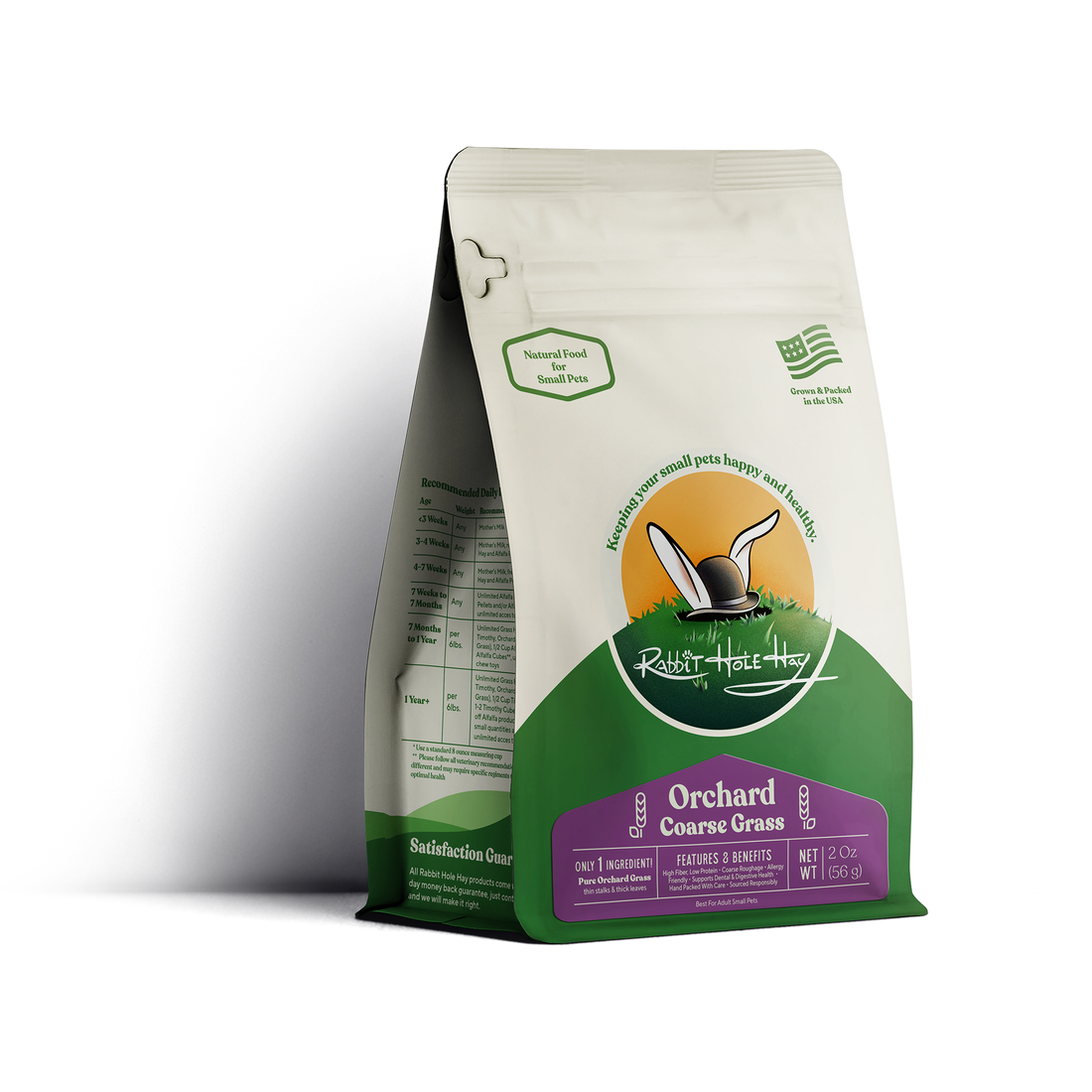
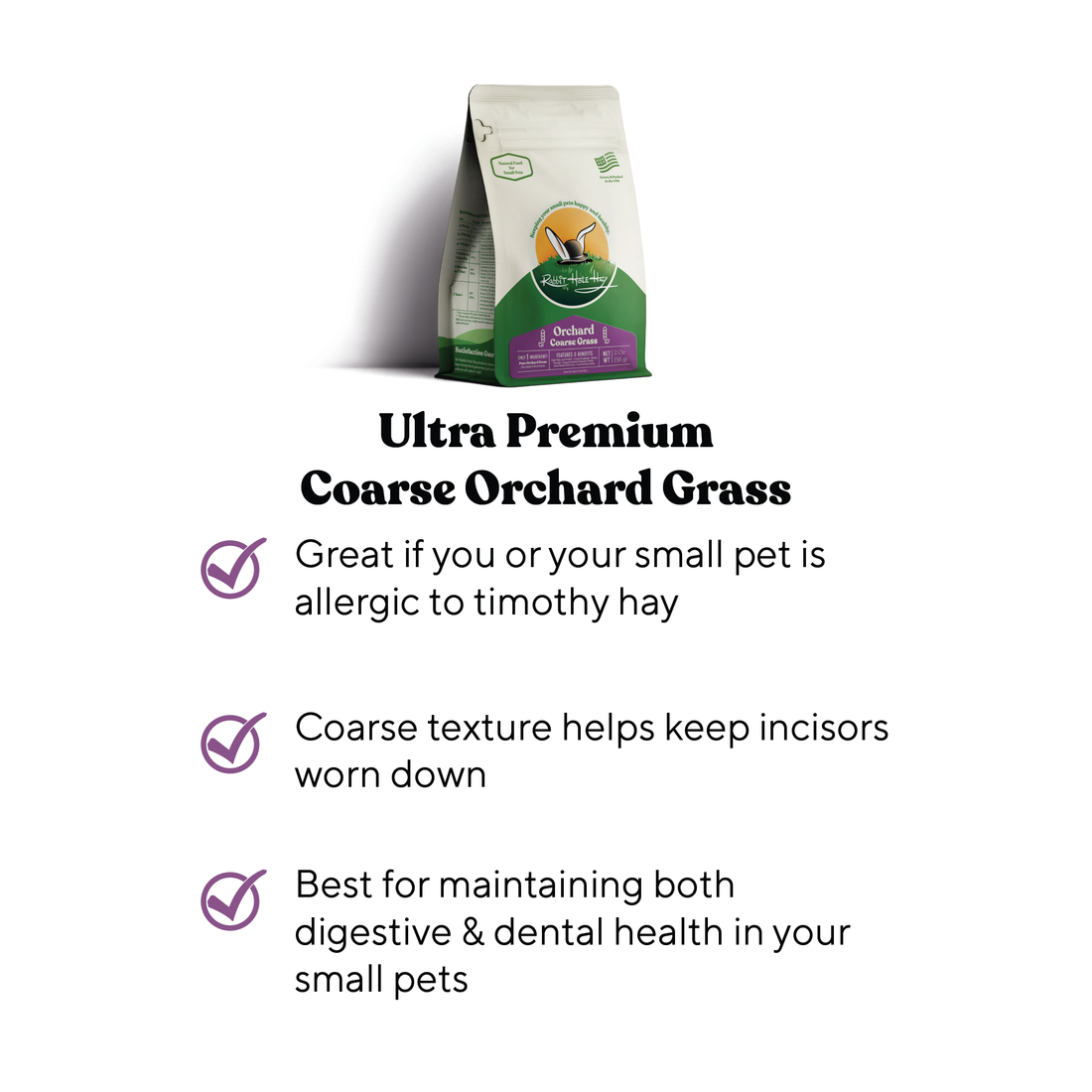
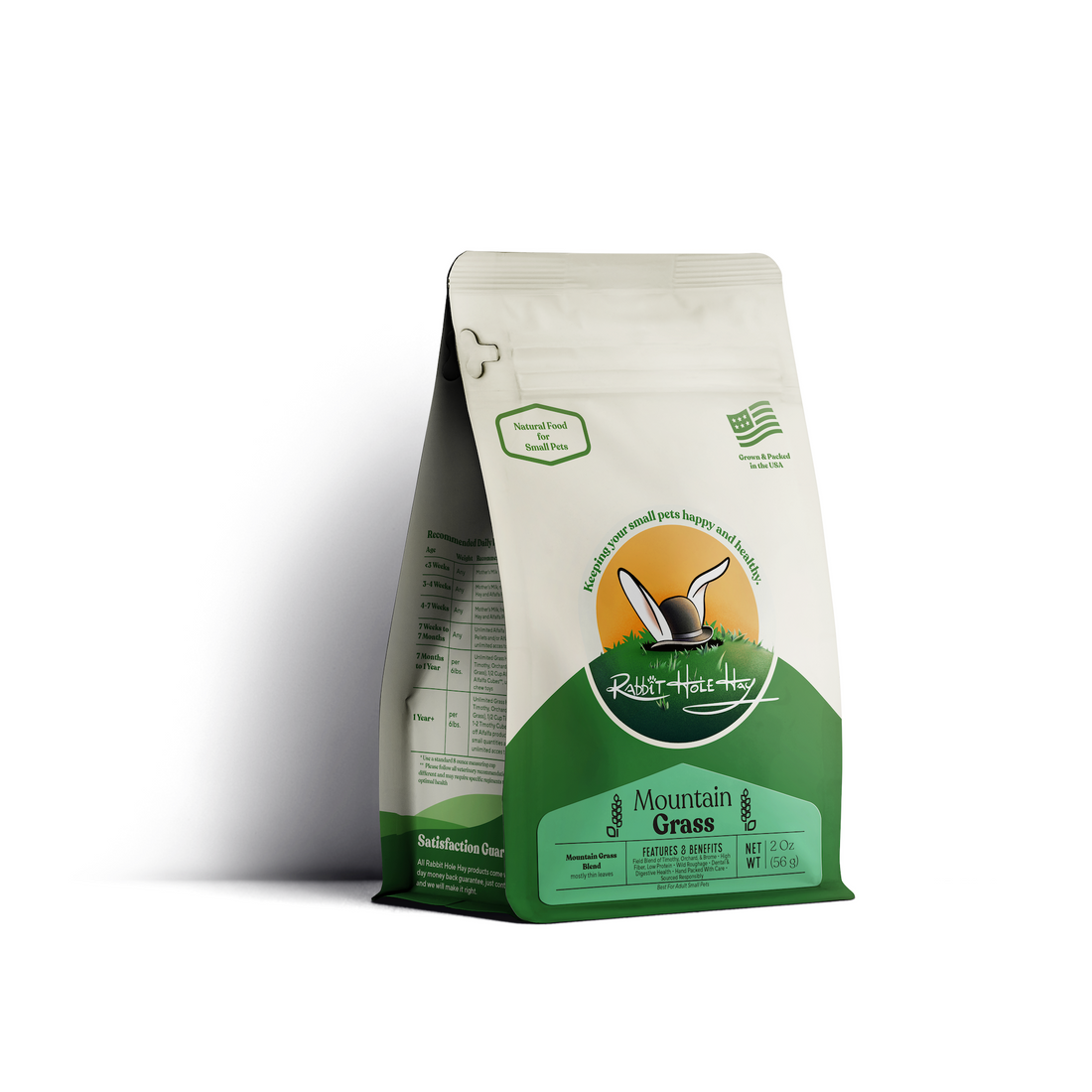
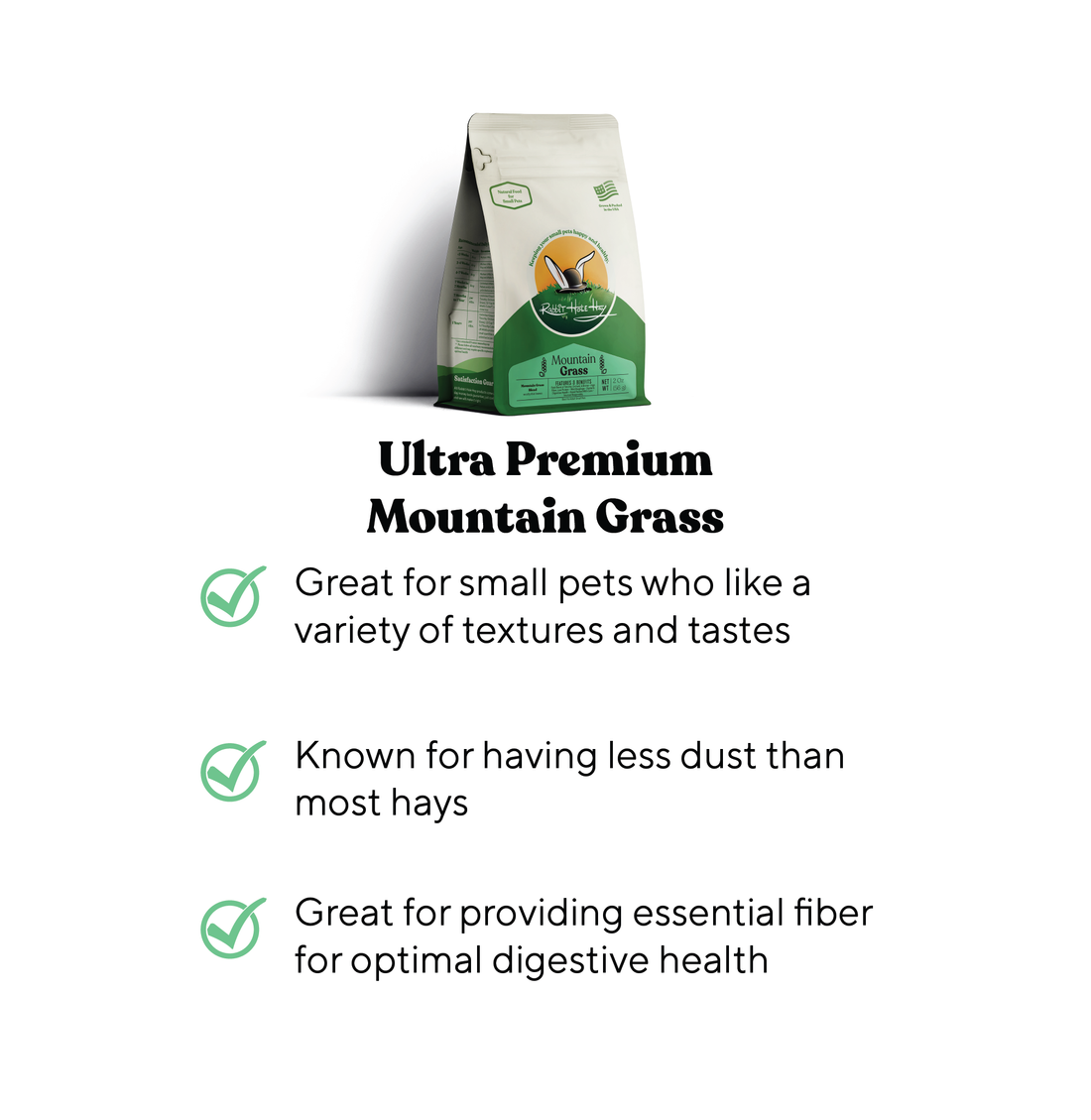
Timothy, orchard, mountain grass—what matters most is choosing a grass hay your rabbit will actually eat. Not pick through. Not ignore. Actually eat consistently.
Keep hay available at all times, and refresh it before it starts to look or smell off. If it’s dusty, damp, or no longer smells fresh, it’s time to swap it out.
When it comes to how much hay they should be eating, a helpful way to think about it is volume. The PDSA recommends offering at least your rabbit’s own body size in good-quality hay each day, offered as food—not only flattened under them as bedding. When you look at what’s in front of them, it should feel like the main part of the diet, not something left behind.

There are a few patterns that tend to make a difference: keeping the pile generous so they’re not running out, offering hay in a way that’s easy to eat (not just on the floor where it gets ignored), and refreshing it often so it stays green, fragrant, and worth coming back to.
If you want a clearer breakdown of hay types, textures, and how they fit different life stages, the Hay Is for Rabbits guide walks through it all in one place. For how different cuts and textures behave day to day, the best rabbit hay for feeding is a practical next read.
Water: All Day, Every Day
Water should always be available, right alongside hay. Fresh, clean water within reach at all times helps keep digestion moving normally.
Some rabbits prefer a heavy bowl, while others drink more from a bottle. If you notice they’re not drinking as much, it’s worth trying a different setup before assuming something more serious.
When a rabbit isn’t drinking enough, you’ll usually see appetite decrease and digestion start to slow. If your rabbit suddenly stops drinking or shows clear signs of dehydration, it’s important to contact a vet the same day rather than waiting it out.
Pellets: Measured, Not Endless
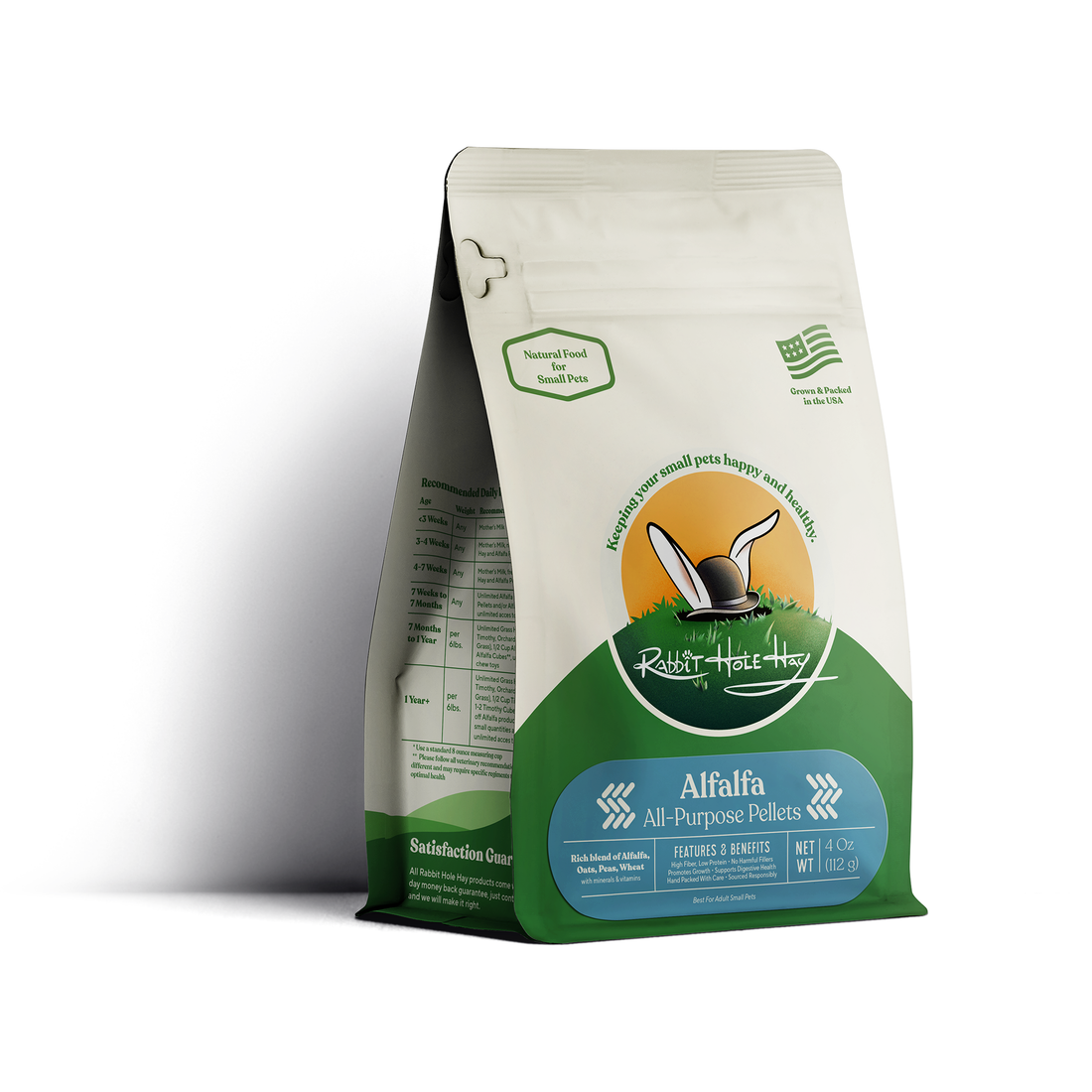
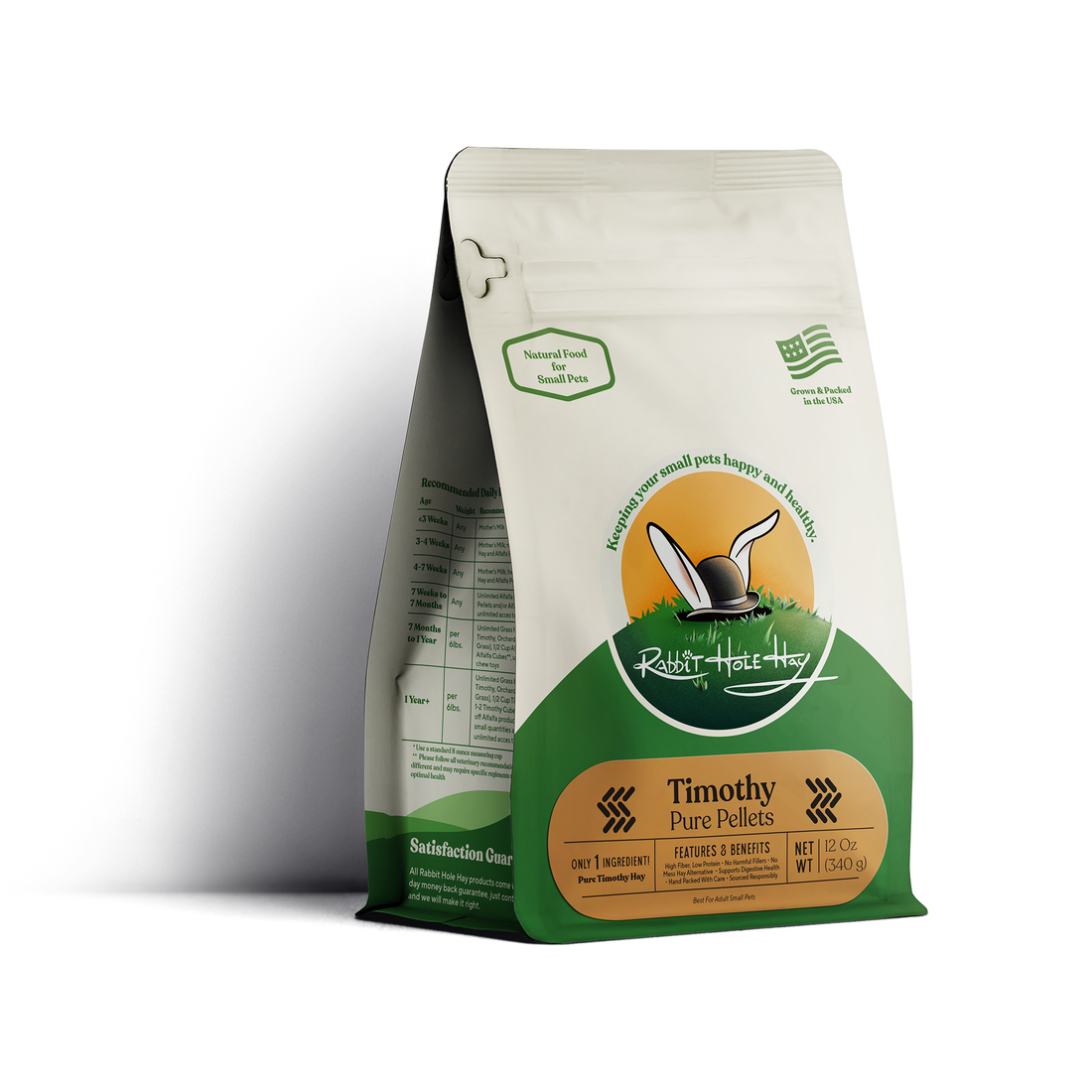
Pellets are concentrated, which makes them useful, but also easy to overfeed. A small scoop goes a long way, so it’s important to keep portions measured rather than leaving them out all day. The House Rabbit Society puts it simply: limit pellets, measure each serving, and avoid free-feeding.
For many healthy adult rabbits, about one quarter cup of plain, high-fiber timothy-based pellets per six pounds of body weight per day is a common starting point. That can vary depending on age, weight, or health, so it’s something your vet can adjust if needed.
If your current routine is working and your rabbit is maintaining a healthy weight, there’s no need to overcomplicate it. Just stay consistent with portions.
Colorful mixes with seeds, dried fruit, or added sugars are junk food. They don’t add anything to your rabbit’s diet and are best left out.
Greens And Fruit: Keep The Sides Small
Leafy greens can add some moisture and variety to your rabbit’s diet. When introducing a new green or veggie, do it one at a time and watch droppings over the next day or two to make sure everything stays normal.
For many healthy adult rabbits, a general guideline is around two cups of approved greens per six pounds of body weight per day, usually split into a couple of servings once hay and water intake are consistent.
Fruit is different. It’s not part of the daily foundation and should be treated as an occasional treat. Small pieces are enough, and many rabbits do just fine with little to no fruit at all. Though many are fans of the banana!
Babies, Adults, And Seniors
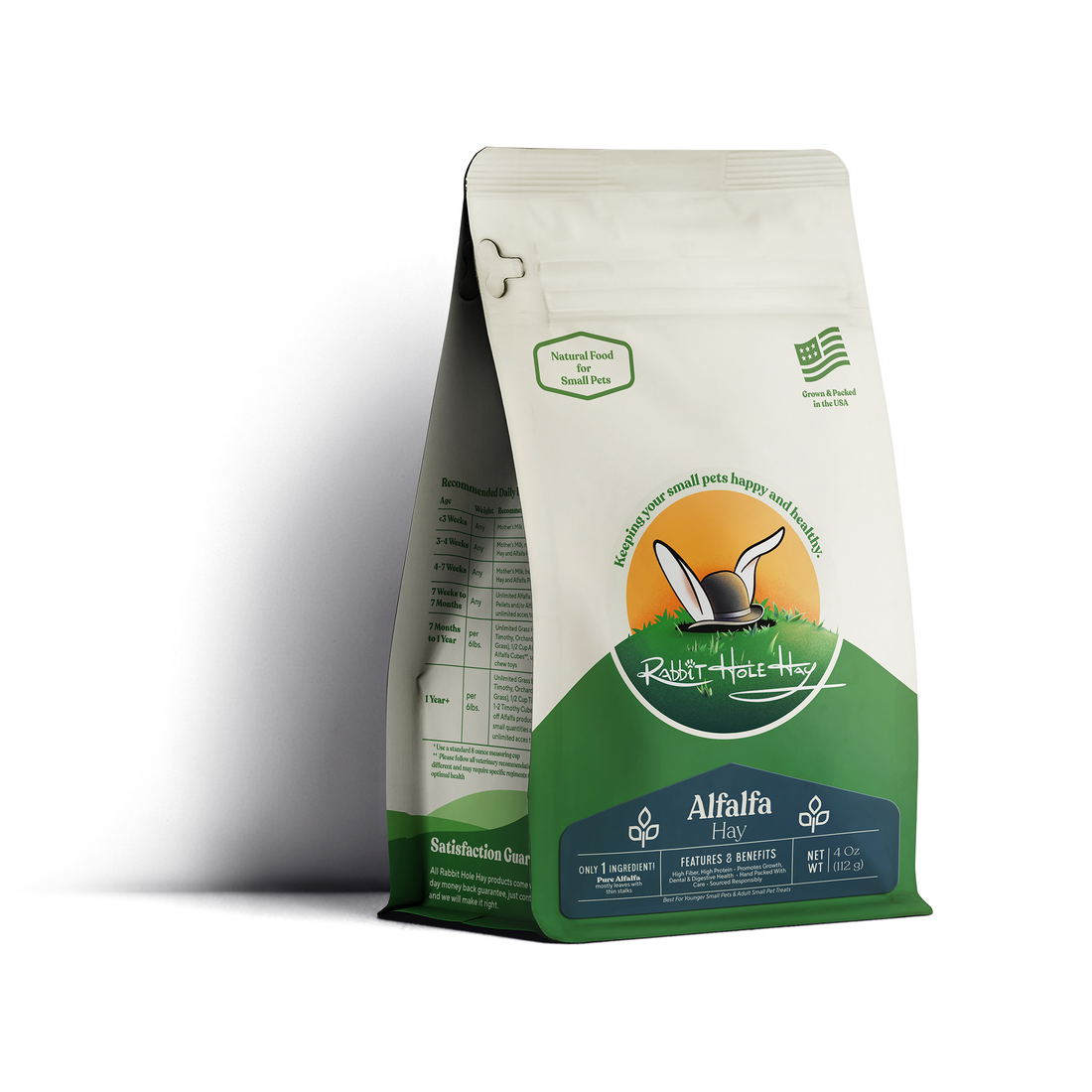
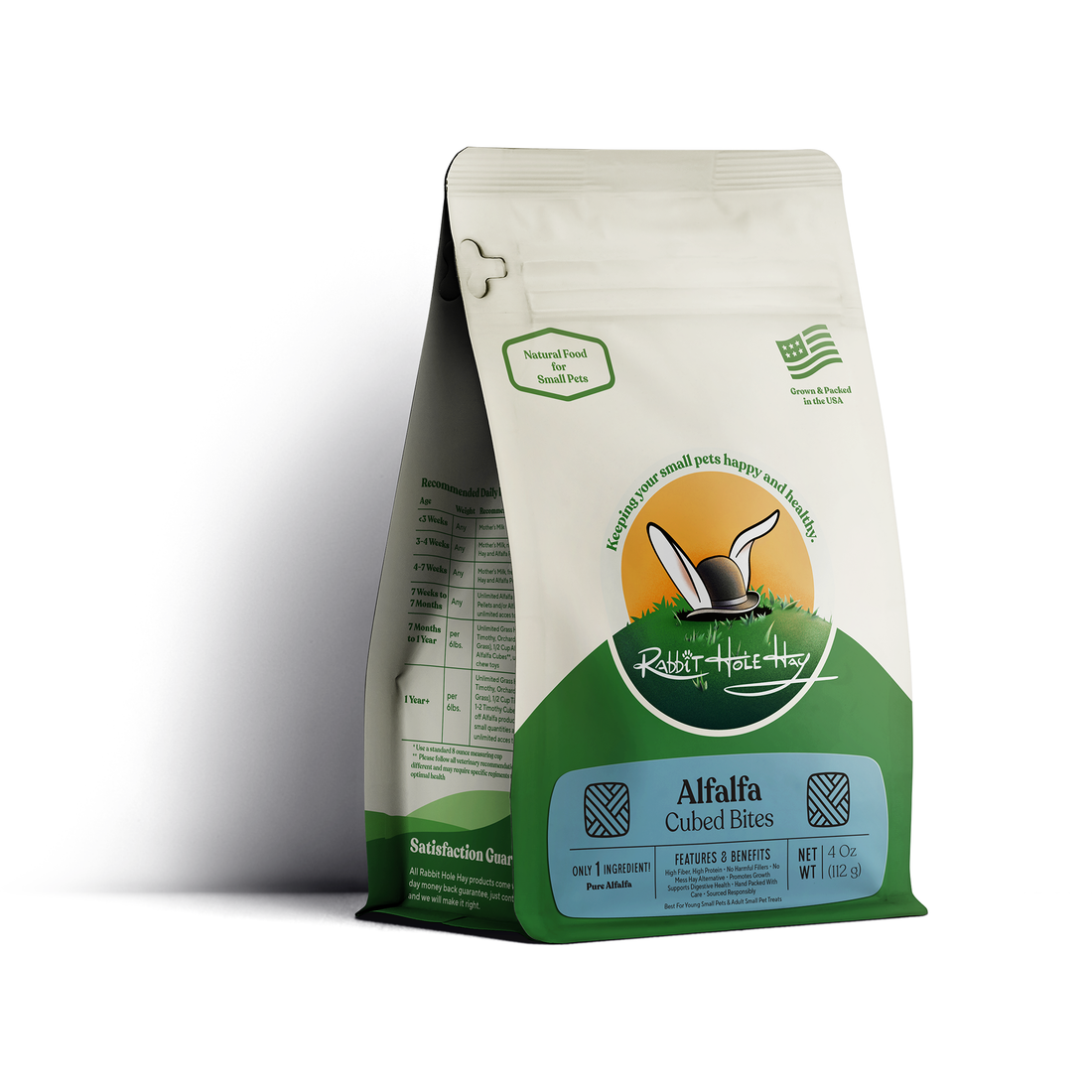
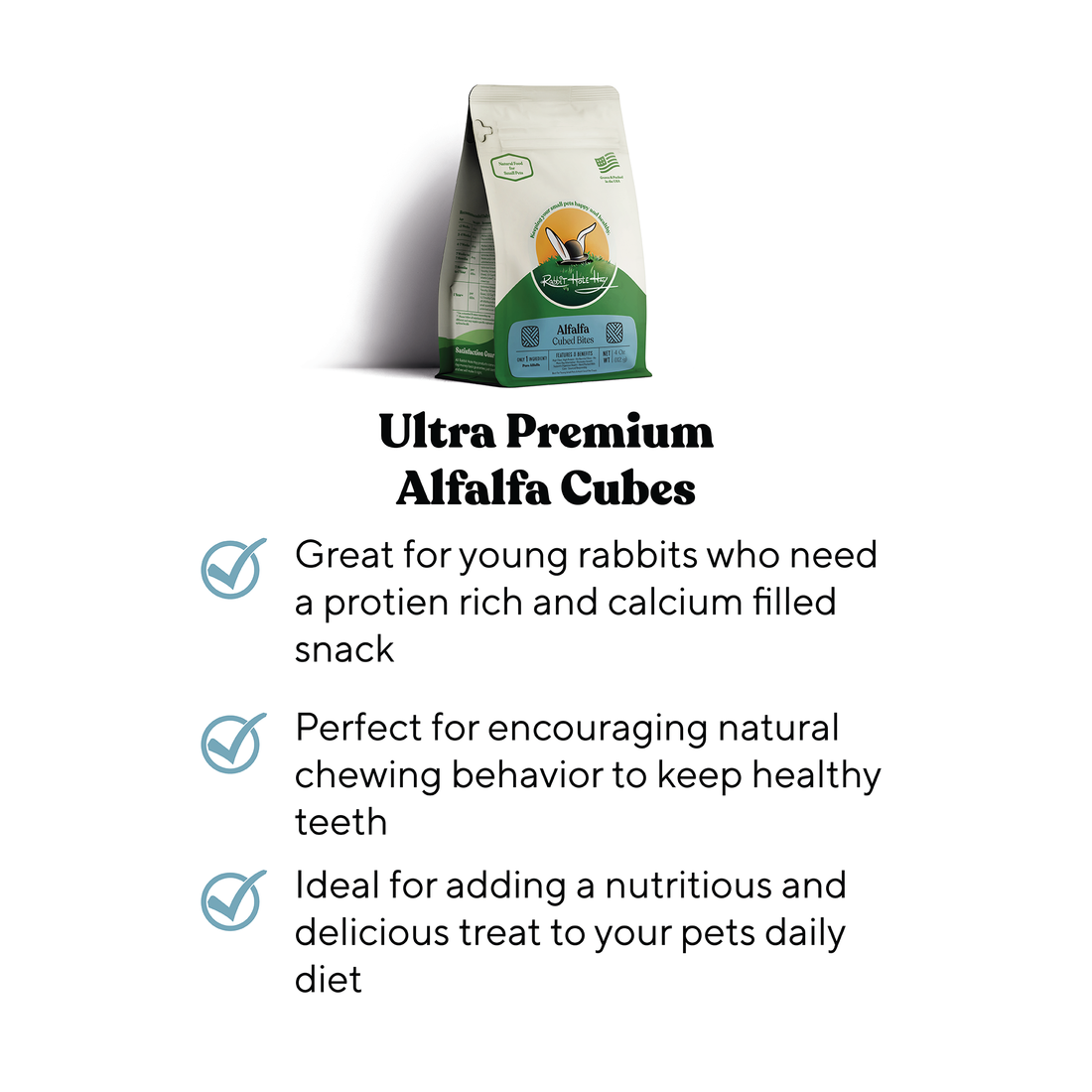
Young rabbits start with their mother’s milk, then gradually move into hay and solid foods. During growth, alfalfa hay is often included because it’s higher in protein and calcium to support development and weight gain.
As they reach adulthood, the focus shifts. Grass hay becomes the staple, offered freely and consistently, while alfalfa is reduced or removed depending on the rabbit.
Older rabbits and those with health issues still follow the same foundation: hay first, with the rest adjusted based on how they’re eating and maintaining weight. If you start to see changes in appetite, weight, or how easily they’re eating, that’s your cue to adjust—and if it doesn’t steady out, check in with your vet.
When Good Intentions Throw Things Off
Most feeding issues don’t start with doing something wrong. They usually start with trying to do something extra—more pellets, more treats, or extra hay that’s there but not really being eaten.
If you watch what disappears first, the pattern is usually pretty clear. Pellets gone quickly while hay sits means the balance is off. From there, you’ll often start to see smaller droppings, more selective eating, or hay getting pushed aside instead of eaten.
Most rabbit hay feeding tips about new bowls, racks, or brands don’t usually fix that. What matters more is how much hay is actually being eaten and how easy it is for them to come back to it throughout the day.
Give hay more space and keep it refreshed. Keep pellets and treats measured. Then watch what changes—because when hay intake comes back up, you’ll usually see droppings return to normal size and consistency, eating patterns become more consistent, and less sorting overall.
Same Rules, Different Personalities
Two rabbits can follow the same setup and still eat very differently. One goes straight for the hay, while another holds out for pellets or greens. No matter how they eat, hay still needs to come first.
Hay matters because rabbit teeth never stop growing, and their digestive system depends on a steady flow of long fiber. Keeping hay available—and actually being eaten—supports both.
Why Hay Matters: Fiber, Digestion, and Dental Health
Hay isn’t just one part of a rabbit’s diet—it’s what everything else depends on. The way rabbits digest food, maintain their teeth, and stay consistent day to day all ties back to how much hay they’re actually eating. When hay intake is where it should be, you tend to see things run smoothly. When it’s not, that’s usually where issues start to show up first. Useful rabbit hay feeding tips always tie back to that: what’s being eaten, not just what’s offered.
Fiber Keeps The Gut Moving
A rabbit’s digestive system depends on a steady, continuous flow of fiber moving through it.
Unlike other animals, a rabbit’s digestive system is a one-way track—they can’t vomit or clear blockages by bringing food back up. Everything has to keep moving forward.
That’s where hay comes in. The long strands of fiber in hay help push everything through the digestive system at a normal pace. As rabbits graze throughout the day, that steady intake keeps things active and moving the way they should.
When hay isn’t being eaten consistently, that movement slows down. Food can sit longer than it should, which is often where digestive issues begin.

What “Gut Motility” Looks Like In Real Life
You don’t need to think in medical terms to know if things are working—you can see it in everyday patterns.
When things are on track, droppings are round, uniform, and show up consistently throughout the day. Rabbits return to their hay often, eating in small amounts over time rather than all at once.
When something starts to shift, it usually shows up here first. Droppings may get smaller, drier, or uneven in size. You might notice more uneaten hay, more sorting through piles, or longer gaps between eating. A rabbit that normally goes back to hay throughout the day may start ignoring it for longer stretches.
These changes point to one thing: food isn’t moving through the digestive system as consistently as it should.
Because a rabbit’s system relies on constant movement, slowdowns can turn into something more serious if they’re not addressed. This is where GI stasis can develop—a condition where the digestive system slows down or stops moving altogether. The House Rabbit Society treats it as an emergency that needs veterinary care, not a wait-and-see situation.
That’s why it’s worth paying attention to these early shifts. If you notice a clear change in eating, droppings, or behavior, it’s a good idea to contact your vet sooner rather than waiting to see if it resolves on its own.
Teeth That Never Stop Growing
Rabbit teeth grow continuously, which means they rely on regular wear to stay at a healthy length.
That wear comes from chewing hay—specifically the side-to-side grinding motion used to break down long strands. This repeated chewing helps keep teeth worn evenly throughout the day.
When hay is being eaten consistently, that natural wear happens without you needing to think about it.
When it’s not, the change doesn’t always show up right away—but it builds.
Teeth can start to grow unevenly or become too long, which can make chewing uncomfortable. You might notice a rabbit taking longer to eat, avoiding hay, or shifting toward softer foods like pellets.
That’s where chewing and digestion meet: if chewing becomes difficult, hay intake often drops—and when that happens, digestion is usually affected soon after. Less fiber moving through the system can lead to slowdowns, and in some cases, GI stasis.
If you notice changes in how your rabbit is eating, it’s worth having their teeth checked by a vet. Catching dental issues early can help prevent both eating and digestive problems from getting worse.
For a simple checklist on what to look for between vet visits, Steps to Healthy Teeth in Rabbits is a helpful guide to spotting early signs.
Keeping hay as the main part of the diet helps support that daily chewing, so teeth stay worn down and eating stays consistent.

Why Grass Hay, Not Just “Fiber” From A Bag
Not all fiber works the same way in a rabbit’s diet.
Pellets may list fiber on the label, but they don’t function like hay. They’re dense, uniform, and eaten quickly, which means less time chewing and less movement through the digestive system.
Hay works differently. It’s made up of long strands that take time to eat. Rabbits come back to it throughout the day, chewing repeatedly and taking in fiber at a steady pace. That combination—time spent chewing and consistent intake—is what supports both digestion and dental health.
Pellets can still have a place in a rabbit’s diet, but they’re meant to be a smaller portion, not the main source of fiber.
And when hay is the focus, the type of hay matters too.
Grass hays are what most adult rabbits are built to eat every day. According to the House Rabbit Society, options like timothy, orchard, or meadow hay should make up the majority of the diet, with pellets and greens added in measured amounts. For everyday loose grass hay, pick a cut your rabbit actually eats and refresh it often.
Other types of hay, like alfalfa, are richer and higher in calcium and protein, which makes them better suited for young, growing rabbits or specific situations—not as an everyday base for most adults.
It’s not just about how much fiber is in the diet—it’s about the type of fiber and how it’s eaten, day in and day out.
Cecotropes And A Balanced Diet
Rabbits produce two types of droppings, and one of them is meant to be eaten.
Cecotropes are soft, nutrient-rich droppings that rabbits consume directly, usually without you ever seeing them. This is a normal part of how they absorb nutrients that weren’t fully processed the first time through.
When hay intake is consistent and the diet is balanced, this process happens quietly in the background.
When it’s not, you may start to notice cecotropes being left behind. They can appear soft, clustered, or stuck to fur, and they’re often a sign that something in the diet is off.
This is usually tied to too many concentrated foods like pellets or treats, and not enough hay.
Increasing hay intake and keeping pellets in measured amounts often helps bring things back into balance. If it continues, it’s worth checking in with your vet to rule out other issues.
Hay Cubes And Compressed Forms
Hay cubes and compressed hay products can be a helpful addition, but they don’t function the same way as loose hay.
They’re made from chopped and compressed hay, which means the fiber is shorter and packed tightly together. Rabbits can eat them quickly, with less of the side-to-side chewing that long strands of hay require.
Because of that, they don’t provide the same level of dental wear or the steady, continuous intake that supports digestion.
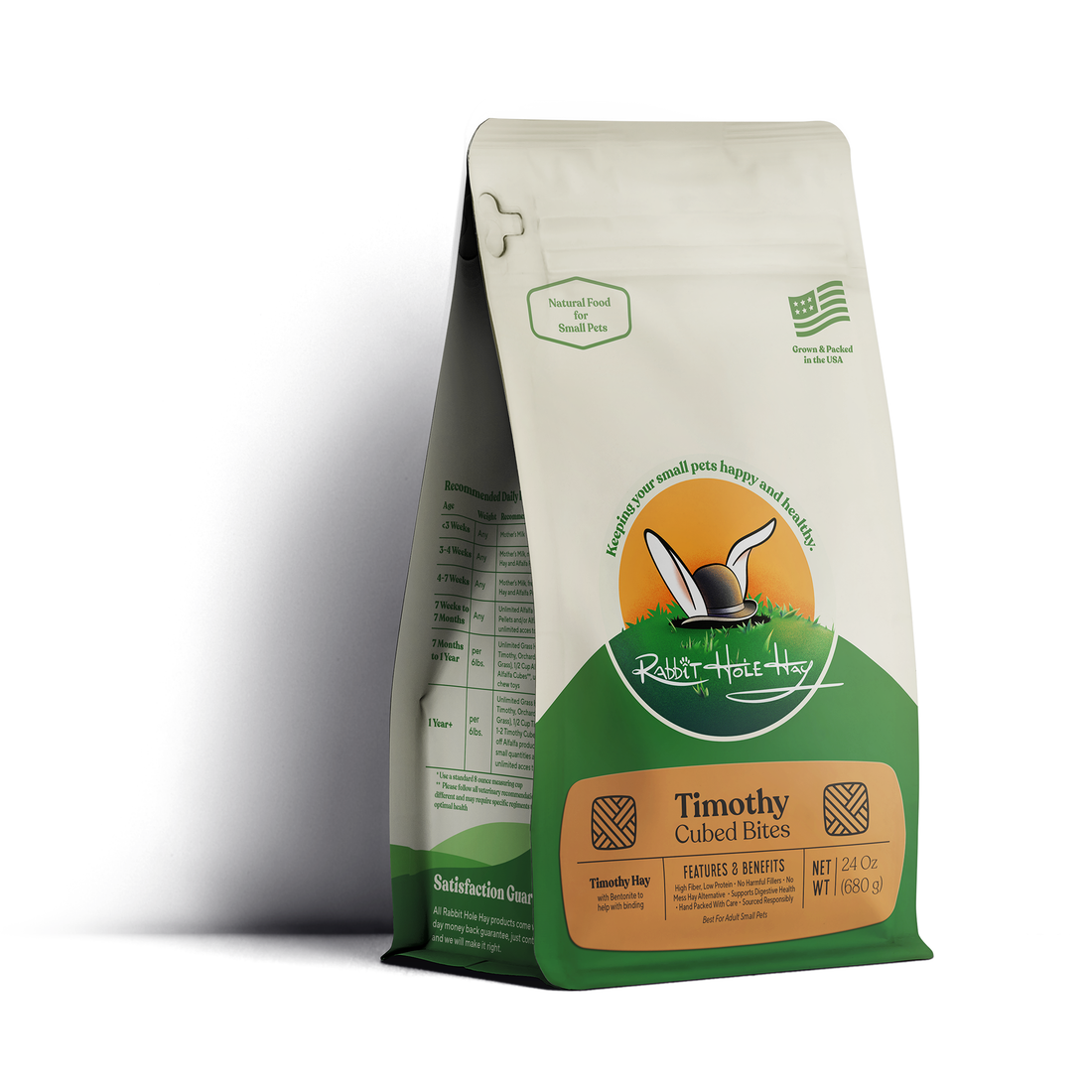
They can work well as a supplement, a way to add variety, or an option for travel or enrichment—but they shouldn’t replace loose hay as the main source.
Most rabbit hay feeding tips still assume plenty of loose hay first; cubes or compressed hay sit on top of that base, not instead of it.
Loose hay encourages longer chewing sessions, more consistent grazing, and the kind of fiber intake a rabbit’s system is built around.
What Often Changes When Hay Intake Is Actually High
When a rabbit is eating enough hay, the difference is usually easy to spot.
Droppings tend to be larger, round, and consistent, showing up regularly throughout the day. Eating patterns feel steady, with rabbits returning to hay often instead of eating in short bursts and stopping.
There’s usually less sorting through piles and less hay left behind. Rabbits spend more time chewing and less time picking around for something else.
You may also notice fewer digestive issues, more consistent cecotrope consumption, and less reliance on pellets to keep them interested in eating.
None of this happens all at once—but when hay becomes the main part of the diet and is actually being eaten, these are the kinds of changes that tend to follow.
Choosing Grass Hay: Types, Life Stage, and What “Good” Looks Like
Choosing hay is less about the prettiest bag and more about what you can see, smell, and watch your rabbit do with it. The right type for your rabbit’s age, plus hay that actually gets eaten, is what turns a diet from “mostly hay on paper” into mostly hay in real life. Good rabbit hay feeding tips start with picking something you can judge with your eyes and nose—not just the label.

Grass Hay And Legume Hay Are Different Jobs
Most adult rabbits need grass hay as the everyday base—think timothy, orchard, meadow, or mountain grass. It’s higher in fiber relative to protein and calcium than legume hays, which matches what a grown rabbit’s digestion and urinary tract are built to handle long term.
Alfalfa is a legume, not a grass. It’s richer in protein and calcium, which makes it useful for young, growing rabbits and for some special cases your vet might OK. For a typical healthy adult, alfalfa is a sometimes food or a transition tool—not the hay that should fill the rack every day. The House Rabbit Society lays out how grass hay should anchor the diet for adults, with pellets and greens measured around it.
Unsure where your rabbit falls? Age and vet input beat guessing. Default to unlimited grass hay for adults, and run alfalfa-for-weight or “pickiness” experiments past your vet first—not the other way around.
Match Hay To Life Stage (Simple Map)
Birth through weaning is milk first; your breeder or vet guides solids. From roughly three to seven weeks, tiny introductions of alfalfa and pellets often appear alongside milk. From weaning to about seven months, many juveniles do well on unlimited alfalfa and measured pellets while they grow, with vegetables introduced slowly later on.
Around seven months, most rabbits are ready to shift toward unlimited grass hay (timothy, orchard, or similar) and tighter pellets—this is one of the biggest switches you’ll make. Mature adults stay on grass hay as the staple for years. Seniors often stay on the same framework; weight drops or trouble chewing are reasons to adjust with your vet—richer hay or pellet tweaks aren’t a DIY chart call.
For types, allergies, and life stages on one page you can save or print, see Hay Is for Rabbits.

Timothy, Orchard, And Mountain Grass
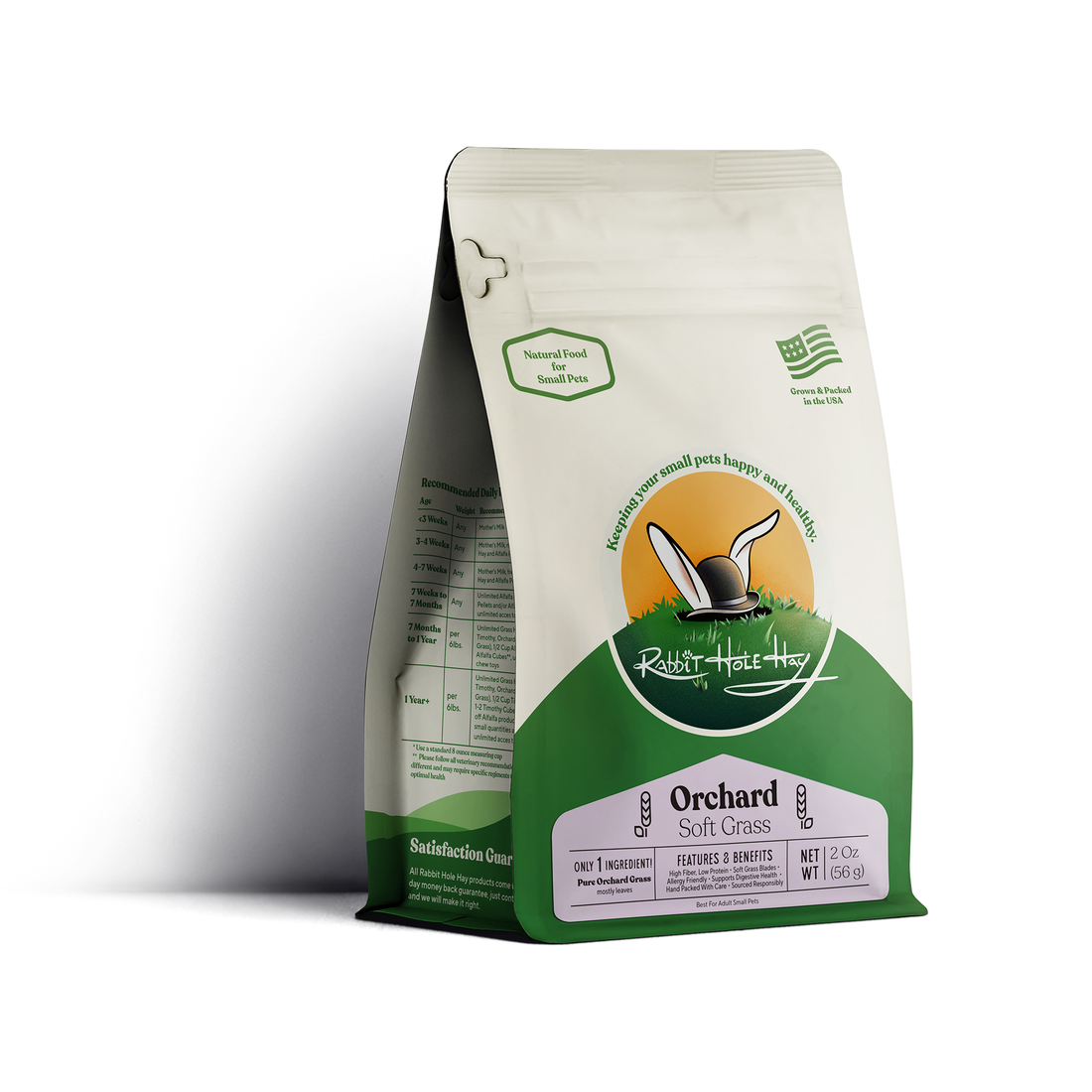
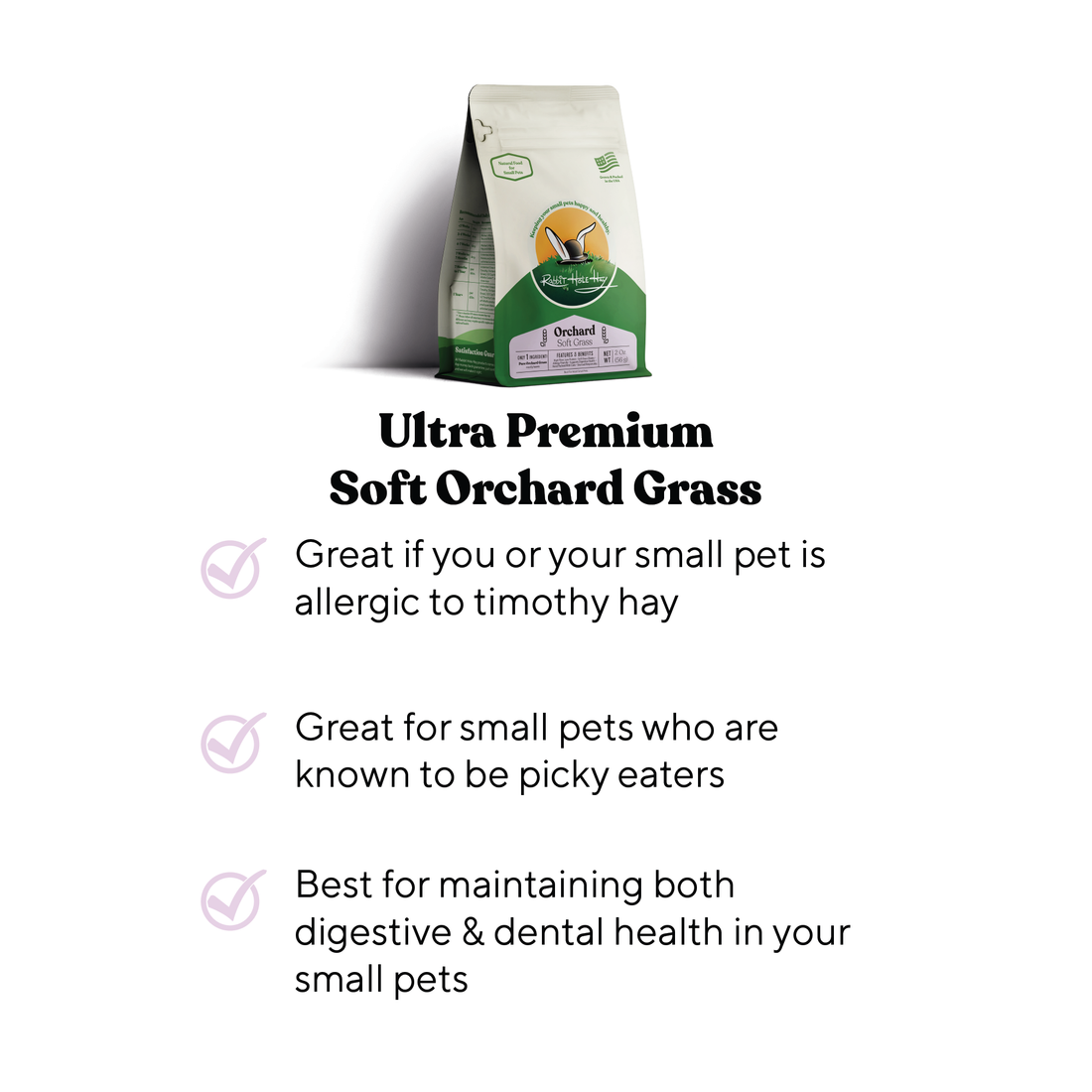
Timothy is the familiar default for adults: widely available, fibrous, and easy to offer every day. Orchard grass wins over plenty of rabbits once timothy feels stale—or when someone in the house sneezes at timothy dust. Mountain grass and other blended options round out variety without leaving the grass-hay family. Loose grass hay is easier to compare side by side: browse grass hays by type and watch what actually disappears from the rack.
A rabbit who won’t touch one grass hay might still love another—swap types before you decide they “don’t like hay.” Sneezing, watery eyes, or dodging only one kind of hay can read like sensitivity; this piece on grass hay sensitivity is worth a read, and your vet should hear about persistent symptoms.
Texture: Soft, Medium, And Coarse Cuts
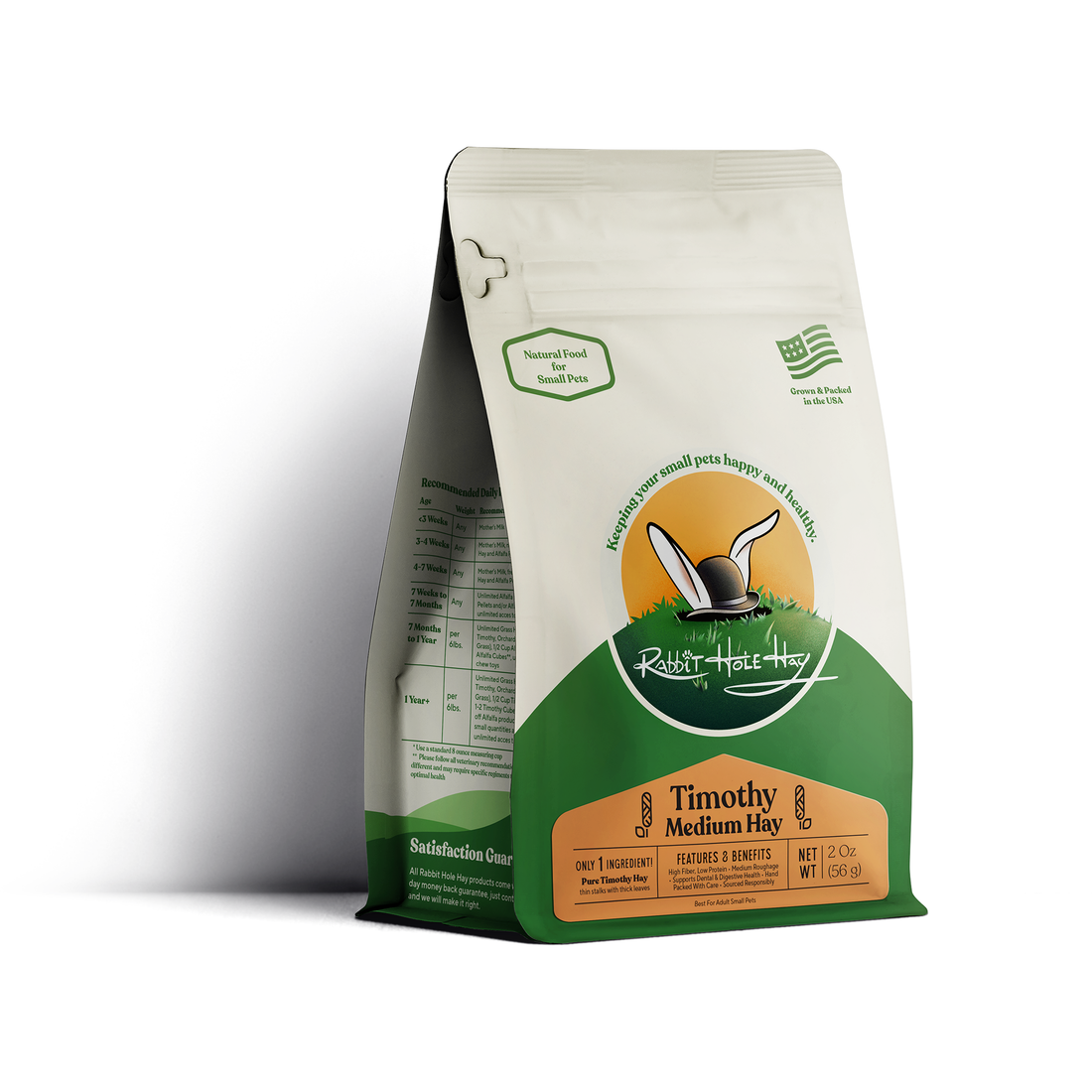
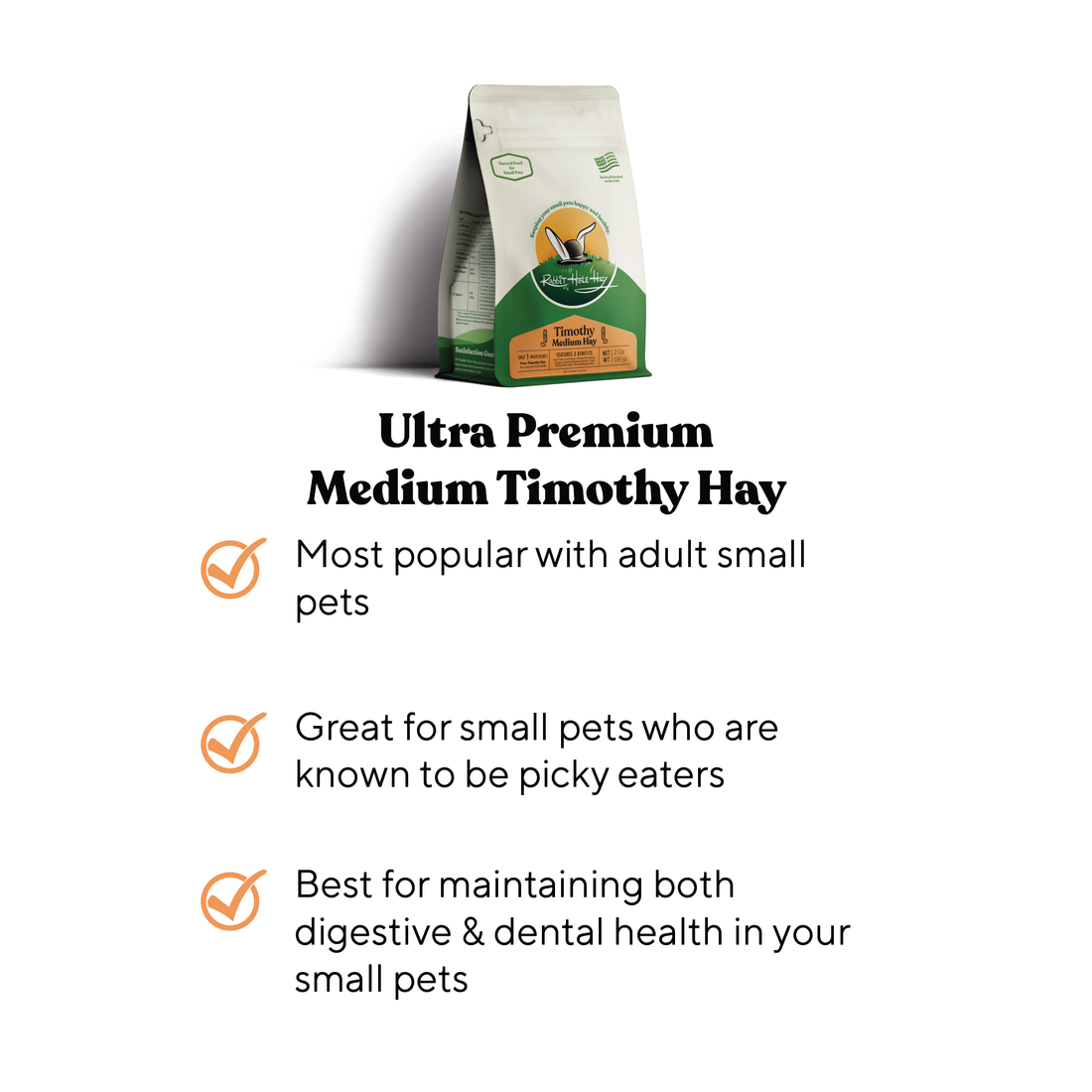
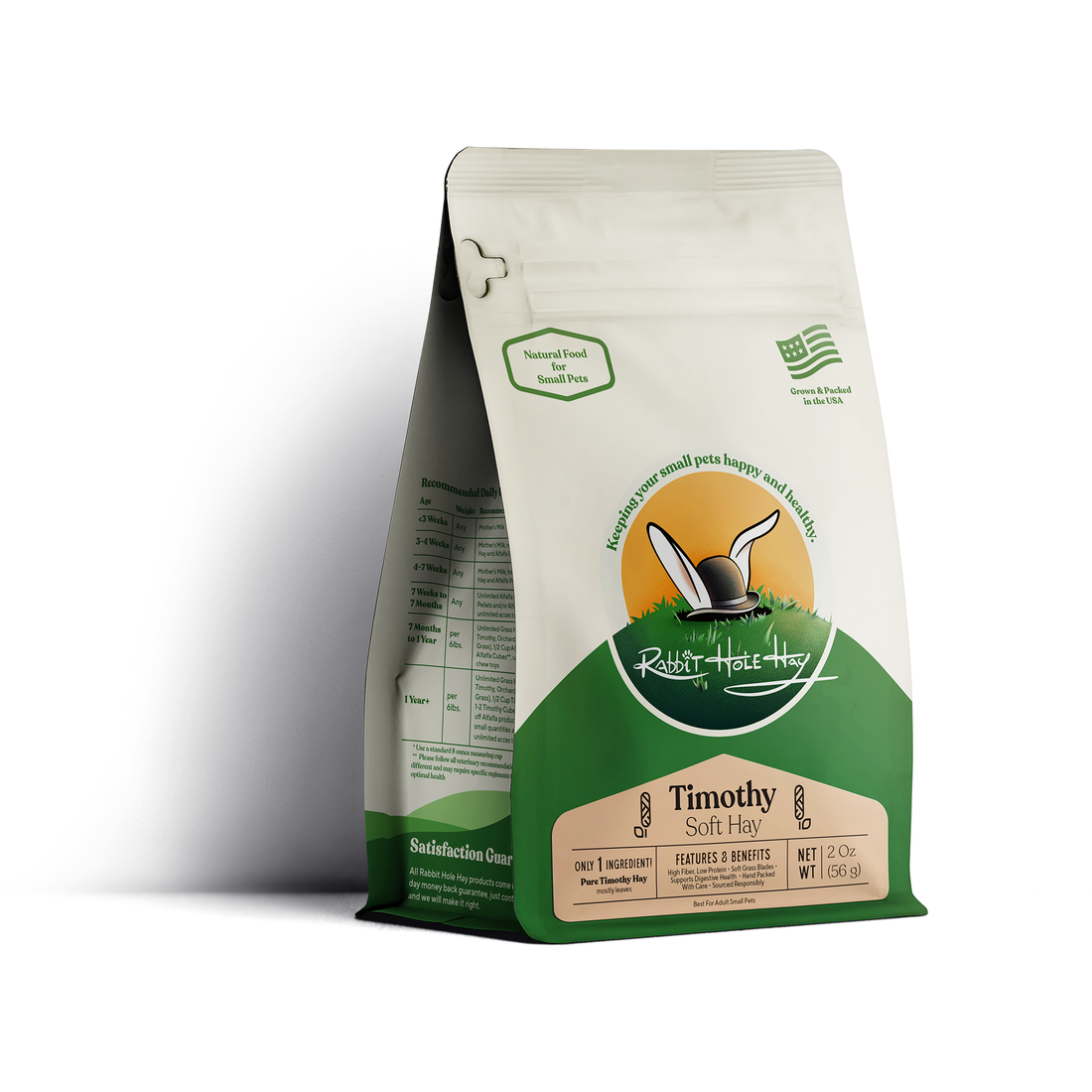
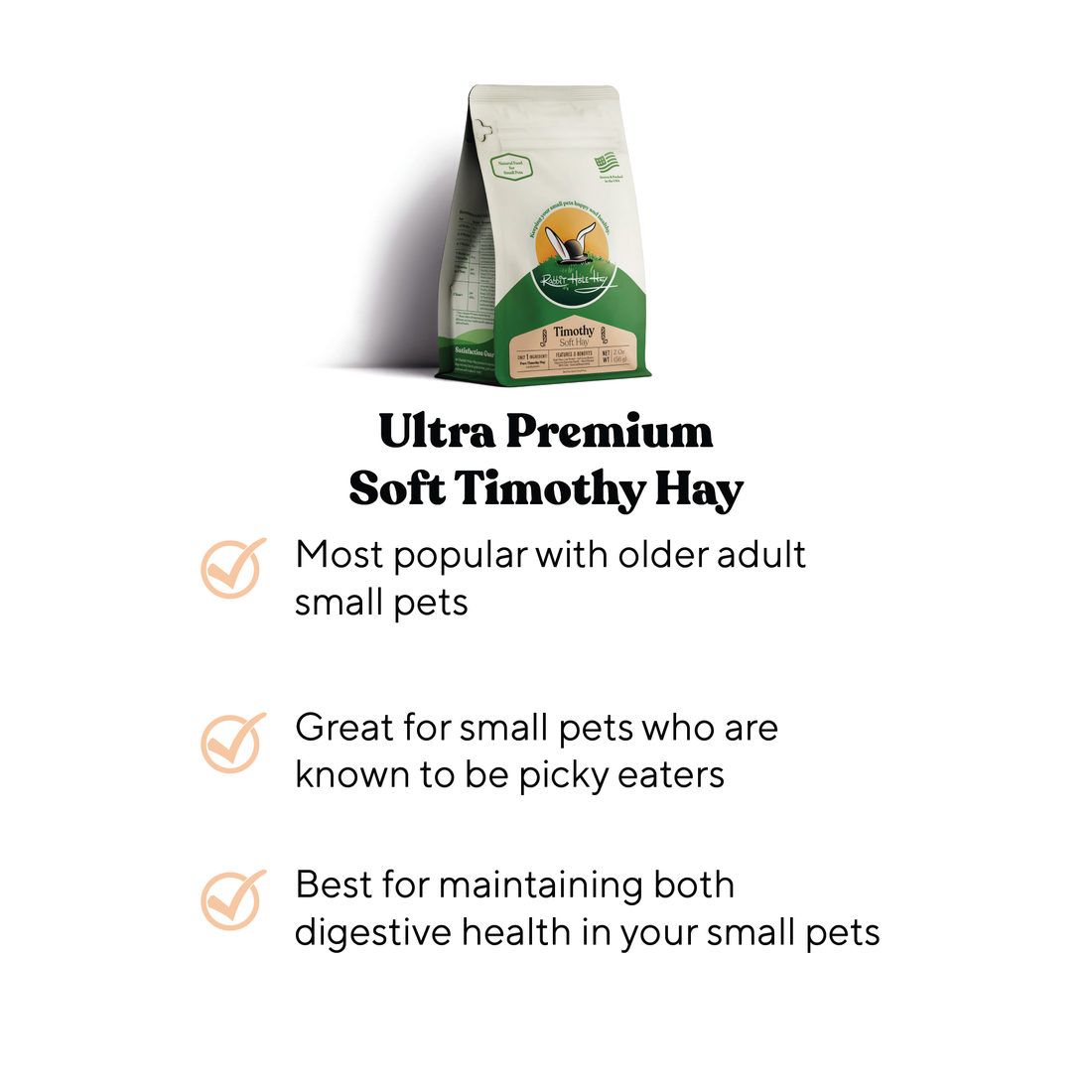
Within timothy and similar lines, texture usually lines up with how stemmy versus leafy the hay is. Stemmier, coarser hay often means more grinding and more dental wear; leafier, softer hay can be easier on picky mouths but may ask for other chewing outlets if wear looks low.
Use simple observations after a change: Does the rabbit chew hay for sustained periods, or leave stemmy pieces behind? Are fecal pellets normal in size and consistency? Those signs show whether the cut is working. If the rabbit will only eat softer hay, you can still add veterinarian-approved chew items or a small portion of coarser hay mixed in, when your vet agrees, to support dental wear.
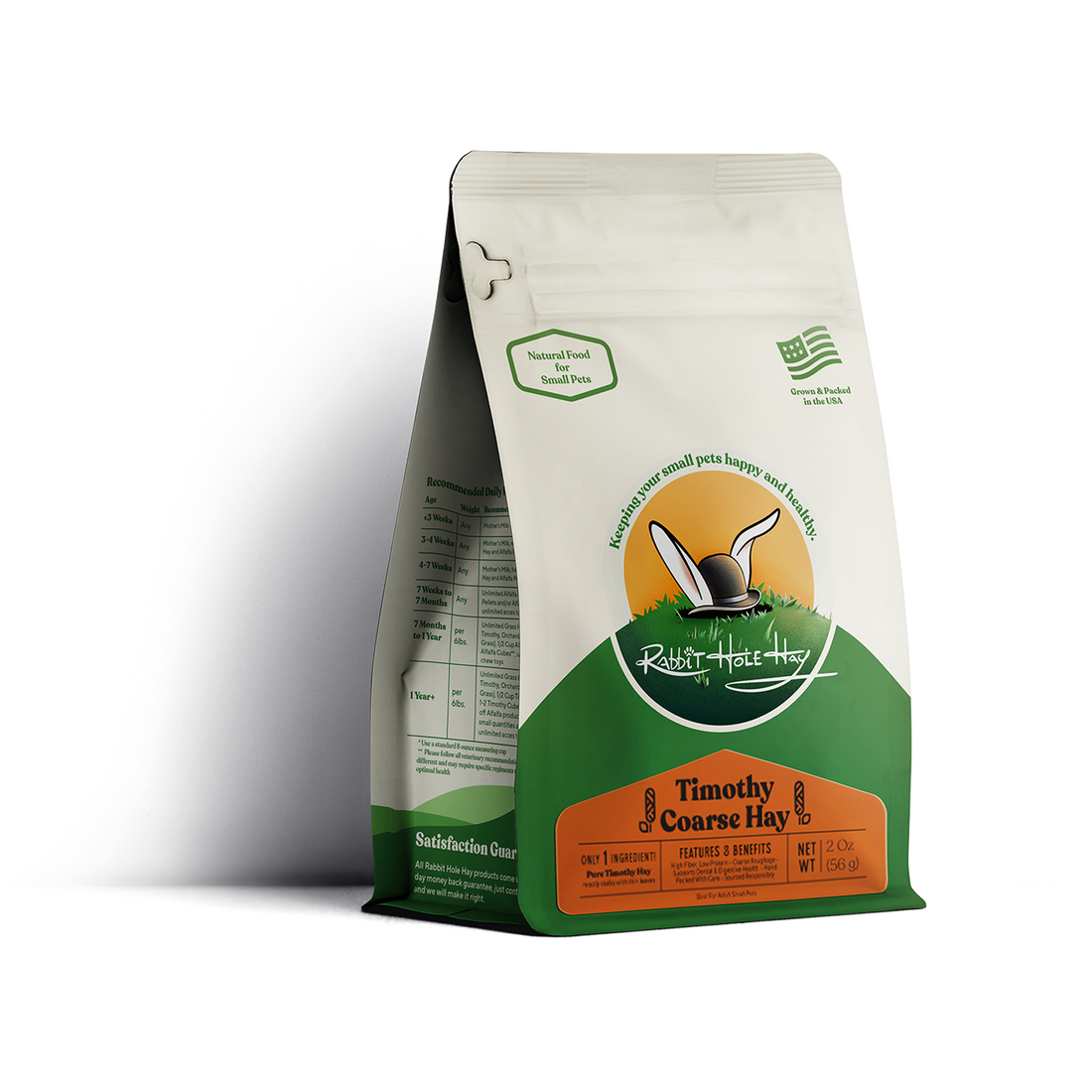
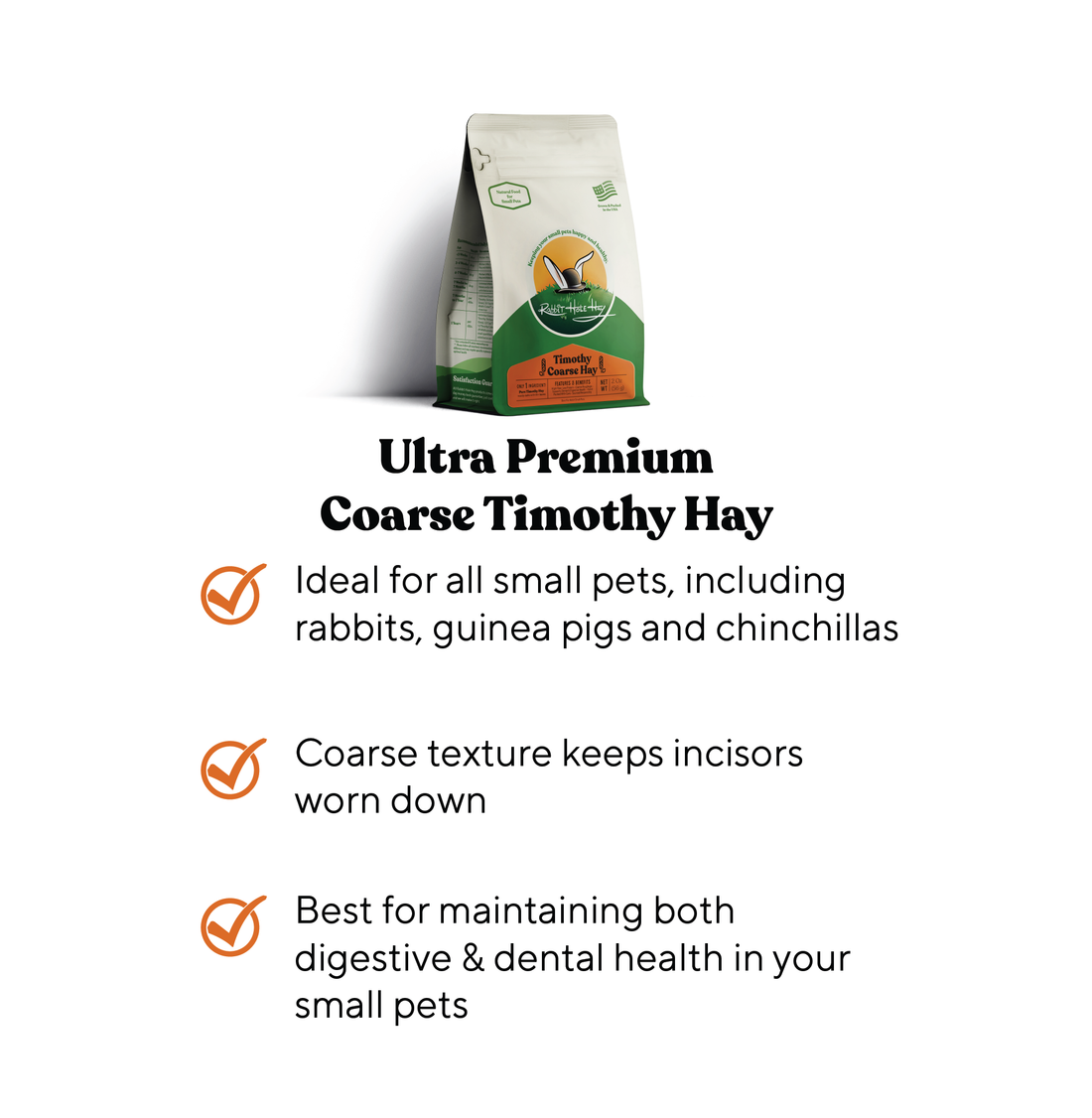
Choosing the best quality rabbit hay walks coarse, medium, and soft timothy in plain language if you want the full tour.
What “Good” Hay Looks Like In Your Hands
Before hay ever hits the rack, you can screen it like produce. Color should lean green or greenish-gold, not dull gray or dusty brown. It should smell fresh and sweet, not musty or sour. Long strands and a mix of stem and leaf are normal; powdery dust, mold, or a chemical “dyed” look are reasons to pass.
Rabbits notice staleness before we do. A pile that used to vanish now sitting untouched usually means something changed—damp storage, sun-baked bales, or hay left out until it’s blah—not a sudden grudge against timothy. Most rabbit hay feeding tips still assume you’ll store and refresh thoughtfully; great hay in a bad spot won’t perform.
Buy from sources that turn inventory and ship hay that hasn’t sat on a shelf for ages. A price that looks too good for the volume deserves a second look: hay, or straw-colored filler?
How Much To Put Out (And How Often To Refresh)
Offer enough hay that your rabbit can graze all day, but don’t bury them under a week’s worth in one corner. Big, soggy layers that sit uneaten turn into wasted, unappealing bedding. Generous daily portions, refreshed often, with old stuff tossed when it’s stale or soiled—that’s the rhythm.
Body size still drives how big the daily pile should look; the easy miss is freshness—what’s in the rack should read as food, not forgotten decor.
Switching Hay Without Drama
Change hay the same way you’d change any rabbit food: slowly. Mix a little new hay into the old, raise the ratio over several days to a week, and watch droppings and appetite. Sudden 100% swaps are how you get a hunger strike over a perfectly good bale.
Fresher hay or a new cut can make a rabbit side-eye the rack for a day or two, which is normal. Slow the blend if appetite or stools wobble. Don’t wait it out if the rack stays full while droppings shrink; that pattern is usually the cue to call the vet.
Placement And The Lazy Grazer
If perfect hay still gets ignored when it’s placed where your rabbit never hangs out, try moving it to a more accessible spot. Plenty of buns graze more from a favorite resting spot or right beside the litter box—the hay didn’t change; the commute did.
If the type, freshness, and storage are dialed in but hay still sits? Revisit placement and pellet portions before you introduce another hay variety out of frustration.
Rabbit Hay Feeding Tips: Freshness, Quality, Storage, and How You Offer It
You can buy the right grass hay and still lose hay to stale piles, damp storage, or a hay rack parked where your rabbit never sits. The rabbit hay feeding tips in this section cover what to do after the bag arrives: maintaining quality, storing it safely, and presenting it so it actually gets eaten.
Why The Pantry And Hay Rack Work Together
Hay does not stop changing when you close the box. Heat, humidity, and time flatten smell and texture. A rabbit that liked last week’s batch may ignore the same hay left in a sunny corner or pressed into a wet mat at the bottom of the hay rack. Treat storage and serving as one loop: protect the bale, then refresh what sits out.

Storage: Dry, Cool, And Breathing
Hay needs to stay dry and away from strong humidity. A closet shelf, pantry, or indoor spare space often works better than a damp basement or a garage that swings with weather unless the space is truly dry and pest-safe.
Airtight plastic totes can trap moisture and encourage mold if hay goes in even slightly damp or if condensation forms. Many households do better with breathable bags or bins in a dry room, or a large breathable sack inside a clean box off the floor. Keep hay out of direct sun and away from stoves, washers, and showers where steam collects.
Shipments that sit on a wet porch or in a hot car need to come inside and air out in dry storage as soon as you can. A damp outer box can wick into the hay even when the inner bag looks fine, so it is worth opening and checking after rough weather delivery days.
If you use more than one container, label purchase or open dates and feed older stock first so nothing sits for months in the back. For a deeper walkthrough of bins, pests, and rotation, see storing rabbit food and hay at home. If you are using a hay rack, make sure it is clean and dry before you refill it.
Quality After You Open The Bag
Each time you open storage, look and smell before you refill the hay rack. Dusty, gray, or sour hay belongs in the trash, not in the enclosure. Good hay should still look and smell like food you would trust to feed your rabbit.
Make sure to clean and dry your hands before you scoop to help avoid introducing oils or damp fingerprints to the hay. If a bag arrived crushed or punctured, move hay into your usual storage setup and inspect to make sure it is not damp or contaminated.
At The Hay Rack: Freshness And Hygiene
The hay your rabbit can reach should look appealing every day. Pull out soiled strands, toss wads that sat in the litter box, and replace hay that has been picked through until it is mostly dust. A thin, fresh layer beats a deep soggy bank that never fully turns over.
When you refill, loosen the hay instead of packing it tight. Dense, compressed layers in a small hay rack can hold humidity from the room and from the rabbit’s breathing, and they turn stale faster than a loose fill.
Wash food-safe racks or crocks on a schedule that matches your setup—more often if the hay sits near urine or if droppings fall into the feeder. Mild dish soap, thorough rinse, and full dry before refilling keeps smells from building up.
How You Offer It: Height, Reach, And Habit
Hay racks, boxes, and large paper bags can all work if hay stays clean and easy to pull. The feeder should match your rabbit’s size: they should reach hay without fighting the bars, and hay should not fall straight into a wet corner every time.
Many rabbits graze more when hay sits beside or above the litter box, where they already spend time. If you are setting that up, litter box training and layout covers habits that pair well with hay placement.

Scattering a little hay in a clean area can add foraging interest; still keep a main pile or hay rack so how much hay they eat is easy to track. For product options and cuts to restock, browse grass hay when you are due for a refill.
Bulk, Delivery Rhythm, And Household Limits
Bulk saves money only if you can store it dry and use it before quality fades. If space is tight or one rabbit eats slowly, smaller, more frequent orders can mean fresher hay at the hay rack than a giant bale you cannot store well.
Let your storage match your climate: in humid seasons, smaller batches and tighter rotation beat keeping a huge amount of hay in one bag that sweats. In very dry homes, breathability still matters so hay does not bake and lose aroma in a hot room.
Pests And Safety
Mice, moths, and beetles look for the same calories your rabbit does. Sweep storage areas, check bags for chew holes, and avoid leaving loose hay on the floor of a garage or shed where pests travel. When something has been contaminated or you see webbing or droppings in the hay, discard it and sanitize the container.
Other rabbit hay feeding tips are worth keeping straightforward: if hay smells off, looks wrong, or your rabbit’s appetite tanks at the same time, stop feeding that batch and call your veterinarian—especially if droppings shrink or disappear.
Quick Checklist Before You Close The Bin
Is the storage spot dry, shaded, and away from steam and sun?
Are you using older hay before newly opened bags?
Does the hay rack have a fresh layer, not a composting mat of hay at the bottom?
Is the feeder clean enough that yesterday’s hay is not sitting in old dust?
For a one-page view of diet basics alongside hay, Hay Is for Rabbits stays a useful print-and-save reference.
Buying Hay Online: Myths vs. Reality (Freshness, Service, Value)
Ordering hay online is normal now, but the same questions keep showing up: Is it fresh? Is it expensive? Is it harder than grabbing a bag at the store? Smart rabbit hay feeding tips still apply when the box shows up at your door—online is just how the hay travels. What matters is whether the hay, the packaging, and the seller’s habits protect quality all the way to your hay rack.

Convenience: Errands, Timing, And Subscriptions
Local runs work until they do not—bad weather, a busy week, or a store that only stocks one cut you know your rabbit will not touch. A steady online order can remove one recurring errand and keep hay arriving before you run out.
Plenty of households use both: a quick bag in town for emergencies, and a scheduled box for the hay their rabbit eats every day. The goal is reliable access to grass hay that looks and smells good, not winning an argument about which channel is “better.”
Subscriptions or auto-ship programs, when they fit your household, can match how fast you actually use hay so you are not buried in bags you cannot store dry. If your climate or space is tight, a smaller box on a shorter interval often beats one giant shipment that sits too long. For more on keeping hay usable after it arrives, see storing rabbit food and hay at home.
Value: Sticker Price Is Only Part Of The Picture
Compare price per pound or per ounce, shipping included, against what you would pay locally for hay you are honestly willing to feed. Factor in gas, time, and how much hay gets thrown away when a store bag isn't the texture your rabbit will eat, dusty, or stale.
Bulk can save money when you have dry storage and multiple rabbits or fast turnover. One slow-eating rabbit in a humid apartment may do better with modest boxes more often than with a bargain bale that fades before it is gone. Practical rabbit hay feeding tips treat wasted hay as part of the cost, not a separate problem.
When you compare sellers, match cut to cut. A cheap bag of coarse timothy that your rabbit will not finish is not cheaper than a slightly pricier orchard they clean up. Price only matters next to what actually disappears from the hay rack.
Freshness: What “Fresh Online” Really Means
Freshness is not about whether you ordered online or picked up a bag in person—it is about harvest quality, how hay is stored before packing, how it is packed, and how long it sits in your home after delivery. Good sellers keep hay out of sun and rain, pack to limit crushing and dust, and turn inventory so customers are not getting last year’s leftovers by default.
When a box lands, use the same eyes and nose you would use in a store: green to green-gold color, sweet smell, minimal fine dust, no mold. If something is off, a reputable company should have a clear path to fix it. Earlier in this guide, the section on buying hay online covers the same worries—convenience, price, freshness, and reaching a person—if you want a tighter pass before you keep reading here.
Aisle hay is not magically fresher; it can sit in bright light, open air, and back rooms for uncertain stretches. Online hay is not automatically fresher either—it depends on the supplier’s harvest, warehouse habits, and how fast boxes move. Let your senses and your rabbit’s appetite judge the batch in front of you, not where you bought it.

Transit: Heat, Crush, And Weather
Shipping adds heat and jostling. In summer, hay sitting on a hot truck or porch can lose aroma fast; bringing boxes inside quickly matters. Rain-soaked outer cartons can wick moisture inward, so open and inspect if the box looked wet on delivery.
Inner bags that breathe often beat sealed plastic that traps humidity when temperatures swing. This is why at Rabbit Hole Hay we do not "seal" the hay in plati, but rather leave it open to allow air circulation. That is true whether you buy online or carry hay home yourself—dry storage and a clean hay rack at home still decide whether your rabbit gets hay that looks and smells appealing after the box is open.
Choosing A Seller: Signals Beyond The Photo
Look for clear cut descriptions, harvest or grass-type detail, and honest photos—not only perfect studio shots. Read how substitutions, delays, or quality issues are handled. If something goes wrong with an order, you should know how to reach a human and what the guarantee covers before you need it.
Reviews can help, but read for specifics: dust, stems, customer service follow-through—not only star counts. A pattern of “my rabbit stopped eating after the switch” with no other detail is less useful than notes about color, smell, and whether the company replaced a bad box.
For a wider lens on where rabbit food fits in the budget and routine, where to buy rabbit food covers stores, online, and bulk tradeoffs without pretending one size fits every home.
Diet Context: Hay Still Comes First
Where you buy does not change what rabbits need: unlimited grass hay for most adults, measured pellets, and greens introduced thoughtfully. The House Rabbit Society’s food and diet overview keeps that framework straight while you sort out shopping channels.
When you are ready to compare grass types and box sizes in one place, browse grass hay alongside your storage plan. For a printable diet snapshot, Hay Is for Rabbits is a useful sheet to keep near the feeding area.
Pellets: How They Fit With Unlimited Hay
Pellets are easy to pour and easy to overfeed. In a healthy adult rabbit’s day, grass hay still does most of the work for digestion and chewing, while pellets act as a measured supplement—not a second unlimited buffet. Rabbit hay feeding tips that hold up in real homes keep hay in the hay rack around the clock and measure pellets like you would measure any concentrated food.

Hay First, Pellets Second
The House Rabbit Society frames the adult rabbit plate clearly: unlimited grass hay, a controlled amount of plain timothy-based pellets, fresh water, and vegetables introduced gradually. Pellets pack vitamins and minerals into small bites, which is helpful when they are used as intended. When the bowl of pellets is always full, many rabbits fill up there and leave hay behind, which is the opposite of what you want for their teeth and gut.
Think of pellets as insurance on top of hay and greens, not a replacement for long-strand fiber. If your rabbit is skipping hay but the pellet dish empties fast, the first place to adjust is usually the pellet portion, with your veterinarian’s input if weight or health is involved.
Weight checks at home are not about chasing a number on the scale every morning. They are about noticing a beltline that softens or a spine that feels sharper under the fur, then pairing that observation with what goes in the pellet dish. Your veterinarian can help you set a target and adjust portions without cutting back on hay.
Alfalfa Pellets Versus Timothy Pellets
Young rabbits are often on richer feeds while they grow; many feeding plans use alfalfa-based hay and higher pellet levels for a period, then shift toward grass hay and timothy-style pellets as they mature. The exact ages and amounts vary by rabbit and by what your vet recommends, so treat age charts as a map, not a law.
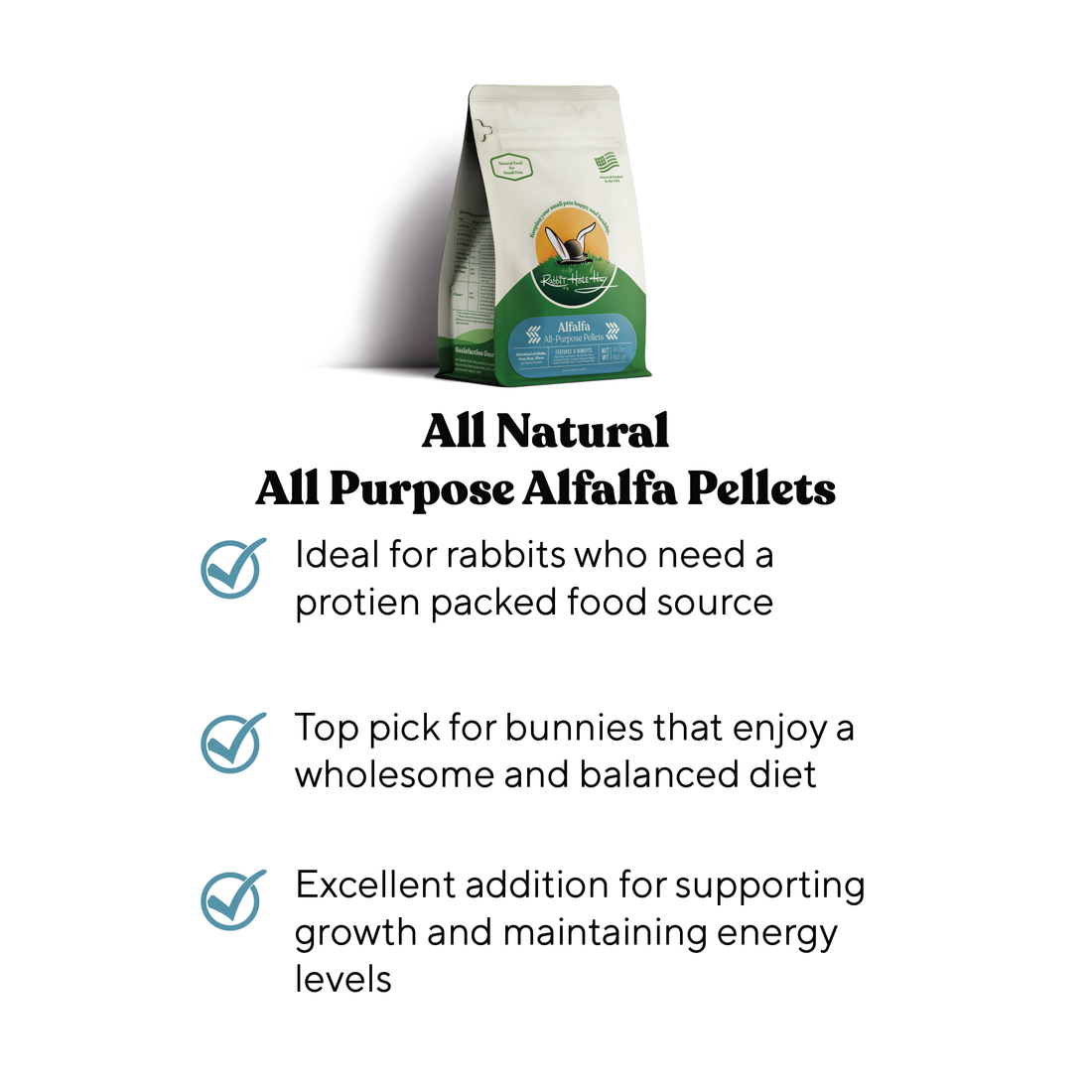
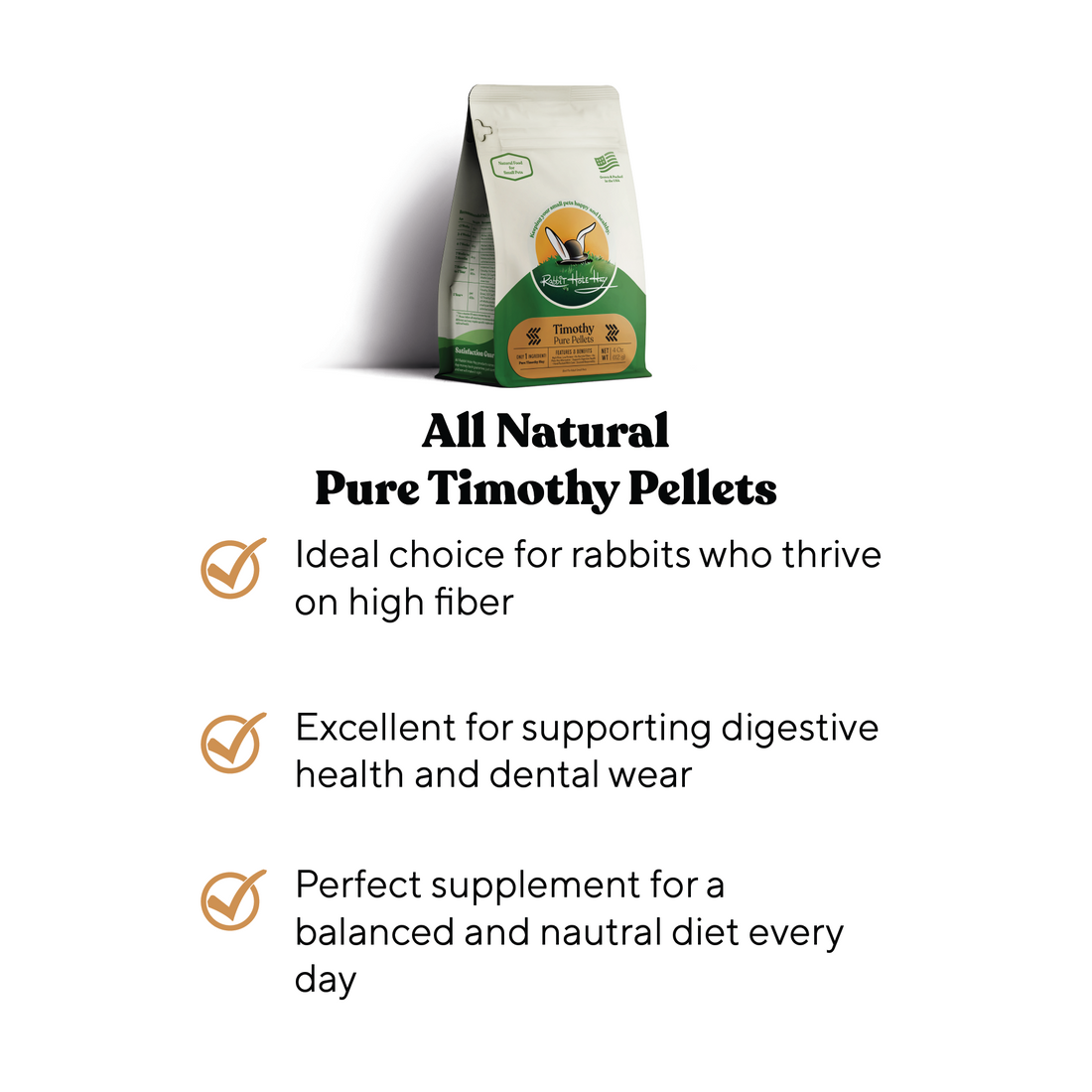
For most healthy adults, grass hay plus timothy-based pellets is the usual pattern. Alfalfa-heavy pellets are often too rich for the average adult rabbit to eat in large amounts every day. If you are unsure which pellet matches your rabbit’s life stage, ask your veterinarian before you buy the big bag.
If you adopted a young rabbit and the shelter sent you home with one pellet type, double-check the label against your vet’s plan before you auto-reorder for years. Life-stage changes are easy to forget because the bag in the pantry still looks fine.
How Much Pellet Is Enough
Body size, activity, and whether the rabbit needs to gain or lose weight all change the right scoop size. A starting point many caregivers use is roughly a quarter cup of plain timothy pellets per day for a medium rabbit, adjusted up or down with veterinary guidance—not a free-pour hopper that never runs dry.
Pick one measuring cup and stay with it so “a little extra” does not creep in every morning. Consistency matters more than whether the scoop came from the pantry or the baking drawer.
Rabbit Hole Hay publishes a recommended daily feeding chart tied to age and weight, and an adult rabbit food calculator for shopping estimates. Those tools are guides; your vet should sign off on the plan for seniors, underweight or overweight rabbits, or any chronic condition.
What A Good Pellet Looks Like
Choose plain, hay-based pellets without colorful mixes, seeds, corn, or sugary yogurt drops. Those “party mix” bags are built for marketing, not for a rabbit’s digestion. Uniform greenish-brown timothy pellets look boring and that is usually a compliment.
Read the ingredient list the way you would judge a hay delivery: the first ingredient should be grass hay, not grain. If the front of the bag leans on cartoon fruit shapes, your rabbit probably does not need what is inside.
Types, transitions, and bowl habits for pellets are covered in the Pellets section above on this same page. When you are ready to shop, browse hay-based pellets alongside your grass hay order so both show up together.
Changing Pellet Brands Or Bags
Switch pellets the same way you would switch hay: mix a little of the new with the old, raise the proportion over a week or two, and watch appetite and droppings. An overnight swap is a common reason for a rabbit to refuse food or get soft stool even when the new bag is fine.
If a bag smells musty, looks dusty in the wrong way, or your rabbit stops eating around the same time you opened it, stop feeding that batch and talk with your veterinarian—especially if droppings shrink or disappear.
Storage And Bowl Habits
Keep pellets in a cool, dark, dry place in a sealed container that blocks pests. Old pellets lose appeal and can pick up grease smells from the kitchen if the tub sits next to the stove. Offer pellets in a heavy dish that does not tip, and rinse it often so oils from previous meals do not turn rancid.
Dump damp crumbles or dust from the dish when you refresh water; warm rooms turn soggy pellet fines into mold faster than most people expect.
For a one-page view of how hay, pellets, and greens relate, Hay Is for Rabbits is still a handy printout next to the feeding area. Solid rabbit hay feeding tips never treat pellets as a reason to let the hay rack go empty—hay stays the food your rabbit should graze all day.
Fresh Vegetables: Portions, Frequency, and Safe Habits
Fresh vegetables add water, flavor, and a wider spread of vitamins to a rabbit’s diet. They never replace grass hay, but they matter once hay and pellets are on a solid footing. Rabbit hay feeding tips that work long term treat vegetables as a daily habit with clear limits—enough to matter, not so much that hay stops moving through the hay rack. The habits below assume your rabbit is a healthy adult unless your vet has set a different plan.

Greens Sit Beside Hay, Not Instead Of It
The House Rabbit Society still puts unlimited grass hay at the center of an adult rabbit’s diet, with measured pellets and a thoughtful rotation of safe greens. Vegetables are part of the picture, not the main source of fiber. If adding more greens makes your rabbit leave hay behind, the portion of vegetables is usually the first knob to turn back, with your veterinarian’s help if weight or digestion looks off.
A Practical Portion Starting Point
Many caregivers use a simple body-weight rule: about one to two cups of mixed safe vegetables per day for roughly every six pounds of rabbit, split into two feedings if that fits your routine. Small rabbits get less in absolute cups; large rabbits get more. It is a starting line, not a law—activity, age, and health can move the number.
Splitting the portion can help digestion feel steadier than dumping the whole day’s greens at once. Morning and evening bowls also make it easier to notice if one meal sat untouched, which is an early clue that something disagreed with your rabbit or that hay appetite dropped.
For a fuller discussion of how that math feels in real kitchens, see the Fresh Vegetables section above on this same page. Pair that with your vet’s guidance for seniors, babies still transitioning, or any rabbit with a diagnosed condition.
Introducing Something New
New vegetables earn their place one at a time. Offer a small piece, wait at least a couple of days, and watch droppings, appetite, and energy before you add the next item. Piling five unfamiliar greens into one bowl is how mild gut upset turns into a guessing game about which food caused it.
Soft stool, loud gas, or a sudden refusal to eat are reasons to pause introductions and call your veterinarian—especially if the hay rack stops emptying or droppings shrink.
Washing, Cutting, And Serving
Rinse greens under cool running water, lift them out of the sink so grit stays behind, and pat or spin them dry enough that they are not dripping into the pellet bowl. Trim tough stems if your rabbit spits them out, and cut rounds like carrots into thin strips to lower choke risk.
Organic produce can still carry soil and handling residue; conventional produce still needs a real wash. The goal is clean food in a clean bowl.
Serve vegetables fresh the same day you prep them when you can. Wilted or slimy leaves belong in the compost, not back in the fridge for “tomorrow.”
Building A Rotation
Leafy greens should carry most of the vegetable load: romaine, green leaf, red leaf, herbs like cilantro or parsley, and other rabbit-safe options from a trusted list. Higher-calcium or higher-sugar items—think some herbs, carrots as more than a sliver, or fruit—work better as small accents than as half the bowl.
Rotate what you buy week to week so your rabbit does not get the same three plants every day for months. Variety supports a wider mix of micronutrients and keeps picky habits from locking onto a single green you might not always find in stock.
For searchable yes/no detail on individual vegetables, Rabbit Hole Hay’s vegetables section of the Eating Guide is the reference to bookmark. Smart rabbit hay feeding tips assume you already checked a list like that before you experiment.

Foods To Treat With Extra Caution
Onions, garlic, and related alliums are off the table. Iceberg lettuce is mostly water and offers little payoff. Dried fruit, yogurt drops, and colorful “salad” mixes marketed for small pets are usually closer to candy than to a vegetable course.
Starchy or sugary vegetables—corn, peas in quantity, large servings of carrot or fruit—can upset digestion in sensitive rabbits. Treat those foods like accents, check them against your trusted list, and watch droppings after you try them.
If you are unsure whether a grocery-store find is safe, look it up before you offer it—not after your rabbit has already eaten a full portion.
Pickiness And Second Chances
Rabbits sometimes refuse a vegetable once and then accept it months later after their palate—or your prep—changes. If a food is listed as safe and your rabbit snubbed it once, you can offer a small piece again later instead of writing it off forever. If they refuse hay, water, or multiple familiar foods at once, treat that as a different category of problem and call your veterinarian.
Keeping Hay In The Picture
When vegetables are going well, it is easy to let enthusiasm crowd out hay. Check the hay rack twice a day: fresh strands, no soggy mat at the bottom, and hay that still smells sweet. Grass hay stays the steady base; vegetables stay the bright layer on top.
For a printable snapshot of how hay, pellets, and greens fit together, Hay Is for Rabbits is still worth taping inside the cupboard door.
Water, Treats, and Fruit: What to Limit
Hay, pellets, and vegetables cover most of what a rabbit eats in a day. Water belongs in the “never restrict” column. Treats and fruit sit at the other end: fine in tiny amounts, easy to overdo. Rabbit hay feeding tips that match real homes keep the hay rack full and the water fresh, then treat dessert like dessert—not a fourth meal.

Water: Always Available, Actually Drinkable
Fresh, cool water should be there every hour of the day. Rabbits on a dry hay-heavy diet move a surprising amount of fluid through the gut; skipping water is how mild slowdowns turn into emergencies. Refill at least twice a day, more often in heat, and scrub the bowl or bottle before a film builds up.
In hot weather, evaporation and algae show up fast; in cold outdoor setups, ice is a real risk. Indoor rabbits still need the same discipline—dry heated air can make water disappear from a shallow bowl quicker than it looks.
Heavy ceramic or metal bowls are harder to flip and easy to clean; sipper bottles keep water off the bedding but the ball bearing can stick. Many families use one or both. For a full comparison of habits, cleaning, and backup plans, read rabbit water bowls versus bottles.
Placement And Hygiene
Water belongs away from the litter box and out of direct sun. Hay dust and kicked litter foul a bowl fast; move the dish or raise it slightly if you are rinsing slime off every few hours. If you use a bottle, check the tip each morning—a blocked spout looks full from across the room while your rabbit gets nothing.
If drinking suddenly drops while appetite and hay use look wrong, that pattern is worth a same-day call to your veterinarian. Do not try to fix dehydration at home with extra fruit.
Some guides suggest a drop of unsweetened juice to tempt a reluctant drinker. If your rabbit truly will not drink, treat that as a medical red flag first, not a flavor experiment, and get veterinary direction before you change water taste for days on end.
Treats: Bonding, Not Breakfast
Commercial “yogurt drops,” rainbow yogurt chips, and seed sticks are built to sell, not to match a rabbit’s digestion. Save packaged sweets for the trash and keep rewards small: a sprig of herb they already eat, a thin strip of carrot, or a hay-based chew they have to work for.
Use treats for training, nail trims, or quiet bonding—not to replace hay they did not finish. Practical rabbit hay feeding tips assume the hay rack still empties on schedule; treats should not be the reason it stops.
Household rules matter: kids, roommates, and well-meaning guests love handing food to a cute rabbit. A clear “hay and water anytime, treats only from this jar” note on the enclosure saves you from mystery soft stool later.
Starchy human snacks—crackers, bread, cereal—are not “neutral.” They are easy to hand through the bars and hard on a rabbit gut. Keep people-food for people.
Hay-Forward Rewards
Compressed hay cubes, timothy twists, and plain dried hay pieces scratch the chewing itch without dumping sugar into the bowl. They still count as food, so keep portions sane if your rabbit is watching their weight. Hay cubes and compressed hay are a common middle ground between “boring fiber” and candy.
If you like kitchen projects, homemade rabbit treats can stay hay-forward without the junk ingredients store bags hide.
Fruit: How Little “Little” Means
Fruit is mostly sugar and water. A blueberry or two, a thin apple slice with no seeds, or a thumbnail of banana is plenty for many rabbits—think garnish, not a half-cup pile. Offer fruit after hay and vegetables are going well, and skip big servings in the same week you are introducing new greens.
Dried fruit looks small but concentrates sugar; a single raisin can be more than a fresh grape worth of sweetness. If you use dried pieces, shrink the portion further and treat them as rare.
Overweight rabbits, rabbits prone to soft stool, or rabbits your vet is watching for other reasons may need fruit cut back further or paused entirely. The limit is the rabbit in front of you, not the photo on the bag.
The Rabbit Hole Hay Eating Guide section on fruit lists individual items and portion mindsets if you want a searchable list before you shop.

Keeping The Big Picture Straight
The House Rabbit Society’s diet overview still anchors hay, limits pellets, and treats fruit as optional. Hay Is for Rabbits is a one-page reminder you can tape beside the fridge so guests do not “help” by pouring extra treats into the dish.
When everyone in the house knows the rule—water and hay are never bargaining chips, fruit and sweets are measured—the rabbit’s digestion gets a steadier ride.
That steadier ride is the point: water and hay are boring on purpose. They are the background rhythm treats and fruit should not interrupt.
“Natural” Sweeteners Still Count As Sugar
Honey, agave, maple syrup, and coconut sugar are marketed as wholesome; for a rabbit they are still concentrated sugar. Skip them in treats and in water. If a packaged snack lists molasses or corn syrup near the top, it belongs on the same “rare or never” list as yogurt drops. Stick with hay, measured greens, and a truly tiny fruit bit when you want to celebrate.
Smart Feeding Practices: What to Avoid and What Never to Restrict
Rabbits evolved as grazers: nibble, move, nibble again, with plenty of rough fiber in between richer bites. Living rooms and kitchens make it easy to flip that pattern—sweet, dense food sits in a bowl, and hay becomes background noise. Rabbit hay feeding tips that actually work rebuild the wild rhythm indoors: unlimited roughage, measured concentrates, and a routine you can repeat without thinking.

Buffet Bowls And “Complete” Mixes
Colorful feed mixes with seeds, nuts, dried fruit, and colored crunchies sell well because they look like variety. In practice, most rabbits mine out the sugary bits and leave the rest, which is how a bowl can look “half eaten” while the rabbit still overloads on sugar and fat. Those mixes also train picky chewing patterns that work against even tooth wear.
The same “pick the candy first” problem shows up in yogurt drops and seed sticks sold as daily snacks. If the bag reads like dessert, assume it is dessert.
Plain hay-based pellets and separate, measured vegetables are less exciting to pour and much closer to what a rabbit’s gut expects. If you need a refresher on why mixed treat bowls backfire, the Smart Feeding Practices section above on this same page walks through the same habits in more depth.
Letting The Rabbit Write The Menu
Given a plate of romaine, cucumber, and carrot coins, many rabbits will hammer the carrots first. That does not make carrots a daily staple; it means they like sugar. Build the vegetable bowl around leafy greens, then add smaller pieces of higher-sugar vegetables as accents, not defaults.
The same rule applies at the hay rack: if you only refill the one cut they like until the bag runs out, you can accidentally lock them onto a narrow fiber profile. Rotate grass hays for interest, but do not let “favorite” mean “only.”
Pellets As An All-Day Snack
Pellets are convenient calories. Left in a hopper all day, they often shrink hay eating without you noticing until weight or droppings change. Measure pellets once or twice daily, same cup, same time, and let the hay rack carry grazing between meals.
If pellets vanish while hay sits, treat that as information: either the portion is high, the hay is stale or poorly placed, or something medical is brewing. Your veterinarian can help sort which it is.
Scraps, Spices, And “Just A Bite”
Table food is built for humans: salt, oil, dairy, starch, and portions sized for a person. A crust of bread or a corner of pizza is not a kindness; it is a digestive wild card. Keep people food for people, and keep rabbit rewards in the rabbit-safe column you already looked up.
What You Never Hold Back
Grass hay for healthy adults should stay available at all times. Cutting hay to “make room” for more pellets or treats is one of the fastest ways to starve the gut of long fiber and the teeth of honest grinding work. Alfalfa-heavy feeding belongs to specific life stages or vet-directed plans—not a default way to stretch hay budgets.
Water stays unlimited and clean. If you are tempted to “slow them down” on water because the litter box is wet, fix the setup or talk to your vet about causes; do not ration drinks.
These rabbit hay feeding tips line up with how rabbits graze when nobody offers a buffet: hay and water are the background hum; everything else is timed and measured.
Routine Beats Inspiration
Feed at similar times, refresh the hay rack on a schedule that matches your household, and sweep the pellet dish at the same point in the evening. Rabbits notice patterns. Predictable meals make it easier for you to spot the day the pattern breaks—hay left, pellets ignored, water untouched.
Write the routine on a card if more than one person feeds the rabbit. “Hay rack full, pellets measured, greens bowl rinsed” is simple to hand off and hard to over-interpret.
Keep a mental checklist: hay smells sweet, water is clear, droppings are round and steady, body condition feels stable month to month. Small drifts are easier to fix than sudden crashes.
Use Trusted Lists, Not Comment Sections
For fruit and vegetable portions and safety, treat Rabbit Hole Hay’s Eating Guide — Vegetables and Eating Guide — Fruit as your primary searchable lists—the vetted yes/no reference for individual plants. The House Rabbit Society’s fruits and vegetables page is a helpful cross-check if you want a second read; when guidance differs, use the more conservative limit and confirm with your veterinarian.
The broader diet frame—hay first, measured pellets, greens, limits on treats—also appears in the HRS food and diet overview and in Hay Is for Rabbits for a quick printout at the feeding station.
When “Smart” Means Calling Before You Tweak
Weight loss, weight gain, chronic soft stool, or a quiet rabbit who still looks bright are all reasons to adjust food with a vet on the line—not by doubling fruit to “perk them up” or removing hay to “force pellets.” Ill rabbits may need temporary changes; let your clinic set those, not a forum thread.
Until you have guidance, protect the basics: hay forward, water fresh, known-safe vegetables in normal amounts, and no experimental mixes from the pantry.
Smart feeding is sometimes boring feeding. Boring is easier to keep consistent, and consistency is what rabbit digestion likes best.
When you restock fiber, browse grass hay the same way you restock pellets: on a schedule, before the hay rack is down to dust, so you are never tempted to stretch a bad batch one more day.
When Your Rabbit Won’t Eat Hay: Troubleshooting and When to Call the Vet
A rabbit that ignores hay is not being dramatic. Hay is the food their gut and teeth were built around, so a sudden drop usually means something changed—in the hay, in the bowl, in the house, or in how they feel. Rabbit hay feeding tips for this moment are simple: fix what you can see first, then get a veterinarian involved if eating or droppings do not bounce back on schedule.

Separate a slow slide from a hard stop. A rabbit who gradually picks at hay for a week while weight holds may still need a dental check, but a rabbit who was fine at breakfast and refuses everything by evening needs the phone call today. When in doubt, use the faster timeline.
Start With The Hay Itself
Open the bag and smell it. Stale, musty, or dull hay gets refused even by rabbits who loved the last box. Swap in a fresh handful from a new pack, fluff it into the hay rack, and see if interest returns within a few hours.
Check the batch you already put out: sun-faded tops, heat-damaged, or a box that sat on a wet porch can ruin hay before it ever hits the rack. If the outer box was soaked, assume the inner bag needs a sniff test too.
If the hay is fresh and they still will not touch it, try another grass type you know is safe for adults—orchard after timothy, for example—before you assume they “quit hay.” Browse grass hay by cut and species when you need options.
The Hay Rack And The Room
Hay parked in a corner your rabbit never visits might as well not exist. Move the rack beside a resting spot or near the litter box if that matches how your rabbit already spends the day. Remove soggy, soiled layers at the bottom of the rack; rabbits avoid hay that tastes like yesterday’s mess.
If another pet can steal hay or loom over the feeder, your rabbit may quit the spot before they quit hay altogether. Feed in a low-traffic area where they can eat with both eyes relaxed.
Pellets, Treats, And “Filled Up” Rabbits
Free-choice pellets, extra fruit, or a new bag of rich treats can shrink hay eating fast. Cut back extras to the measured plan your veterinarian approves, refresh the hay rack, and reassess over twenty-four hours. Practical rabbit hay feeding tips treat hay appetite as the signal that the overall diet is still balanced.
Dust, Allergy, And Nose Trouble
Sneezing, watery eyes, or eating around certain hays can point to dust or sensitivity. Try a different grass hay, shake dust off outside before you fill the rack, and read grass hay sensitivity for context. Ongoing symptoms belong in a vet conversation, not only a hay swap.
Pain, Teeth, And Chewing
A rabbit who reaches for pellets but avoids long stems may have sore teeth or molars that no longer meet evenly. Drooling, wet chin, uneven front teeth, or eating with a tilted head are extra clues. Schedule a dental exam instead of waiting for hay appetite to “come back.” For day-to-day signs to watch, see steps to healthy teeth in rabbits.
Stress And Household Change
New pets, loud construction, travel, or a flipped furniture layout can put eating on pause. Offer familiar hay in a calm spot, keep routines steady, and watch whether normal grazing returns as the house settles. Prolonged refusal still needs a vet, because stress and illness are hard to separate from the couch.
When Waiting Stops Being Safe
If your rabbit stops eating hay and also backs away from pellets, greens, or favorite foods—or if droppings shrink, stop, or turn misshapen—treat that as urgent. Gut slowdown can move quickly in rabbits; the House Rabbit Society’s GI stasis page explains why same-day veterinary care matters. Our overview of GI stasis in rabbits ties the condition back to fiber and motility in plain language.
Add pain and posture to the same bucket: hunched sitting, grinding teeth, pressing the belly to the floor, or sudden aggression when touched alongside poor eating are emergencies, not “bad mood.” Heat stress with rapid breathing and limp behavior also jumps the line—cool the rabbit on the way to the clinic after you call.
Do not try to force hay by removing water or withholding pellets unless your veterinarian tells you to. Those moves can make a sick rabbit worse. Keep water full and the environment quiet while you arrange care.
What To Bring To The Vet Visit
Note when hay refusal started, what changed in food or environment, and what your rabbit still will eat. Snap a photo of recent droppings if you can. Bring a sample of the hay batch you are feeding so the clinic can rule out obvious mold or odor issues.
Young rabbits, seniors, and rabbits with chronic conditions have less margin than a healthy adult. If your rabbit is in one of those groups, call earlier rather than waiting a full day to “see if it passes.”
The HRS food and diet overview is a useful frame to share with a new clinic: hay forward, pellets measured, greens and treats limited. That context helps the team see where hay fits in the full day, not only in the exam room, so treatment matches what your rabbit usually eats.
Good rabbit hay feeding tips do not need a perfect setup on day one. They need fresh hay within reach, measured pellets and treats, greens chosen with care, and water refilled often. When those pieces line up, chewing stays steady and droppings stay even.
Watch what your rabbit actually eats, not what you wish they preferred. Adjust grass type, rack placement, and extras when habits drift, and call your veterinarian when appetite or droppings change fast. Our Eating Guide and House Rabbit Society references still apply; this guide sits beside them and fills in the hay-first habits those resources assume you are already building.
If you take one habit forward, refresh hay often, put it where your rabbit already spends time, and treat sudden refusal as a signal. Small, steady rabbit hay feeding tips beat a one-time overhaul most of the time.
Know which grass hay fits your rabbit? Browse our grass hay and we can ship it to your door. Still sorting cuts, types, age, or allergies? Hay Is for Rabbits: a guide to understanding your rabbit’s diet walks through the full bowl.
For premium hay options and other rabbit care essentials, visit our store.


Your Scenario
Fluffy has been with you for a few weeks now. He is simply adorable, has a wonderful personality and has already created a bond with you. However, there’s one thing wrong, the little guy won’t eat his hay! He always eats all the other greens, fruit, and pellets you leave for him, but the hay you leave for him stays untouched or he's only picked at it and eaten a little.
As a rabbit owner you've read that hay is essential for a rabbit's diet and you want to provide the best rabbit care possible. So, what do you do? You research ways to get your rabbit to eat their hay and you begin going through the list of tips to see how you can switch things up.
Ask Yourself These Questions
Go through the questions listed below and see if maybe the reason behind your rabbit not eating hay is because of the way you are purchasing or storing their hay.
Is The Hay You Order Fresh?
Just like humans, rabbits don't like to eat food that isn't fresh. Make sure that the hay you are ordering looks green, has a nice smell to it, and isn't full of dried out strands.
Are You Buying Quality Hay?
Buying high quality hay is important in ensuring that your rabbit gets the best hay available. Purchasing high quality hay will help to make sure you are receiving farm fresh hay and not dried out bales of hay that have been sitting on a shelf for 6 months or hay that has been dyed green to look fresh.
What Type Of Hay Are Purchasing?
Purchasing the right type of hay is just as important as making sure you are purchasing fresh, high quality hay. A rabbit's diet needs to be made up of at least 80% grass hay in order to keep their digestive system working properly. The best kind of grass hays for your rabbit are Timothy Hay, Orchard Grass, or Mountain Grass. You can try purchasing different types of grass hay to see if something new will get your rabbit interested again.
Is The Hay You're Buying For Your Rabbit Suitable For Their Age?
While purchasing fresh, high quality hay is important, you also have to consider the age of your rabbit when purchasing their hay. Grass hays are crucial for adult rabbits, but if your rabbit is under 7 months then you need to feed them Alfalfa Hay to make sure they grow up happy and healthy.
Where Are You Placing Your Rabbit’s Hay?
Are you placing your rabbit's hay only in their hutch/cage? It's known that rabbits like to eat while going to the bathroom. Try placing some in their litter box!
How Much Of The Hay Are You Giving To Your Rabbit At Once?
Are you placing all of their hay for the week in their hutch/cage? While you want to give them a sizable portion for the day, you don't want to give them too much. If they are leaving hay uneaten then it can go bad just sitting in their hutch/cage for prolonged periods of time.
Are You Storing The Hay Correctly In Order To Keep Its Freshness?
Hay is an all natural product (think of it like a produce). If it's not stored correctly then it go bad quicker than normal. Making sure you store it the right way will ensure that your hay lasts and stays fresher longer.
How Often Should You Replenish Rabbit's Hay?
Make sure you are checking your rabbit's hay supply on a regular basis. Giving them fresh hay when you notice their supply is low and switching out their old hay for fresh hay is the best way to go.
The answer to any of the questions above could be the reason your rabbit isn't eating their hay. See if following along with the suggestions mentioned in each has your rabbit back to eating hay again.
If they still aren't eating hay, then check out these other tips for getting your rabbit to eat their hay!
Why Does My Rabbit Not Want To Eat and How Can I Help?
Posted by RSPCA
Encourage rabbits to eat more hay
Some rabbits are reluctant to eat hay. Early stage/low grade dental disease can cause discomfort when chewing so rabbits may be less likely to eat hay/grass.
If rabbits are reluctant to eat, take them to the vets to check there aren’t any underlying health problems. If they’re still reluctant to eat hay, see below!
Variety
Provide constant access to the best quality hay affordable, which is dust-free/sweet smelling/slightly green with long strands.
Hay/dried grass is available in various forms, e.g. hay cubes/hay cookies/kiln-dried grass. Try various makes/types to see which ones they prefer. Variety is good; adding a fresh portion several times daily may keep rabbits healthy.
Offer growing/freshly picked clean grass (never lawnmower clippings).
Different hay types:
Adult rabbits need mainly grass hay (i.e. Timothy/meadow hay) containing more fibre and less calcium than legume hay (e.g. alfalfa (lucerne)/clover). Alfalfa/clover are higher in calcium and protein; long-term feeding could cause urinary/kidney problems.
For young/pregnant/nursing rabbits, legume hay is suitable.
Reduce portion sizes
Rabbits might not eat hay if other tasty food is available, or they haven’t eaten hay before. Check portion sizes:
Only feed a small measured amount of pellets/nuggets daily (one eggcup full/kg bodyweight).
Feed a handful of high fibre leafy greens daily.
Gradually reduce pellets/nuggets/leafy greens ration. Make dietary changes slowly, under veterinary advice, to avoid tummy upsets and ensure they get all required nutrients.
Consider removing treats briefly.
[Continue Reading The Original Article]
Know what type of hay to purchase for your little one? Find it in our store and get it shipped straight to your door! If you still aren't sure what kind of grass hay to feed your rabbit you can download our Hay is for Rabbits eBook below. You'll learn all about the different types of hay, the best ones to feed your rabbit based on their age, allergies, and more!



Comments