






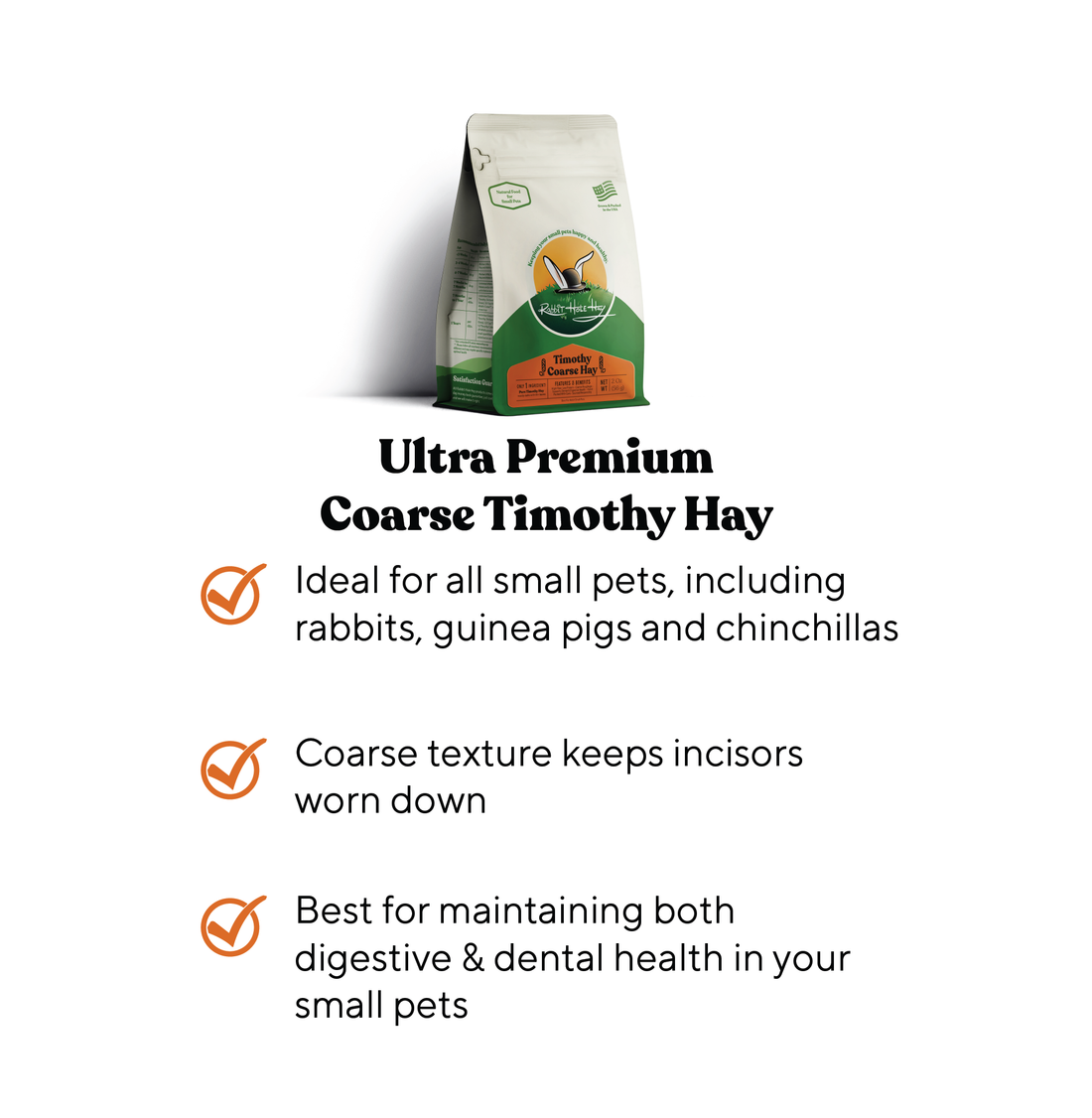

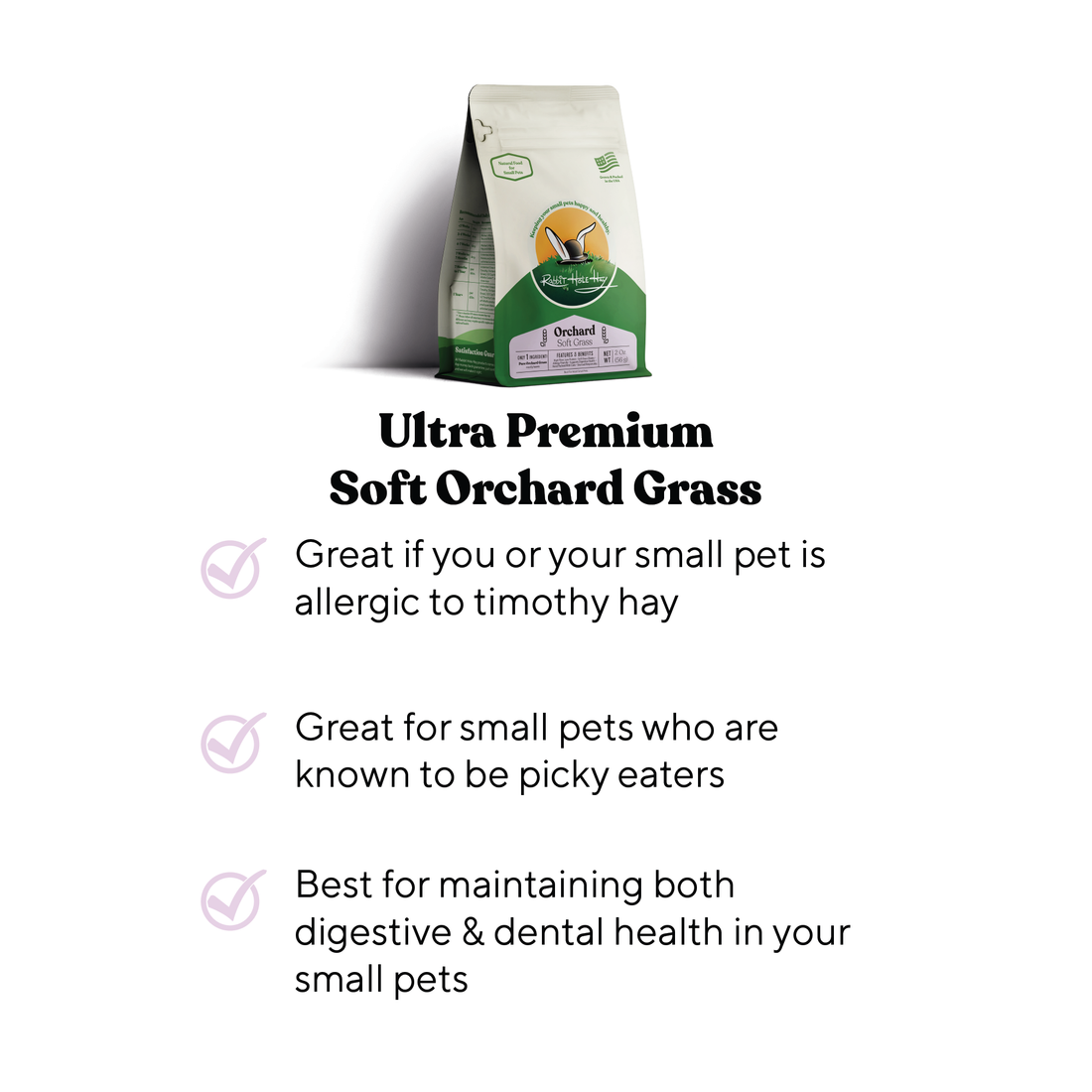

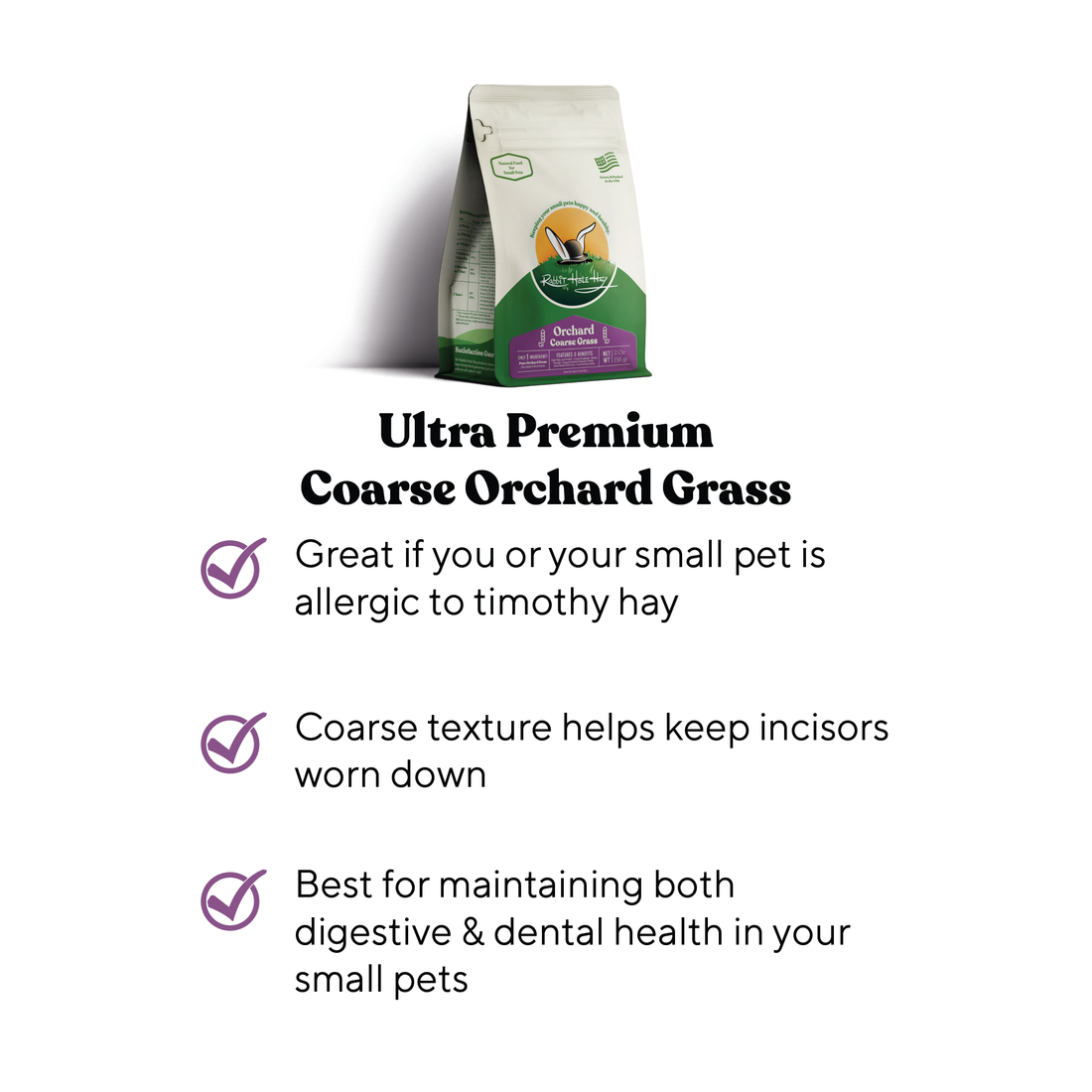



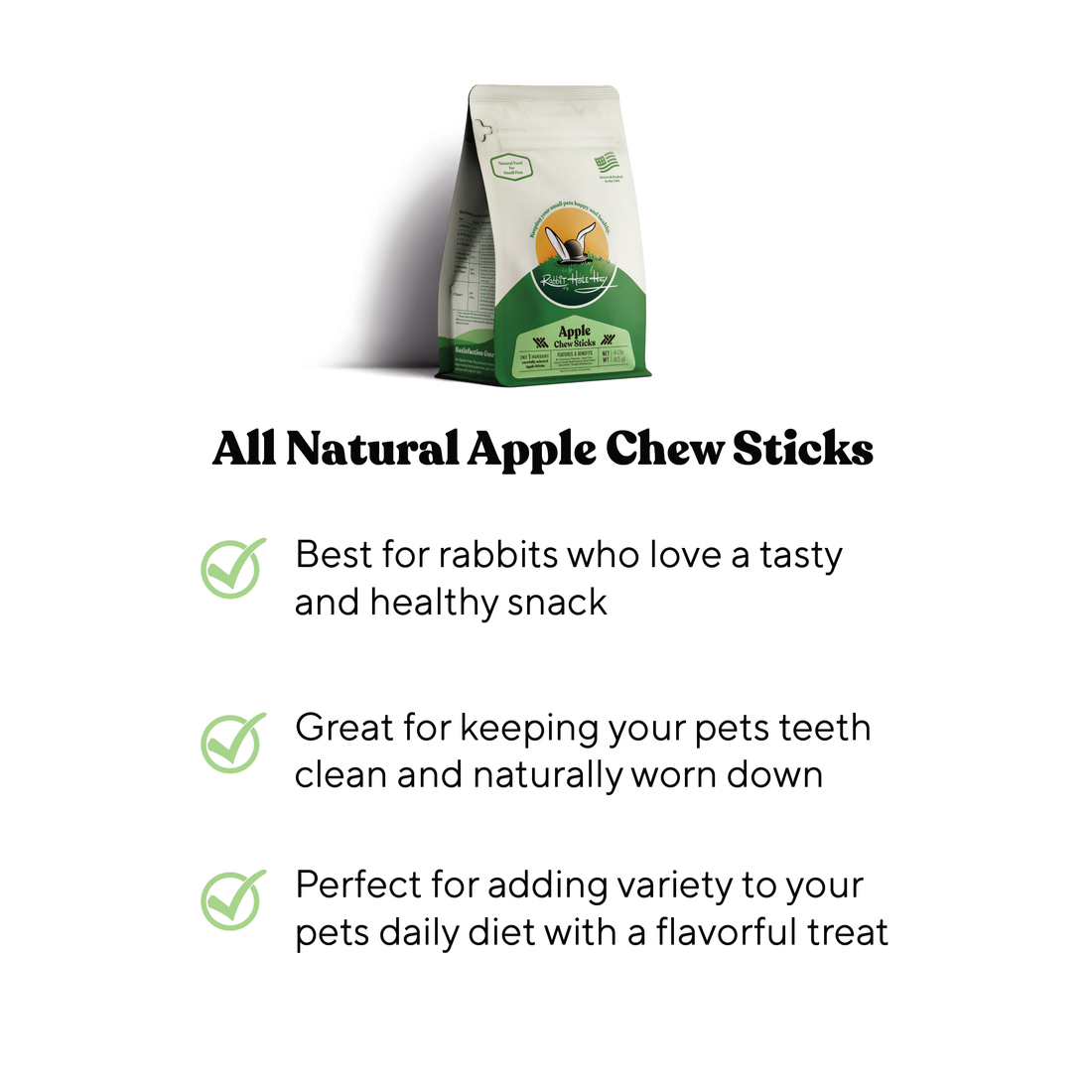






















































Feed baby domestic rabbits mother's milk first. If the doe is gone or not nursing, use Kitten Milk Replacer (KMR)—not cow's milk—then move them onto alfalfa hay and measured alfalfa pellets as they wean around four to eight weeks. Grass hay such as Timothy comes later, once growth slows. This page is for pet kits in your home, not wild nests.
Finding a cold, wrinkled newborn in the palm of your hand feels urgent. That worry is fair. We will walk through how to tell if mom is actually feeding, safe syringe technique, age-by-age amounts, potty help after meals, the weaning timeline, and when to call a rabbit-savvy vet. For the wider hay-first picture, start with our guide to the best rabbit hay for everyday health.

How Do I Know If a Mother Rabbit Is Feeding Her Babies?
Healthy mother rabbits do not hover. Many nursing does visit the nest only once or twice a day, often at night or early morning, to keep predators from noticing the litter. Empty nest time does not automatically mean abandonment.
Before you start hand-feeding, check the kits themselves:
Warm bodies and round, full bellies after a nursing window
Quiet huddling together rather than restless crawling and squealing
A nest still lined with pulled fur or hay, showing mom has returned
Cold, wrinkled kits with sunken bellies need help now. If you are still unsure whether the doe has truly stopped, use our guide on signs a mother rabbit has stopped caring for her babies before you take over the milk job.
What Should I Feed Orphaned Baby Rabbits Instead of Mother's Milk?
Do not use cow's milk. It has the wrong fat and protein balance and can wreck a fragile gut. The usual substitute is powdered Kitten Milk Replacer (KMR). Many caretakers add a small amount of plain acidophilus to support digestion. Goat's milk is only a short stopgap until you can get KMR—not a long-term plan.
Warm the formula to about body temperature. Too hot burns; too cold often gets refused. Mix fresh for each feeding and throw leftovers away. Dirty syringes introduce bacteria fast when kits are this young.
How Much Formula by Age?
Amounts vary by size and brand guidance, but a common home schedule (often split into morning and evening feeds) looks like this:
Newborns: about 5 cc KMR plus ½ cc acidophilus
1 week: about 10–15 cc KMR plus ½ cc acidophilus
2 weeks: about 26–30 cc KMR plus 1 cc acidophilus
3–4 weeks: about 30 cc KMR plus 1 cc acidophilus until solids take over
Weigh kits daily on a gram scale when you can. Steady gain beats chasing a perfect syringe number. If a kit stalls or loses weight for more than a day, call a rabbit-savvy vet or emergency exotic clinic—do not keep guessing with larger volumes.
How Do I Feed a Baby Rabbit Safely With a Syringe?
Feeding baby rabbits is as much about angle and pace as it is about the formula. Aspiration—milk in the lungs—can turn into pneumonia quickly.

Cradle the kit belly-up in one hand, head slightly elevated—not flat on its back like a human baby bottle pose.
Use a soft-tipped oral syringe or a specialty baby-bunny bottle. Hard tips can bruise the mouth.
Let the kit suckle. Do not squeeze hard to finish faster.
Stop at once if milk bubbles at the nose. Wipe, pause, and try a slower pace later.
You are not failing if the first sessions feel clumsy. Let the kit set the pace—this is not a race to empty the syringe.
What Happens After Feeding?
Mother rabbits stimulate pee and poop after nursing. Without that help, hand-raised kits can bloat. After each meal, use a warm, damp cotton ball or soft cloth and stroke gently from belly toward the genital area until urine (and often soft stool) appears. Early stool may look yellowish or greenish—that is common while they are still on formula.
When Should Baby Rabbits Start Eating Hay and Pellets?
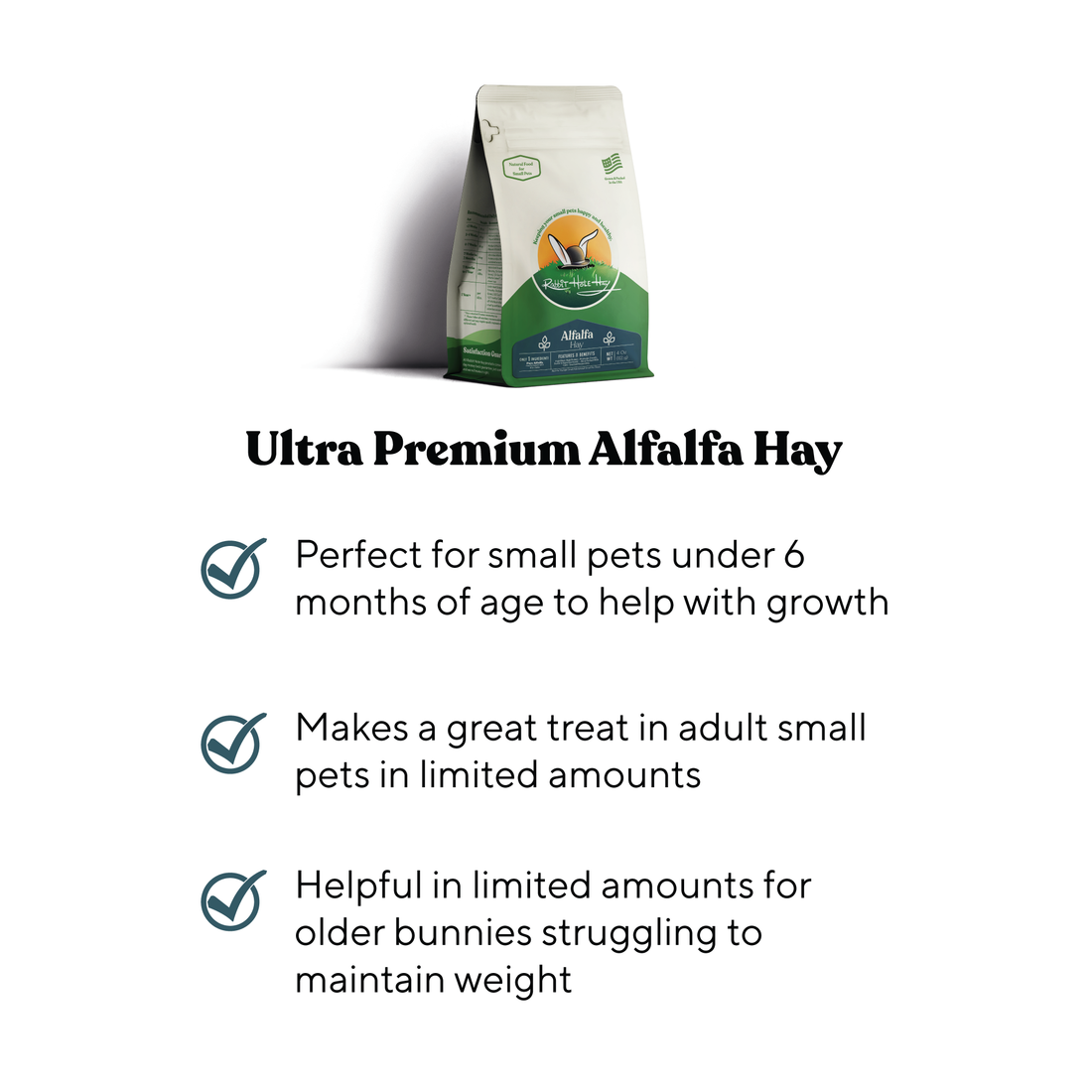
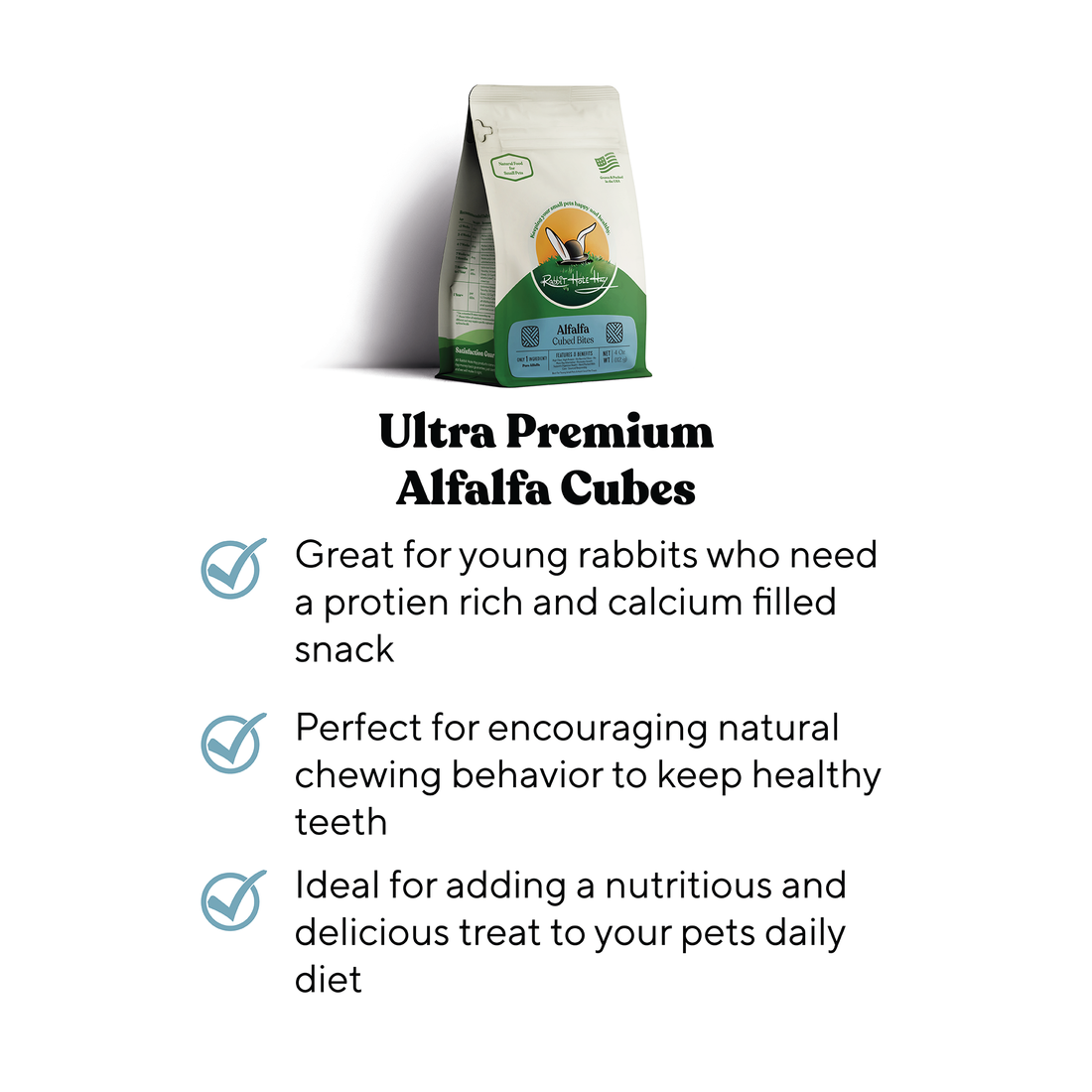
Around three to four weeks, many kits begin nibbling solids while still drinking milk. Offer soft, fragrant alfalfa hay in the nest area. Alfalfa’s higher protein and calcium support growth; it is the right hay lane for most young domestic rabbits.
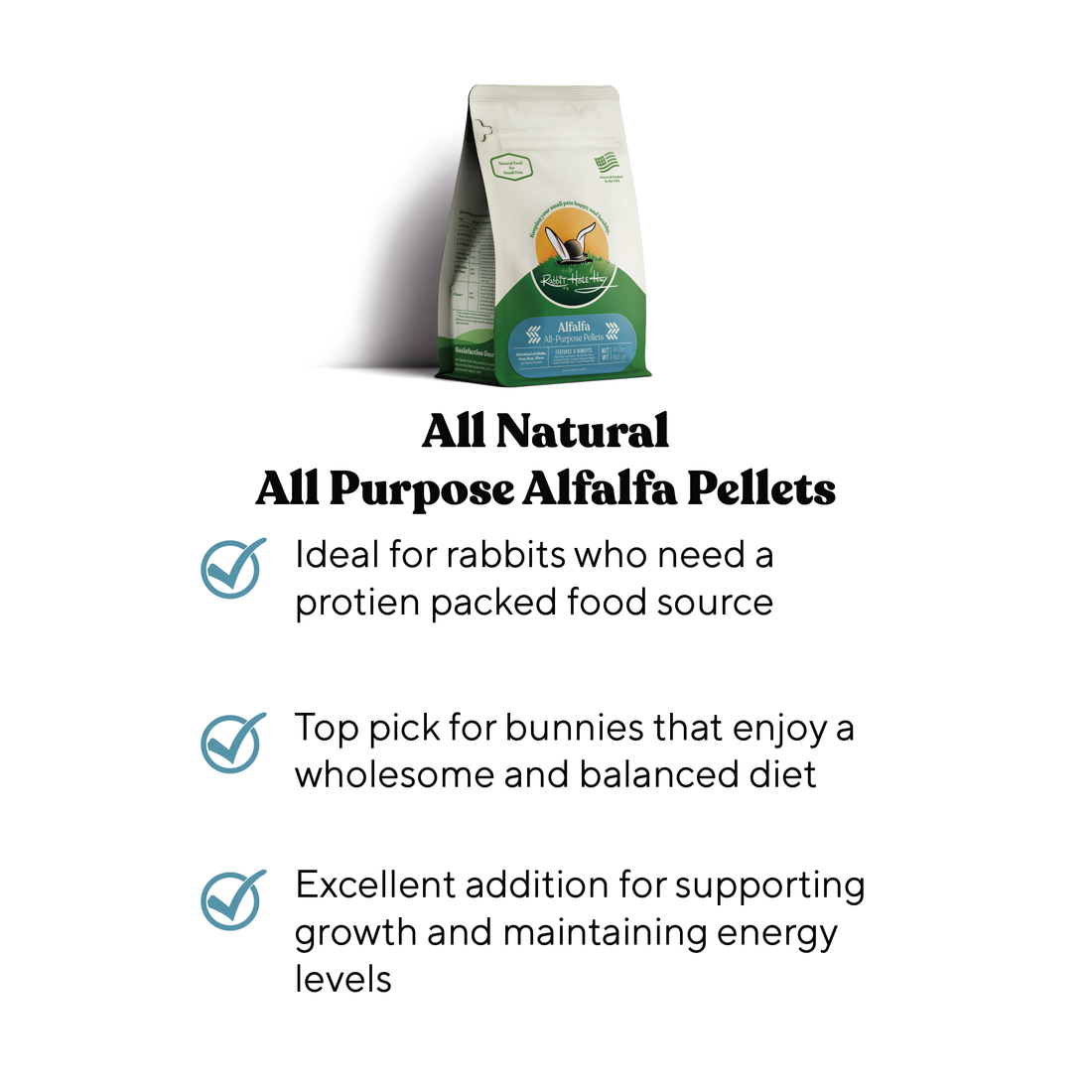
By about five weeks, add a small scoop of plain alfalfa-based pellets made for young rabbits—no seed mixes or sugary treats. Fresh water in a shallow dish should be available once they are exploring solids. Hold leafy greens until closer to eight to ten weeks, and introduce them one type at a time in tiny amounts while you watch droppings.
House Rabbit Society still puts fiber at the center of a rabbit’s plate for life. Early alfalfa is the growth version of that rule; adult grass hay comes later. For the full age handoff—including when Timothy replaces alfalfa—use our guide to changing hay as a rabbit grows.

How Long Should Baby Rabbits Stay on Milk, and How Do I Wean Them?
Most domestic kits need milk support into the six-to-eight-week window even after hay appears. Weaning is a fade, not a flip switch.
Week 4: Keep full milk feeds; put alfalfa hay where they can find it
Week 5: Add a small pellet portion; trim milk volume slightly if solids are being eaten
Week 6: Lean harder on hay and pellets; many kits drop to one milk feed
Weeks 7–8: Finish milk if weight and droppings stay steady on solids
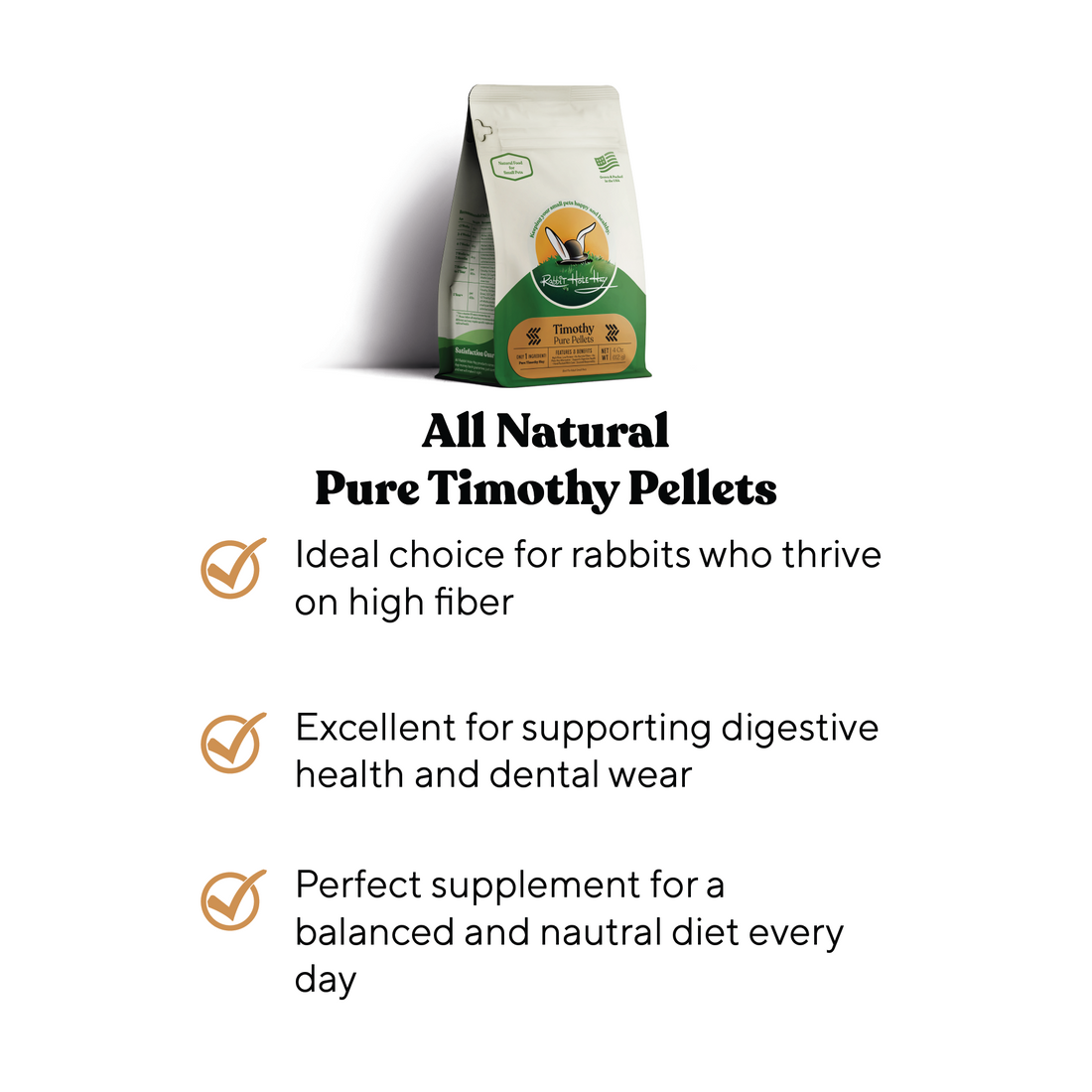
If stools go soft or watery after a jump in pellets or greens, slow down. Their gut is still adjusting. Around six months, most healthy rabbits move from alfalfa toward Timothy or another grass hay—save that switch for later and use the age-transition guide linked above when they are older juveniles.
Is Feeding Wild Baby Rabbits the Same as Feeding Pet Kits?
No. Wild cottontails and jackrabbits have different needs, legal limits, and rehab pathways. If you found outdoor kits, do not treat this domestic formula schedule as a backyard rescue plan.
Use our article on what to feed a wild baby rabbit and contact a licensed wildlife rehabilitator when you can. Stay here for pet rabbits you are raising or fostering indoors.
What If a Baby Rabbit Won't Eat, Gets Bloated, or Has Runny Stool?
Refusal often starts with temperature or flow. Recheck that the formula is warm, not hot, and that the syringe is not clogged or blasting milk. If a kit still will not take formula after a calm retry, get veterinary help—neonates do not have a long window.
Mild bloating can follow air swallowing or a too-fast feed. Slow the next meal and gently massage the belly in soft circles. Firm, painful bloating with no stool after potty stimulation is an emergency, not a wait-and-see night.
Soft yellow stool can be normal early on. Ongoing diarrhea, especially with lethargy or weight loss, needs a vet check for formula intolerance or infection. Keep tools clean between kits so one sick stomach does not become a litter problem.
A runt who cannot compete at the nest may need a private syringe session after siblings eat. Same formula, same angle—just less competition. Track weight so you know whether the extra attention is working.
What Supplies Help When You Are Hand-Feeding Baby Rabbits?
Having the kit ready before a crisis beats a midnight store run:
Powdered Kitten Milk Replacer and plain acidophilus
Soft-tipped oral syringes or a small-animal nursing bottle
A digital gram scale for daily weights
Warm water, cotton balls or soft cloths for potty stimulation
Shallow dishes for water and early pellets
Fresh alfalfa hay now; plan for Timothy hay once they are older juveniles
Sanitize syringes between uses. A feeding log with time, volume, weight, and stool notes turns fuzzy worry into something you can show a vet in one screenshot.
For a longer walkthrough from newborns through weaning, keep our feeding baby rabbits eBook nearby—same care steps, more space to print and mark up.
Key Takeaways for Feeding Baby Domestic Rabbits
Mother's milk first; orphaned kits need KMR (not cow's milk), warm formula, and slow syringe feeds.
Confirm true neglect before you intervene—full bellies and warm huddles often mean mom is still nursing at night.
Stimulate potty after every hand-feed; then introduce alfalfa hay and measured alfalfa pellets as weaning begins.
Fade milk over weeks four through eight while watching weight and droppings; grass hay waits until later growth stages.
Wild kits belong with rehabbers; use the wild-feeding guide for outdoor nests, and keep these steps for pet kits at home.
Steady hands, clean tools, and a hay pile that still smells like grass beat midnight guessing. When something feels off—cold kits, stalled weight, milk at the nose—pause and get rabbit-savvy help rather than forcing another hard squeeze of formula.





Comments