













































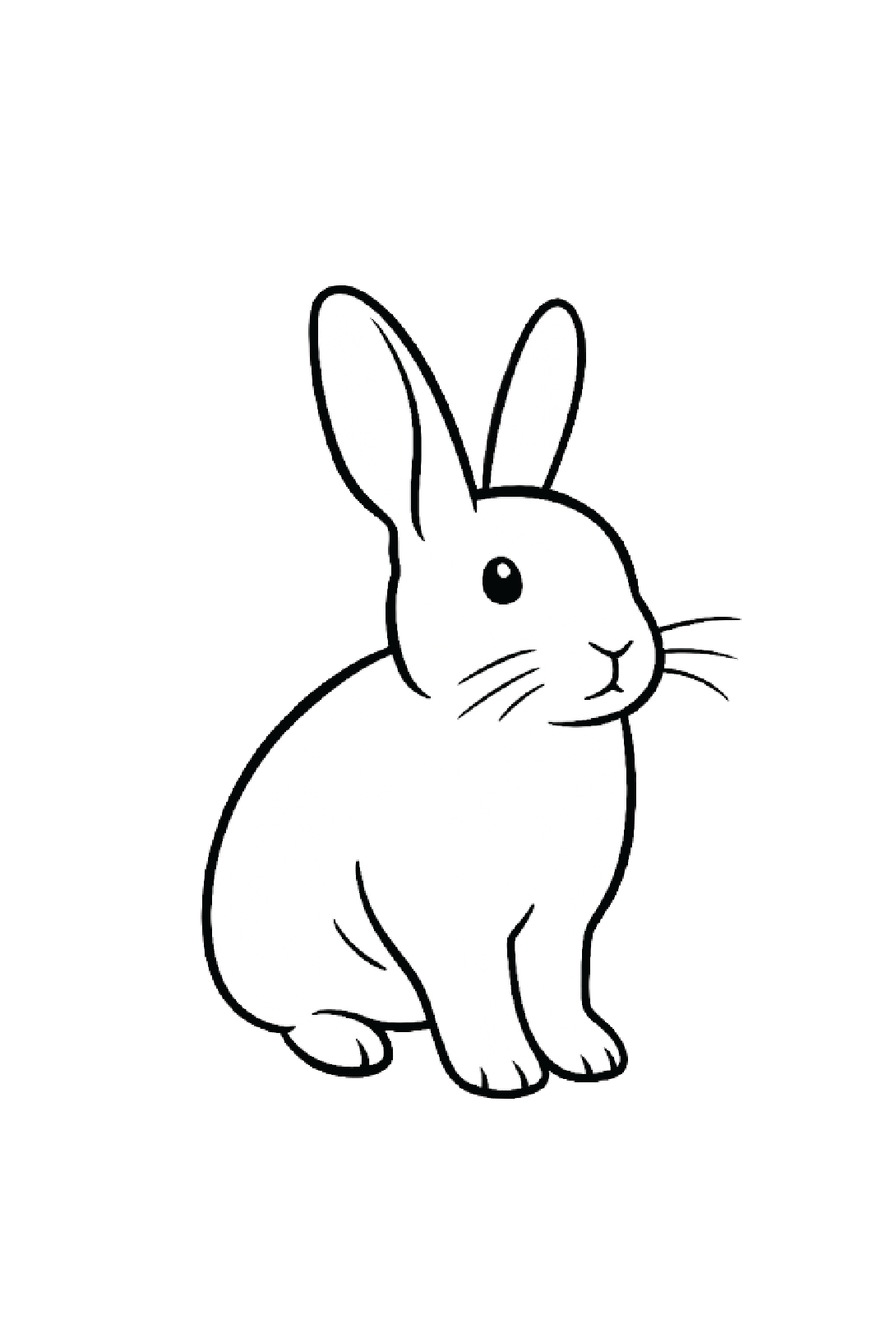

Most rabbits who “won’t eat hay” are choosing something easier or tastier first—extra pellets, fruit, dusty hay, or a pile stuck in a corner they never visit. Fix the setup, swap in fresh grass hay, and trim treats before you decide they are simply picky. Hay should be about 80% of the diet; everything else rides behind it.
Watching a full hay pile sit untouched while your rabbit begs for snacks is frustrating. That worry is fair. We will walk through habits, freshness, litter-box placement, age-right hay, and when refusal means a vet call—not a shopping trip. For the bigger hay-first picture, start with our guide to the best rabbit hay for everyday health.

Why Won't My Rabbit Eat Hay in the First Place?
Rabbits learn what “real food” looks like from what shows up every day. If the bowl is heavy on pellets and the fridge door means banana chips, hay starts to feel like the boring option. That is not attitude for attitude’s sake—it is training you did not mean to give.
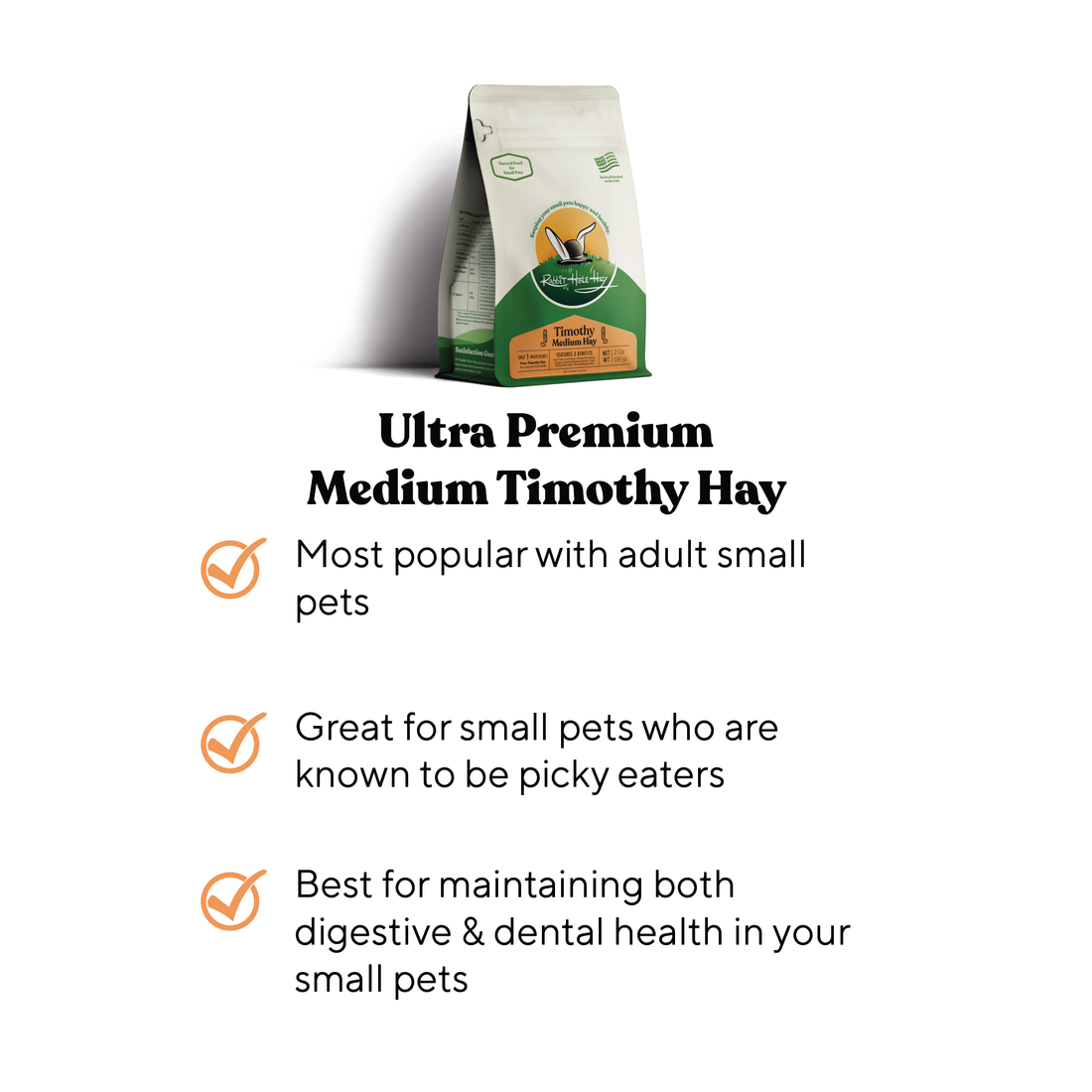
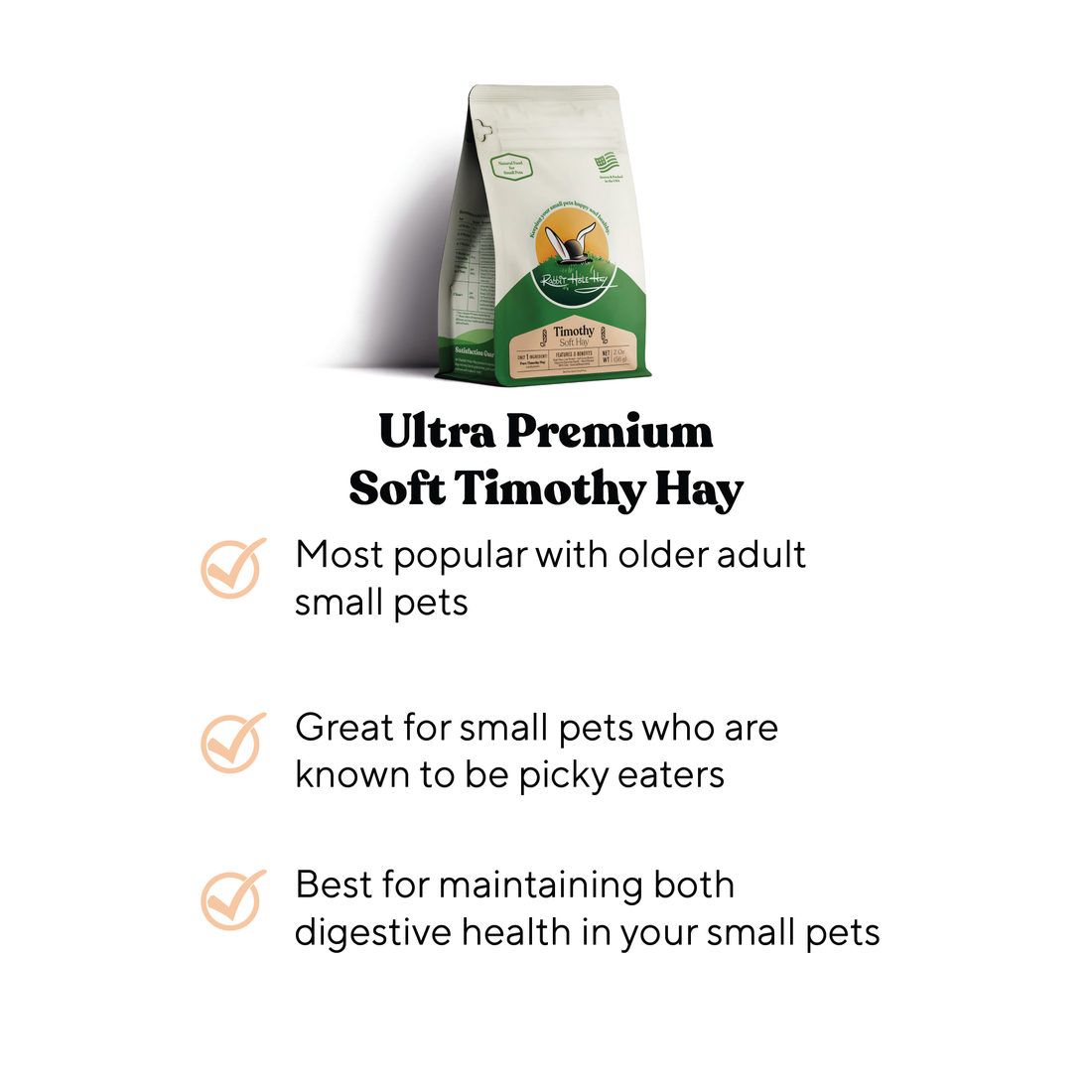
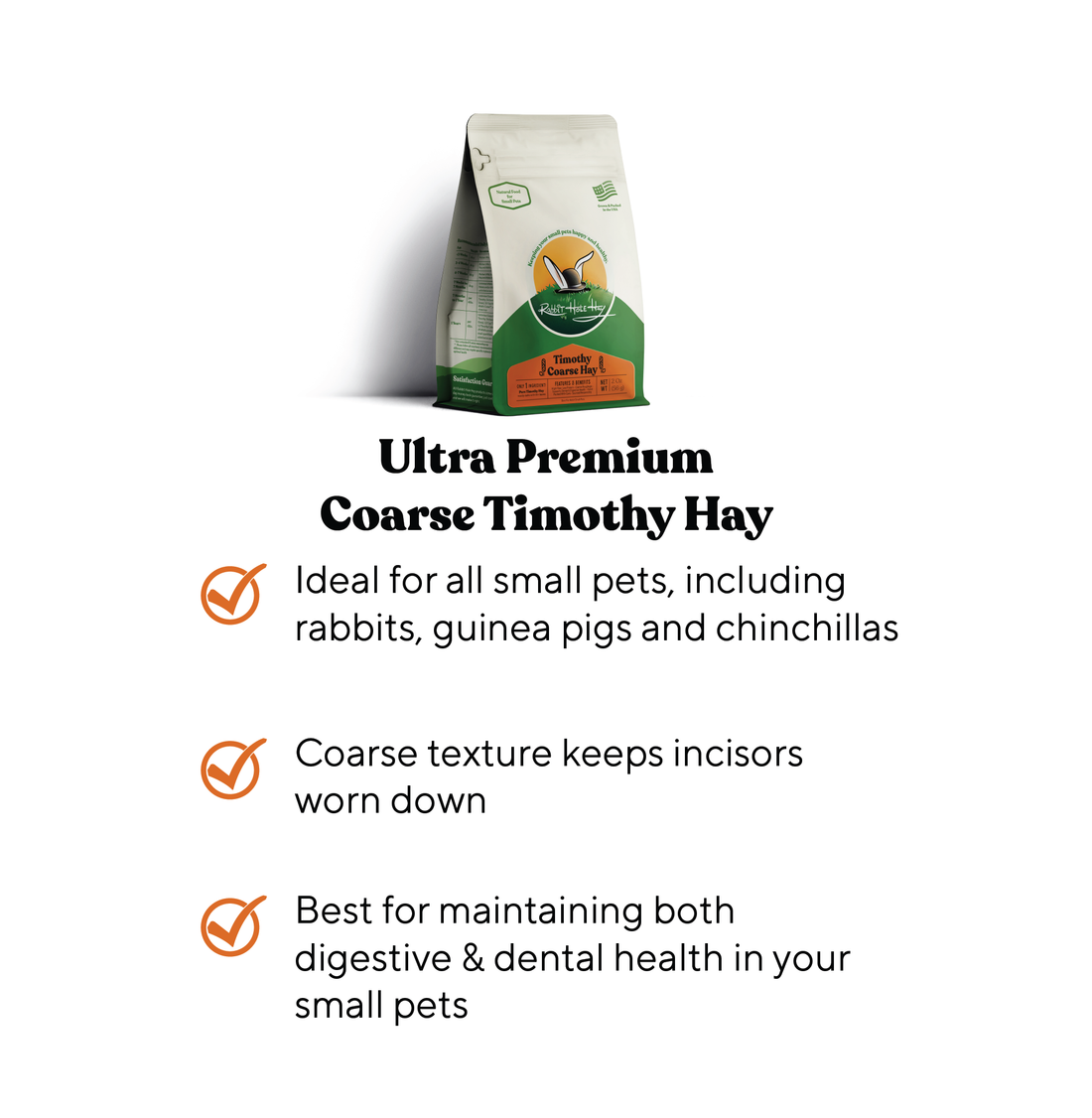
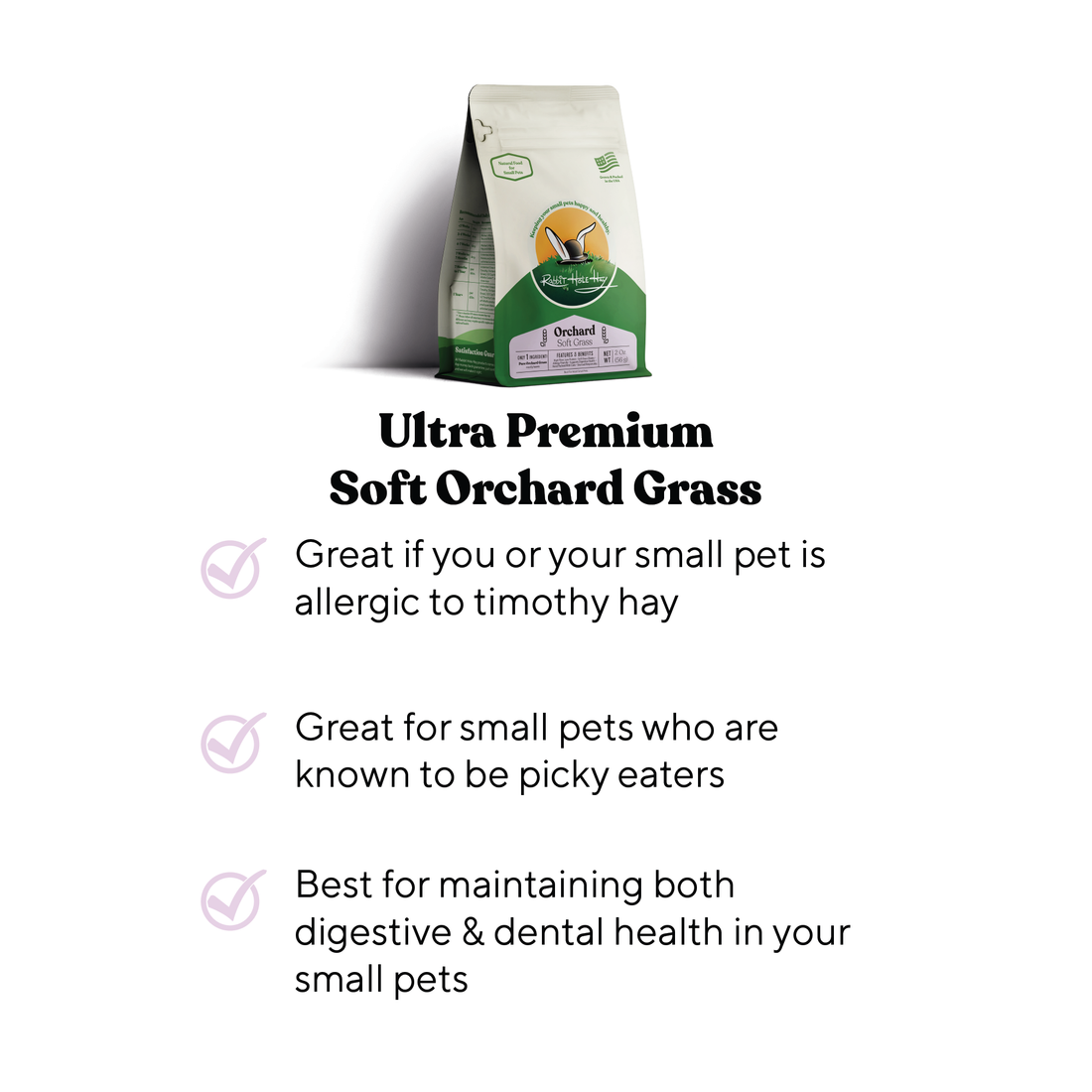
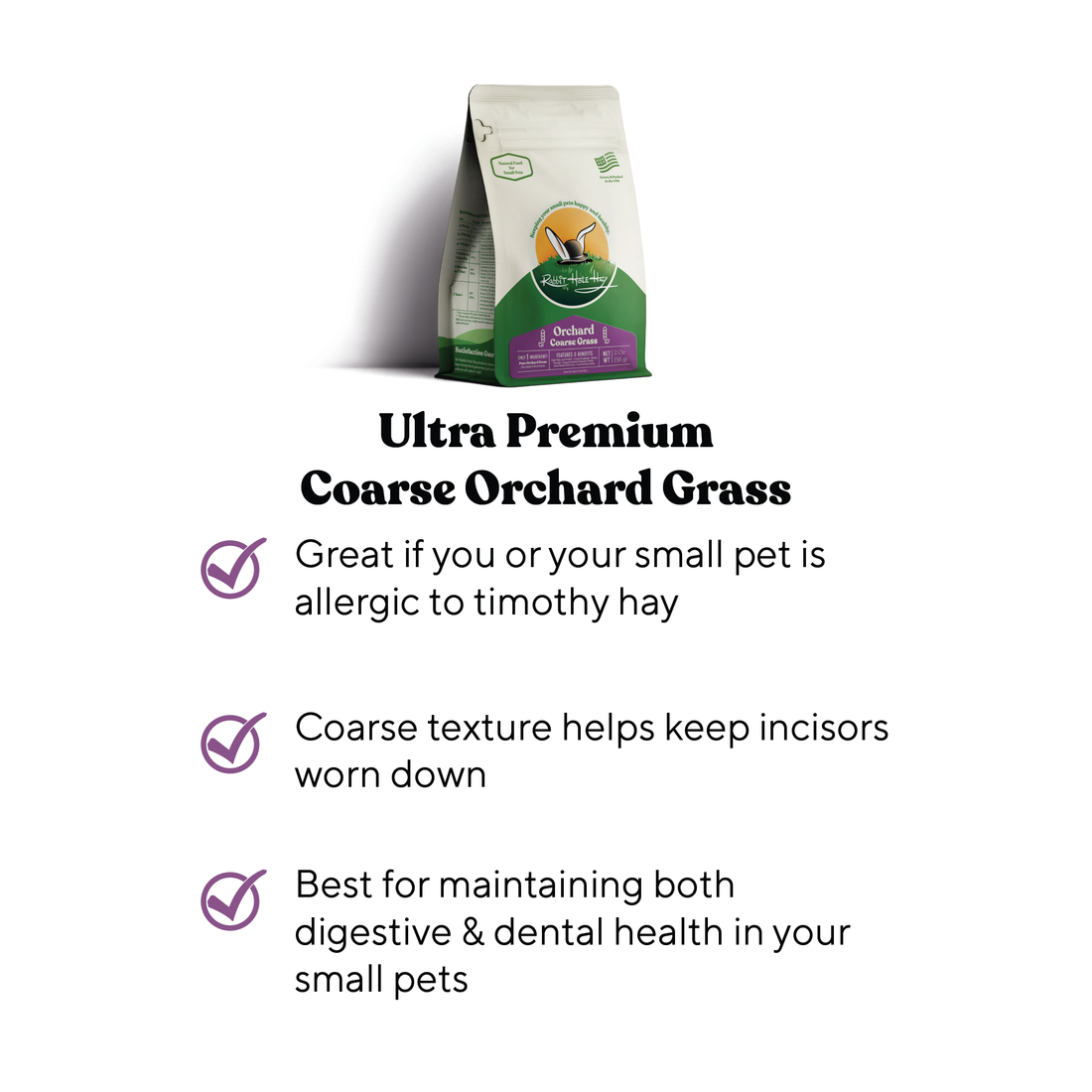
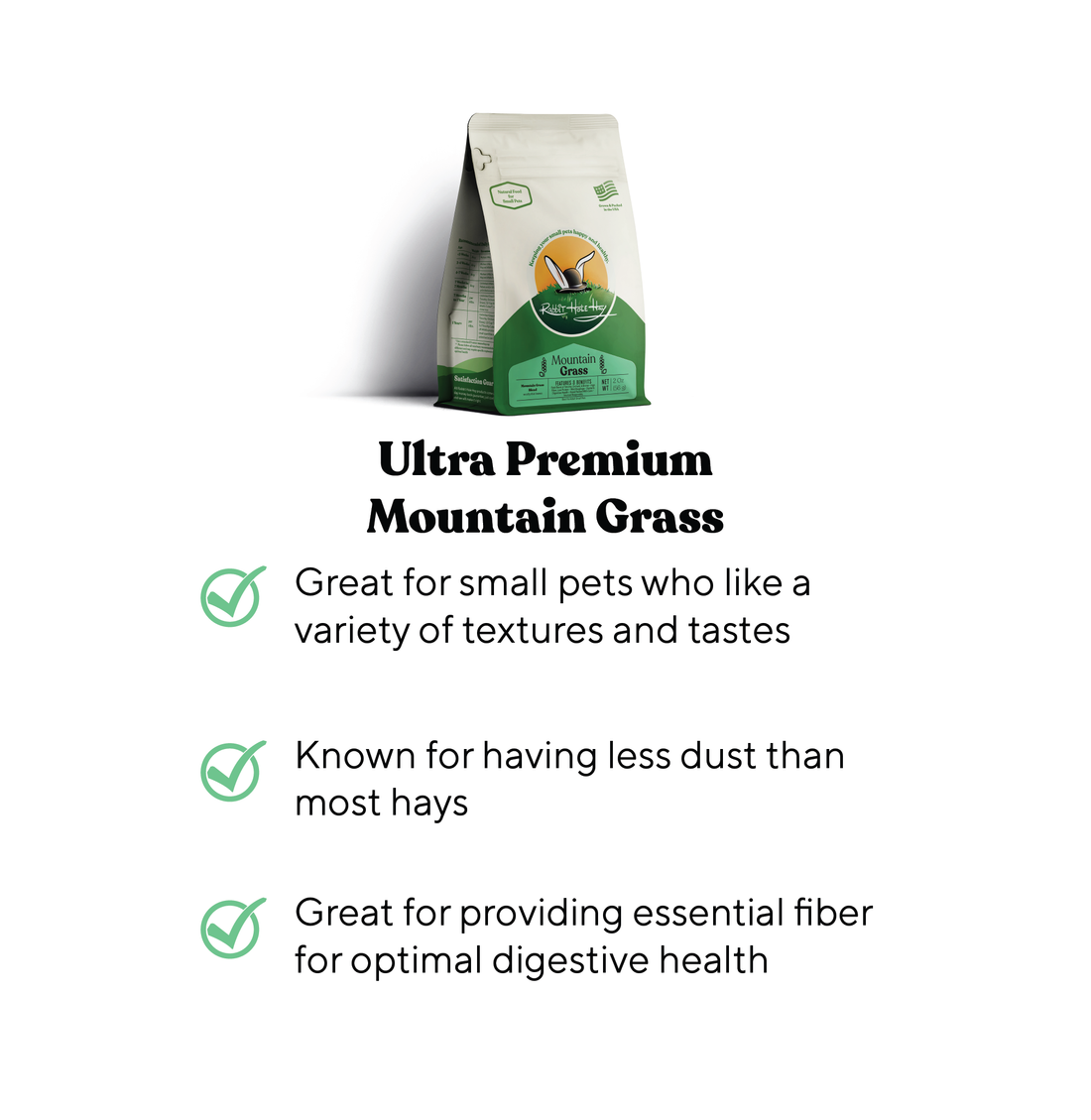
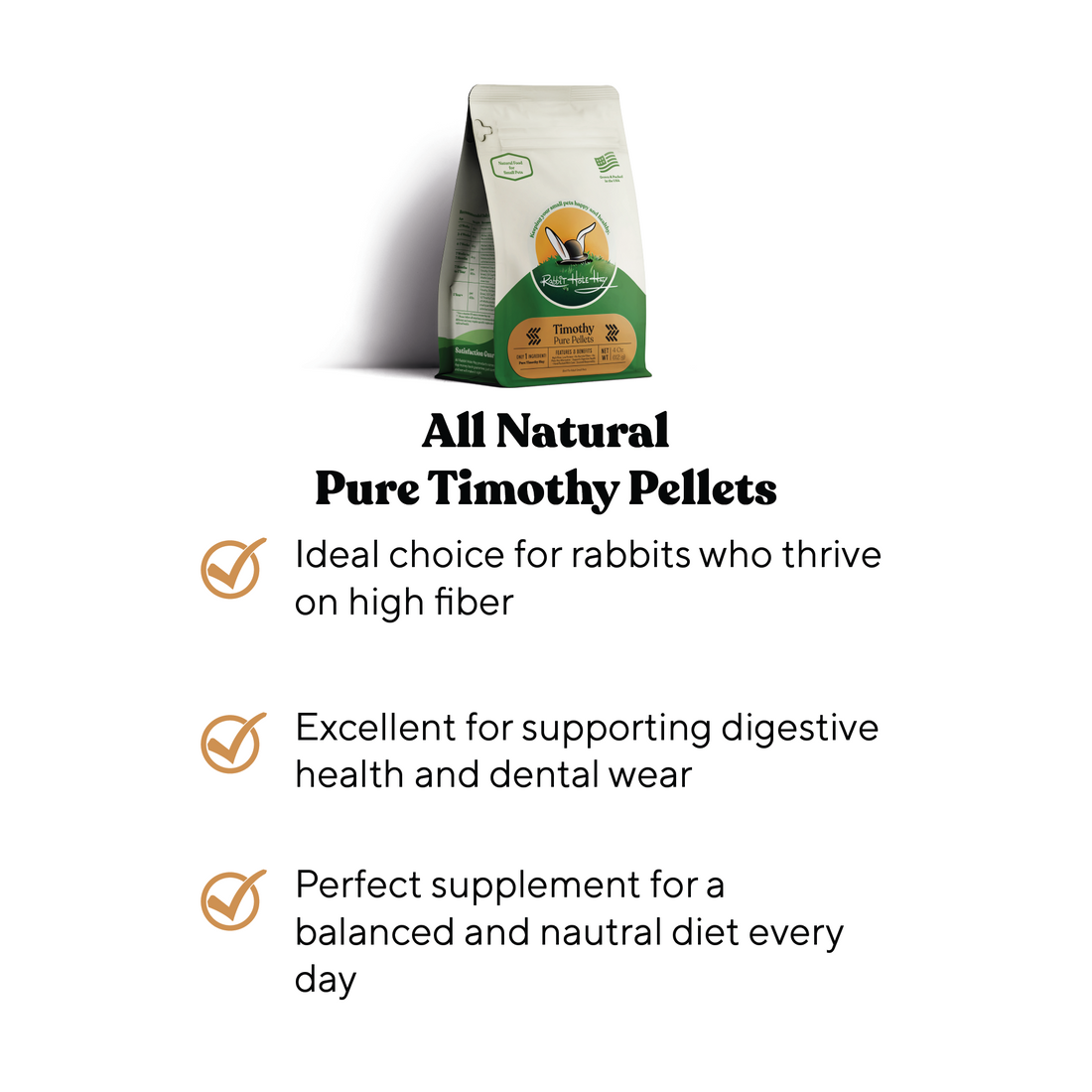
Adult grass hays such as Timothy Hay, Orchard Grass, and Mountain Grass keep the gut moving and wear teeth down with every chew. Skip that fiber and you raise the odds of gut slowdowns, soft stools, and dental pain that makes chewing even less appealing. House Rabbit Society keeps hay at the center for a reason: it is the meal, not the garnish.
Encouraging hay eating is less about clever tricks and more about changing what wins on the floor. Cut pellets to the measured adult portion, save fruit for rare pinches, and put hay where your rabbit already hangs out. Taste still matters—but it rarely beats a crowded snack schedule.
Does Hay Freshness Change Whether a Rabbit Eats It?
Yes. Stale, dusty, or yellowed hay smells like last week’s leftovers. You would push that plate away too.
Look for green stems, a clean grassy smell, and stems that still feel springy rather than brittle dust. Open a new bag when the current pile looks faded or smells flat. Store what you are not using in a cool, dry spot in a breathable bag—sealed plastic traps moisture and can turn a good harvest musty.

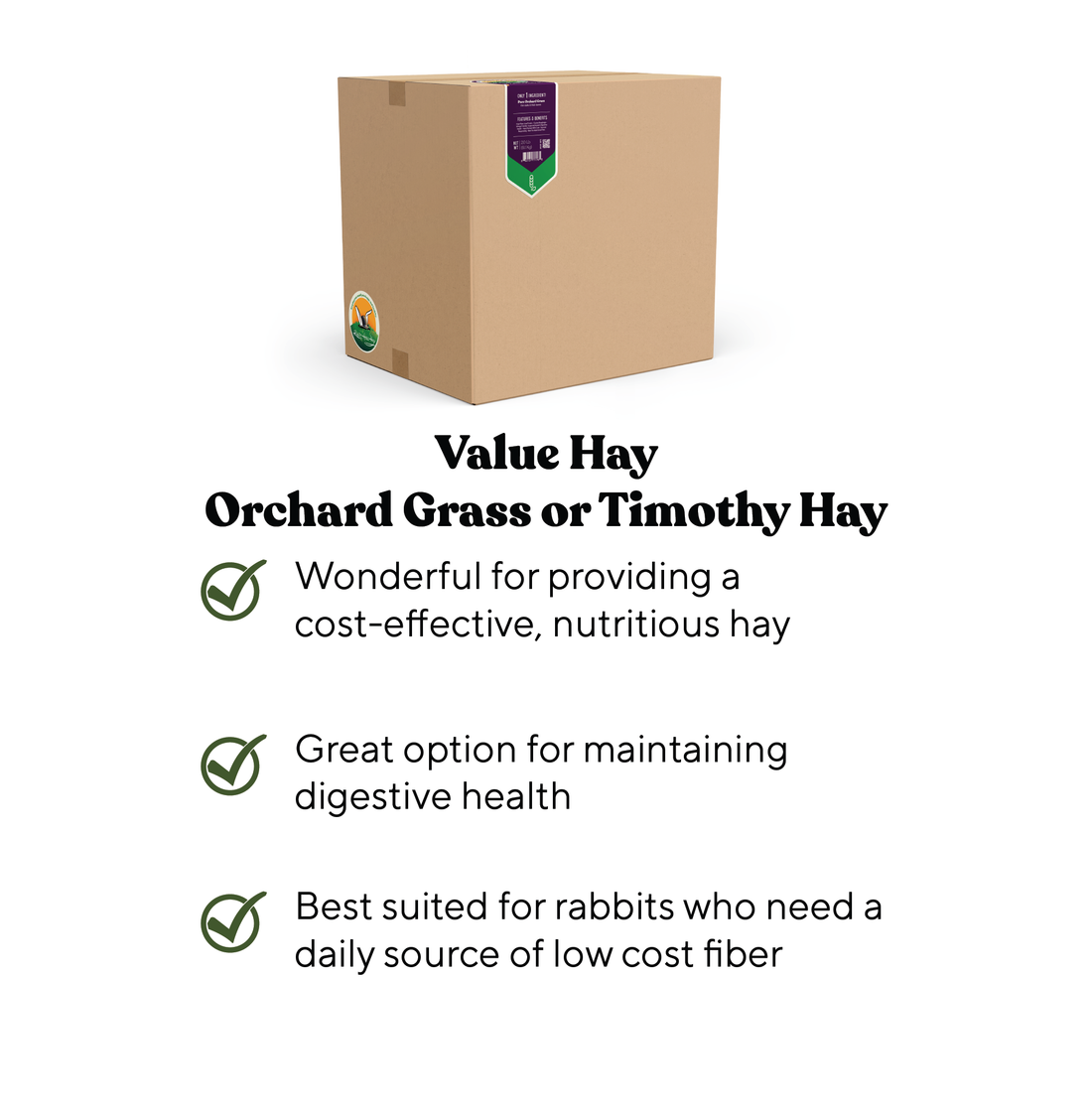
If pet-store bricks keep disappointing you, try a farm-direct option from a fresh hay collection so you can compare smell and texture side by side. Freshness will not fix every refusal, but it removes the easiest excuse for a picky nose.
How Does Setup and Placement Affect Hay Eating?
Location matters as much as brand. Many rabbits graze while they use the litter box. Hay in a lonely rack across the room can sit untouched while the litter corner stays empty of stems.
Put a generous handful over or beside the litter pan, then keep a second pile in the lounge area. Refresh both daily so yesterday’s crumbs do not become today’s only choice. Overfilling one giant mountain that sits for three days teaches them that hay is always “old.”
Water counts too. A dirty bowl or clogged bottle can quietly cut appetite. Clean and refill every day so drinking—and the chewing that follows—stays easy.
Litter-box hay: place where they already toilet
Second station: lounge or hideout so grazing is never a special trip
Daily refresh: swap out wilted or soiled stems instead of topping off forever
Small layout changes often move the needle faster than buying a fifth treat recipe. If the setup is already solid and you still need volume tactics, use our five steps for getting rabbits to eat more Timothy Hay for the longer playbook.
How Can I Get My Rabbit to Eat More Hay?
Once freshness and placement are honest, build a simple routine. Offer more than one grass type for a week—Timothy, Orchard, Mountain—and watch which pile disappears first. Some rabbits pick a favorite stem texture the way people pick a favorite chip.

Measure adult pellets so they cannot fill up before hay.
Limit sugary produce to tiny, rare servings.
Mix two grass hays in the same rack for a few days, then leave the winner as the everyday staple.
Refresh litter-box hay every morning and evening if the space gets soiled fast.
Keep a dry, breathable bag of backup hay so you never run out midweek.
You are not bribing them with dessert. You are making hay the easiest, freshest thing in the room. Use the Timothy steps guide when you need a fuller volume checklist; keep the setup and freshness fixes from this page in play every day.
Which Hay Fits Baby Rabbits Versus Adults?
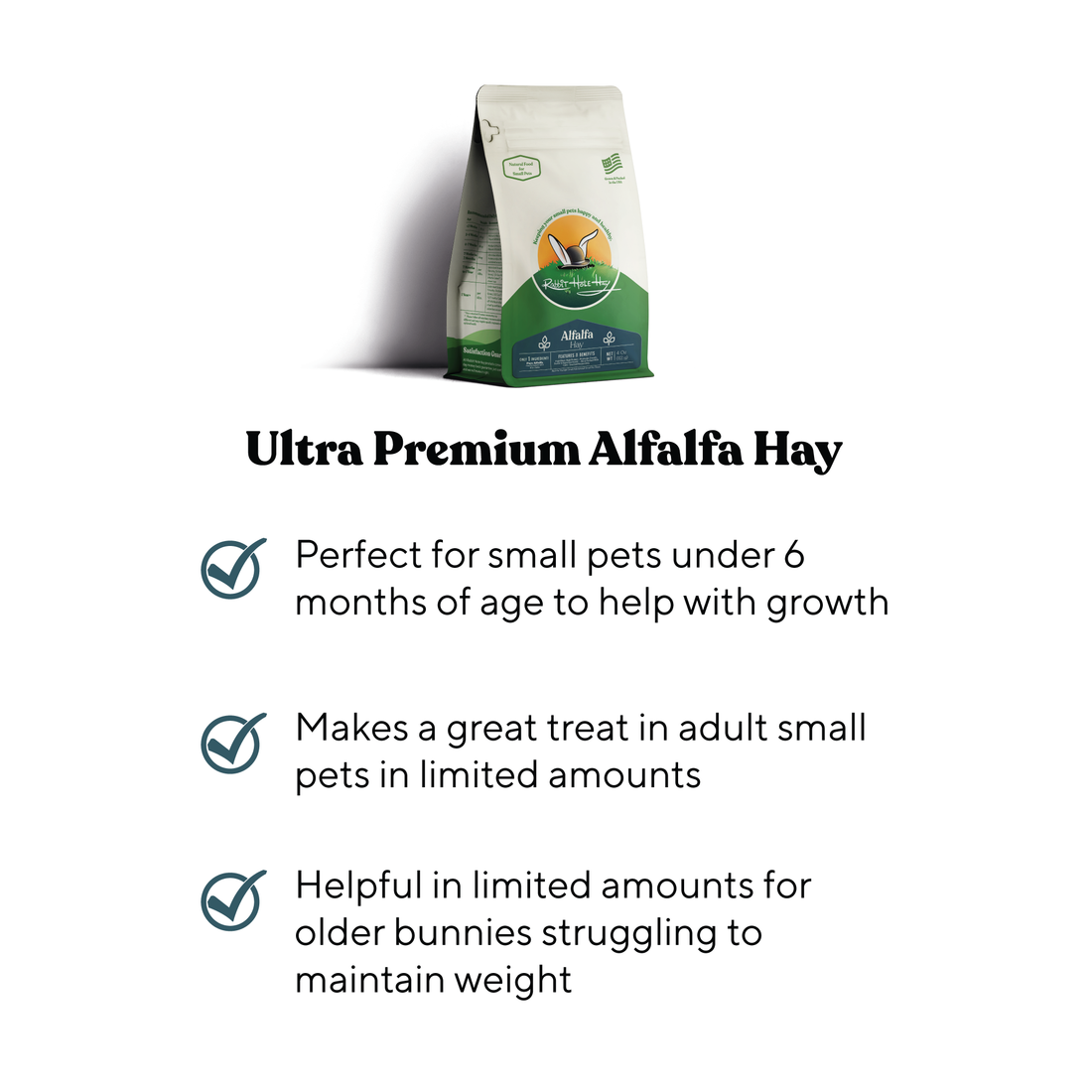
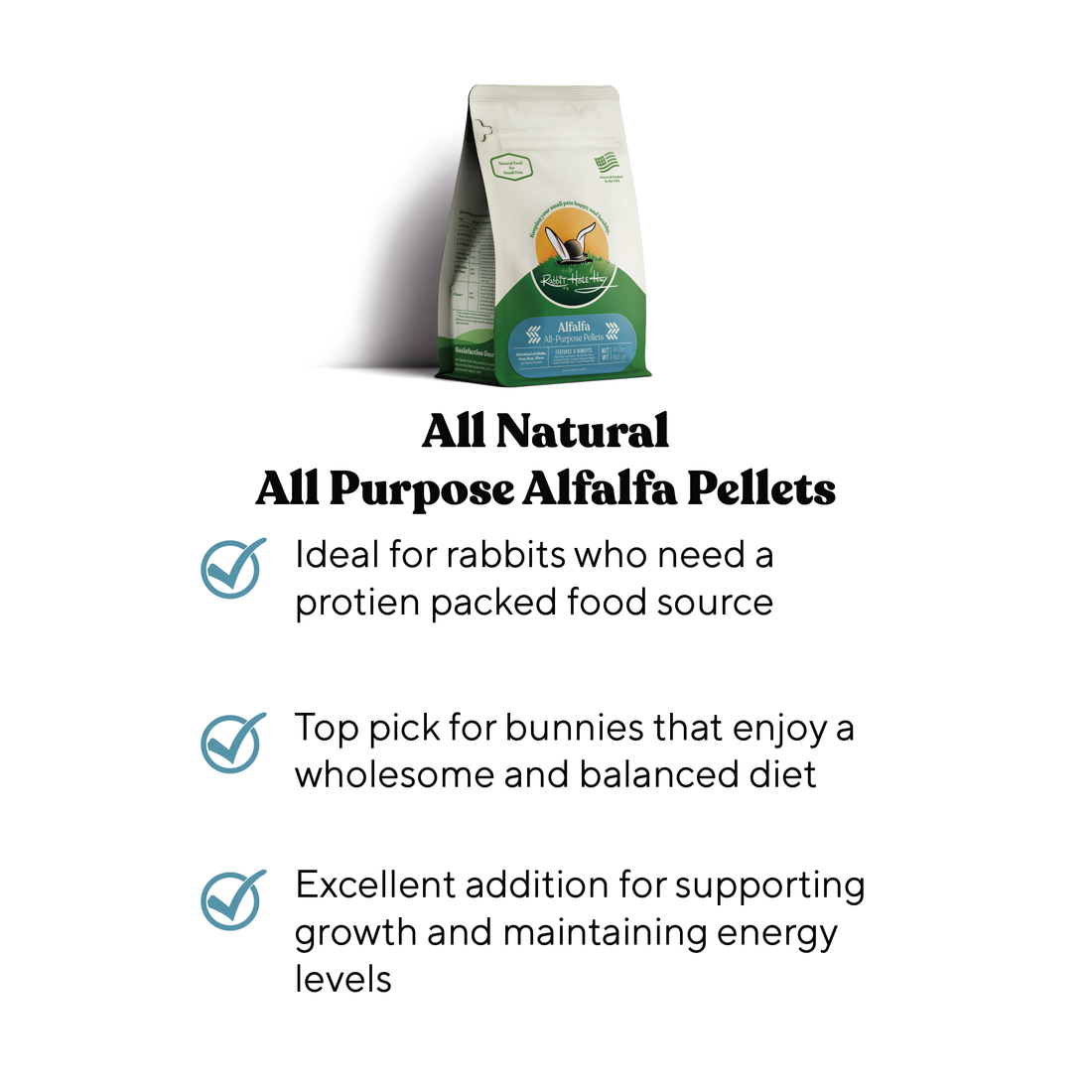
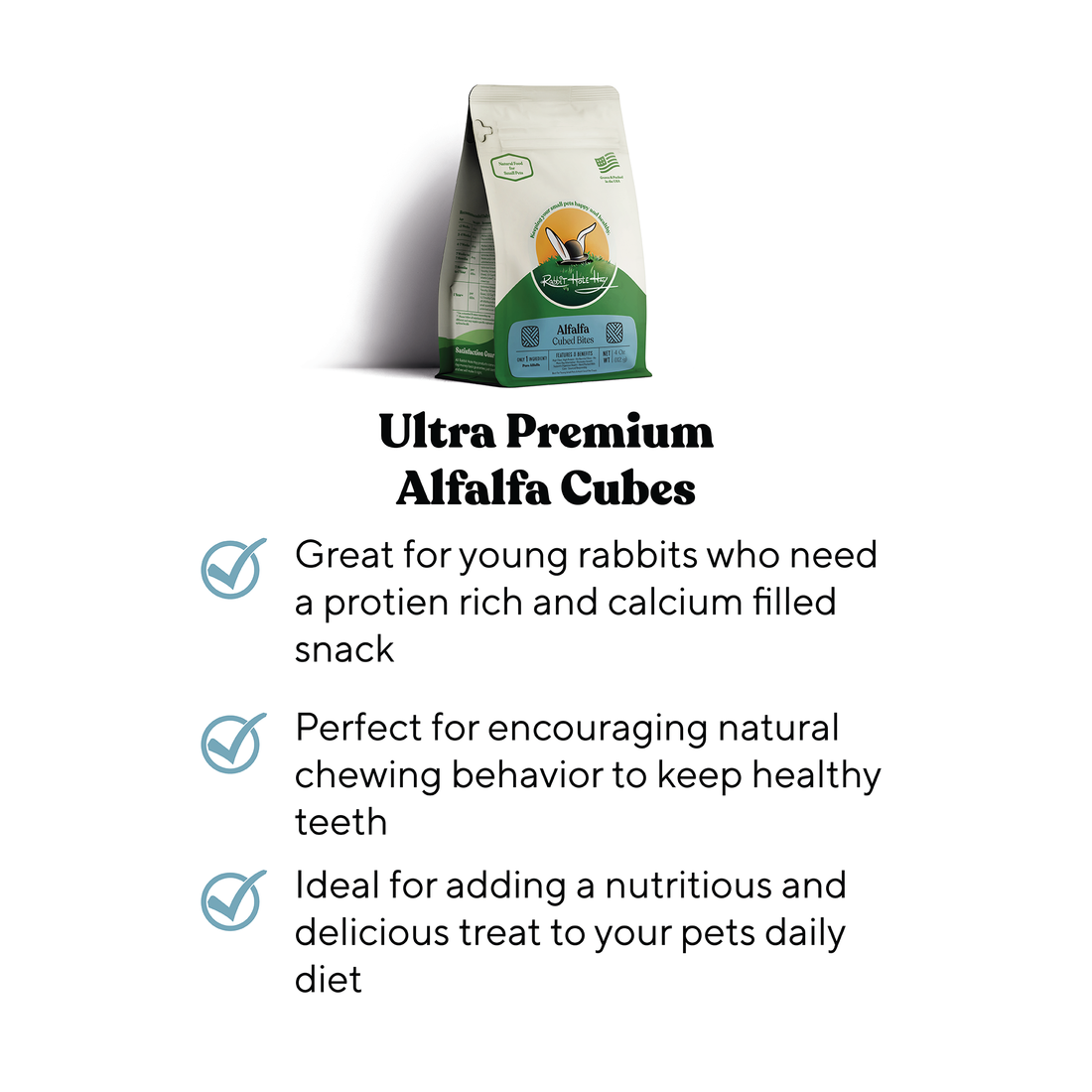
Young rabbits under about seven months need extra calories for growth. That is when Alfalfa Hay earns its place—higher protein and calcium than adult grass hay. Pair it with age-right pellets and a rabbit-savvy plan for greens later.
Once growth slows, switch to adult grass hays so calorie-dense alfalfa does not become a soft middle for life. Sudden total swaps can stall appetite, so blend old and new over a week or two while you watch droppings. For the full age handoff, see our guide to changing hay as a rabbit grows.

When Should I Worry That Refusing Hay Means Illness?
A rabbit who ignores stale hay after you fixed treats and placement is one story. A rabbit who suddenly refuses hay, pellets, and favorite greens is another. Painful teeth, gut stasis risk, and other illness can shut down chewing fast—and rabbits hide discomfort well.
Call a rabbit-savvy vet the same day if appetite drops across the board, droppings shrink or stop, or your rabbit seems hunched and quiet. Do not wait to “see if they get hungry later.” An empty gut can turn dangerous quickly, and you are not overreacting by calling.
If only hay disappears while other favorites still go, keep adjusting setup and freshness—and tell your vet about the change at the next visit so they know what you already tried at home.
Key Takeaways
Most hay refusals start with competition from pellets and treats, tired hay, or a pile in the wrong corner—not a rabbit who “hates fiber.” Fix those first, match hay to life stage, and treat a sudden full appetite crash as urgent.
Make grass hay the main course; measure pellets and keep fruit rare.
Refresh fragrant hay daily and park it by the litter box plus a lounge spot.
Use alfalfa for growing kits, adult grass hays afterward, and call a rabbit vet if all eating stops.
When you want the full diet picture in one place, open the Hay Is for Rabbits guide. Stocking a few grass varieties side by side is often the simplest way to turn “won’t eat hay” into “which pile first?”




Comments