















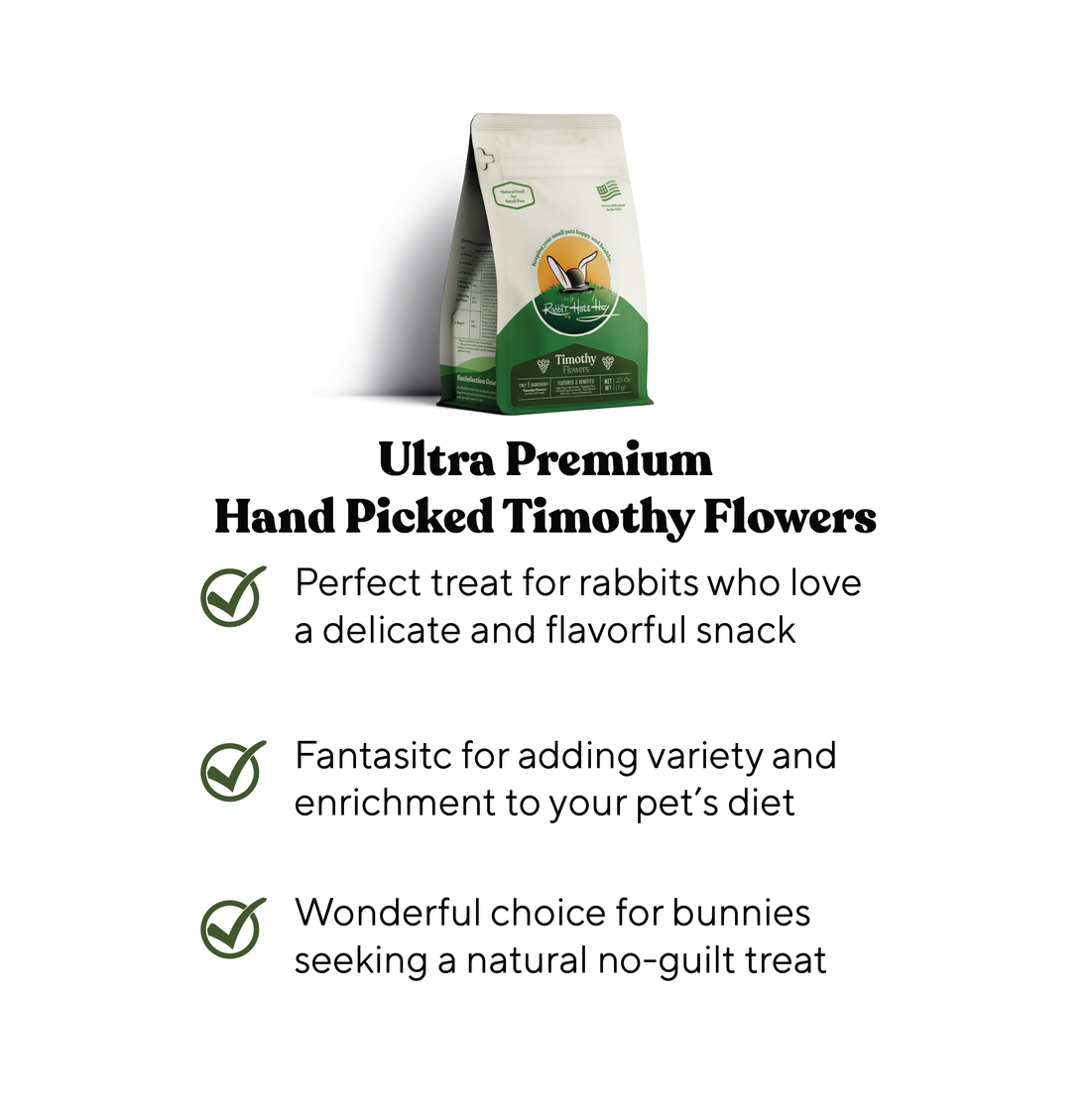

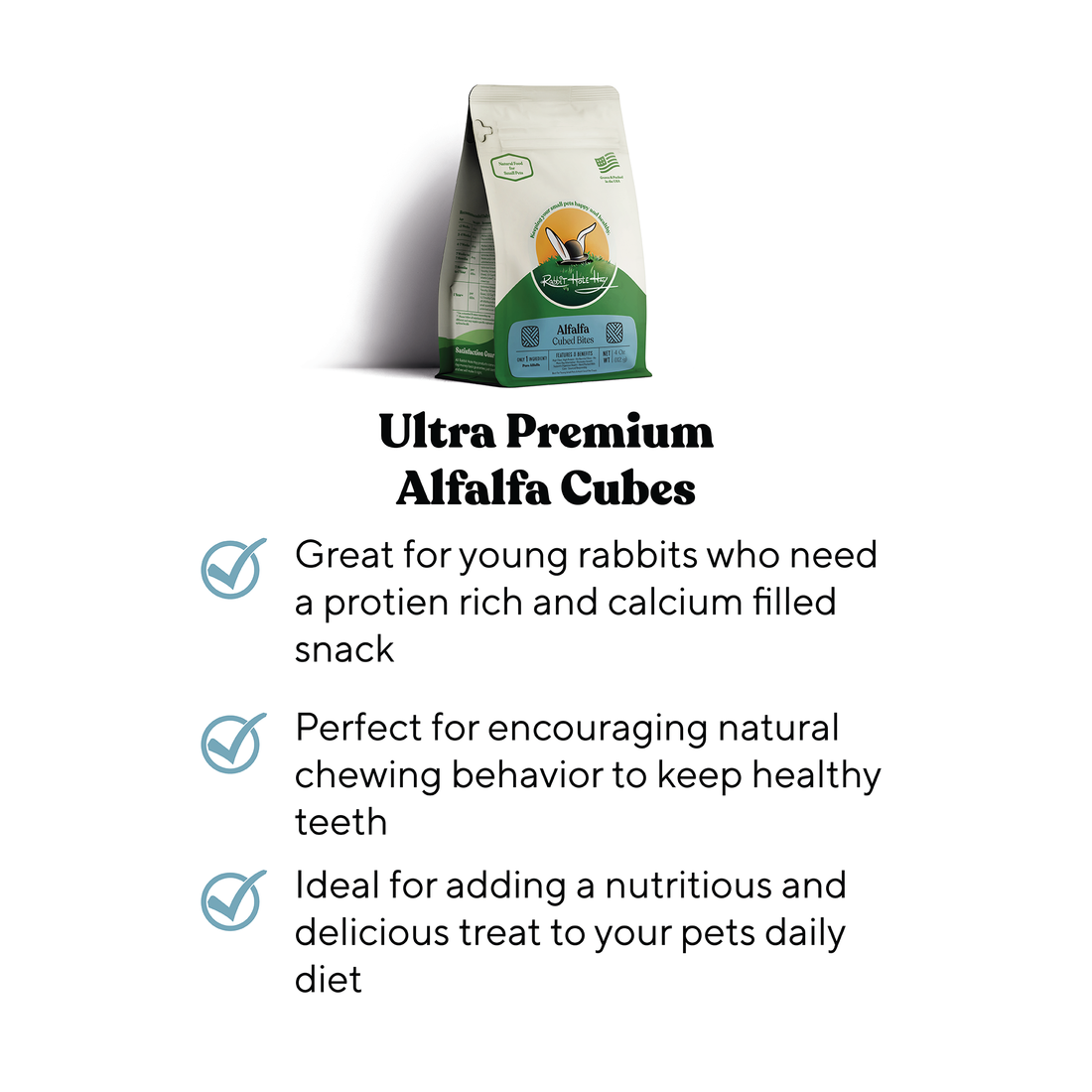

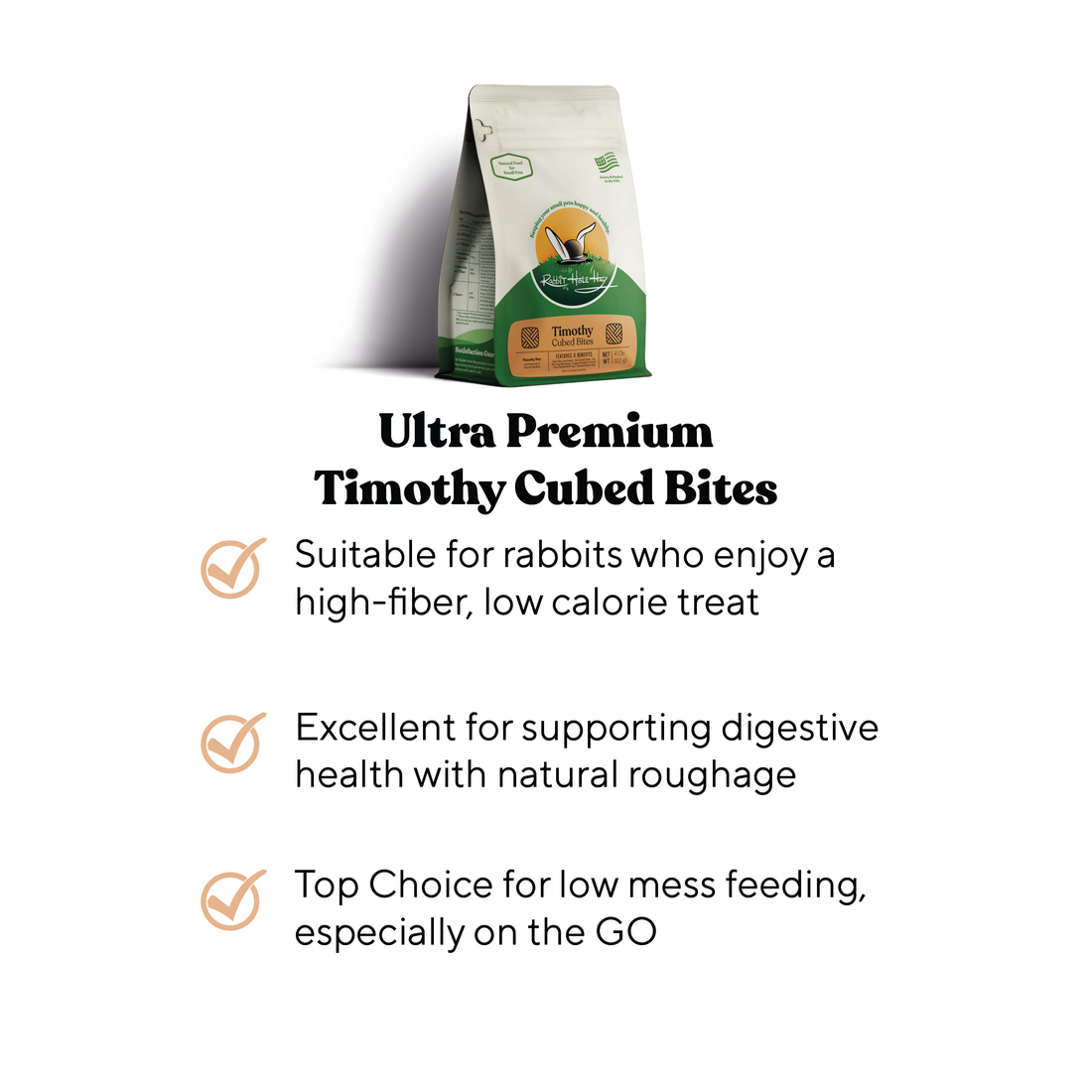

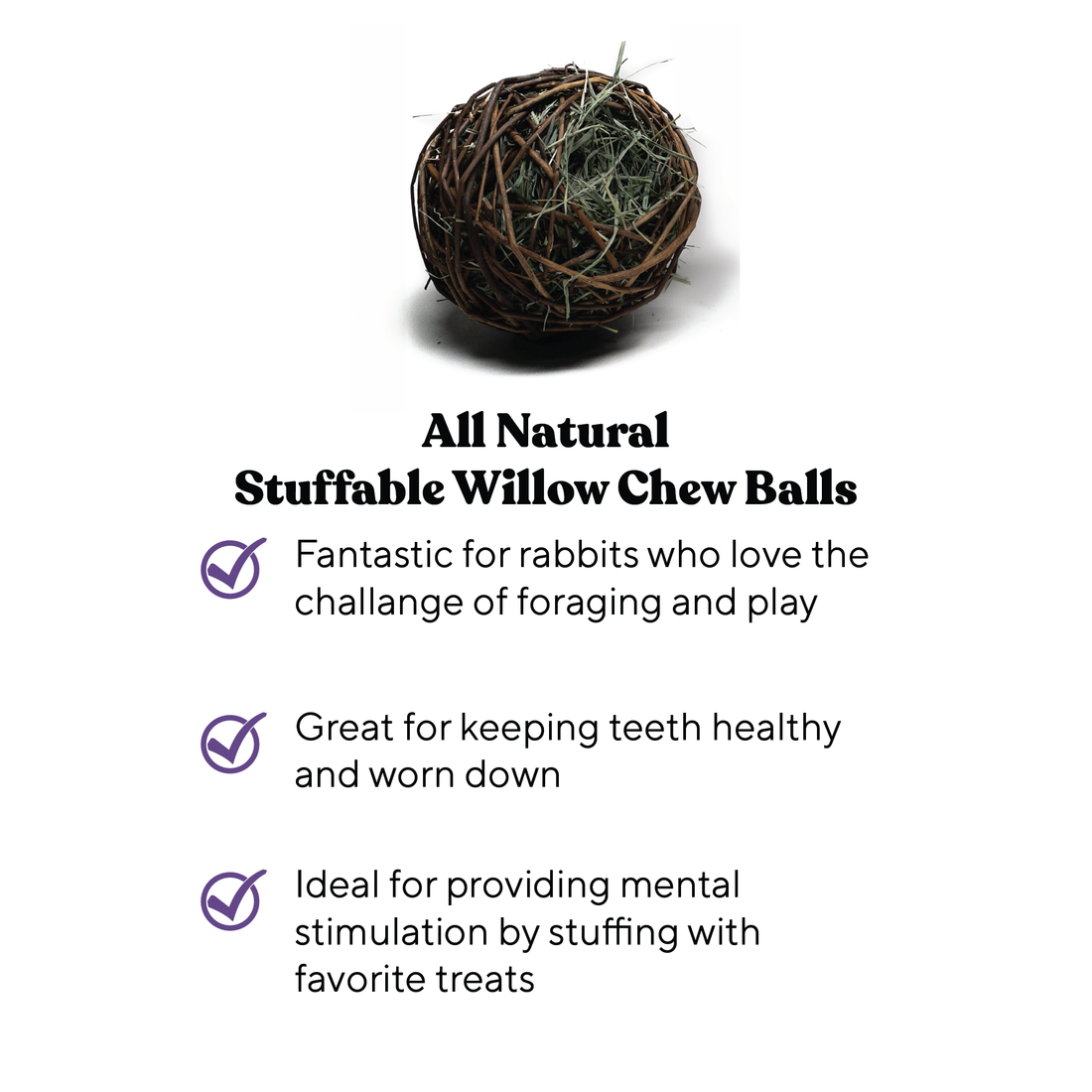

































Timothy hay is important for rabbits because it supplies the long-strand fiber their gut needs to keep moving, and the tough chewing that wears down teeth that never stop growing. For most adult rabbits, grass hay like Timothy should be about 75–80% of what they eat every day—not a side dish next to pellets.
Plenty of owners stock a handsome bag of pellets and treat the hay rack like optional decor. If that sounds familiar, you are not alone—and the fix is simpler than a full diet overhaul. Hay is the engine; everything else rides behind it.
Here is what Timothy actually does for digestion and teeth, how it doubles as enrichment, when alfalfa is the better pick, which cut to try, and what to do if your rabbit barely touches the pile. For the wider hay-first picture, start with our guide to the best rabbit hay for everyday health.

How Does Timothy Hay Keep a Rabbit's Gut Moving?
A rabbit's gut is built for nearly constant fiber. Long strands from Timothy hay keep food moving. When that motion slows, soft stools, smaller droppings, or a quiet appetite can show up fast—and GI stasis is a real emergency, not a "wait and see" mood.
You are not overreacting if you refill the rack twice a day. Unlimited access lets them graze on their schedule. Pair hay with fresh water; dry fiber without water is a rough combo. House Rabbit Society's diet overview puts the same rule in plain terms: hay first, always.
Why Does Chewing Timothy Hay Protect Rabbit Teeth?
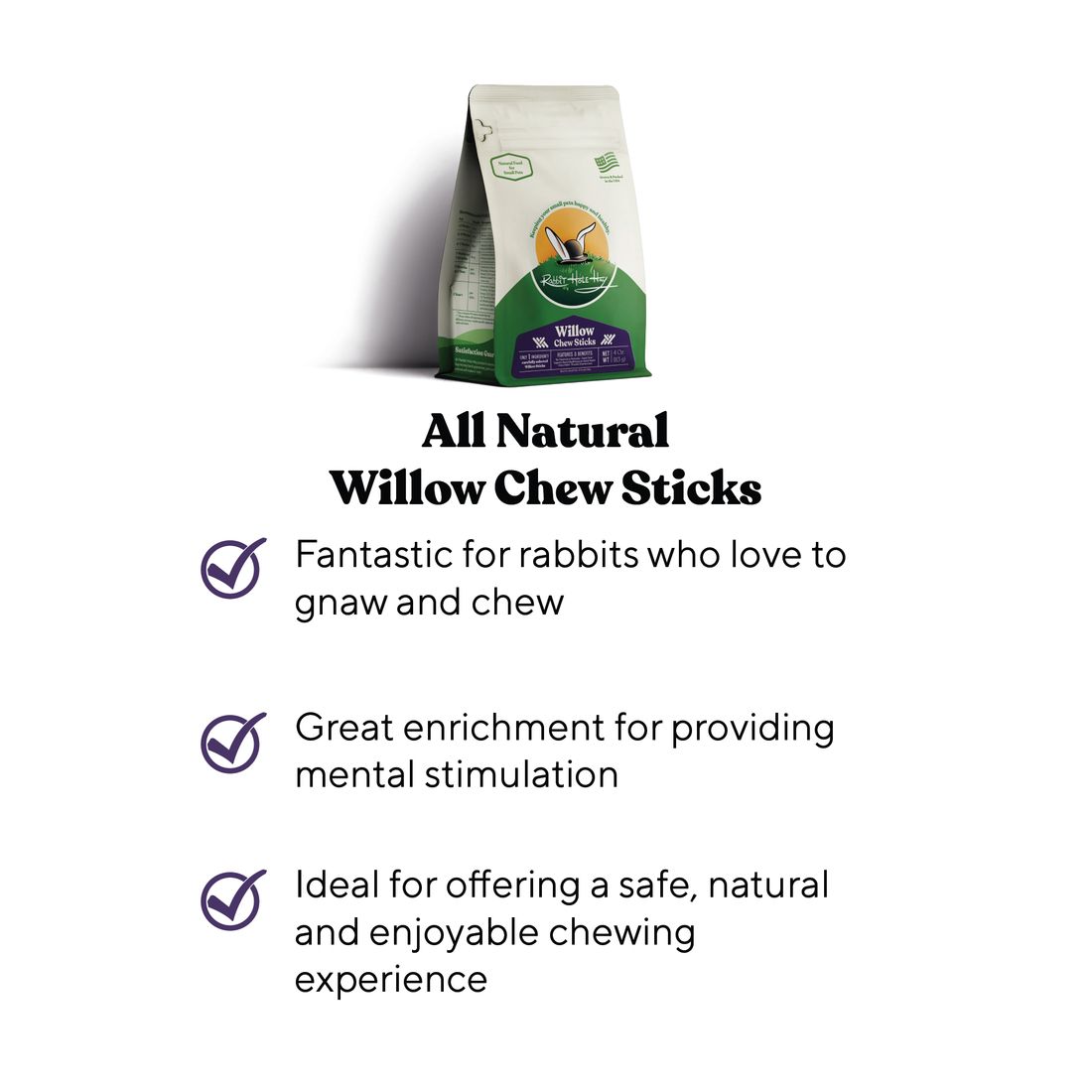
Rabbit teeth grow continuously. Soft pellets and leafy greens do not create enough grind. The coarse texture of Timothy hay makes them chew side to side, which files the teeth down while they snack.
Skip that work and sharp spurs can form. Eating gets painful, then hay intake drops even more—a loop you do not want. If you see drooling, a sudden soft-food-only streak, or hay refusal, read our guide on overgrown teeth in rabbits and book a rabbit-savvy vet. Rabbit.org's dental problems page is worth a look too.
Does Timothy Hay Count as Enrichment, Not Just Food?
Yes. Sorting stems, burying faces in a fresh flake, and digging for the "good pieces" is foraging homework. That busy work beats staring at bars or redesigning your baseboards.
A full hay setup is one of the cheapest ways to lower boredom stress. Stuff a cardboard tube, use a rack next to the litter box, or scatter a handful where they already lounge—same nutrition, more interesting job.

How Is Timothy Hay Different From Alfalfa for Adult Rabbits?
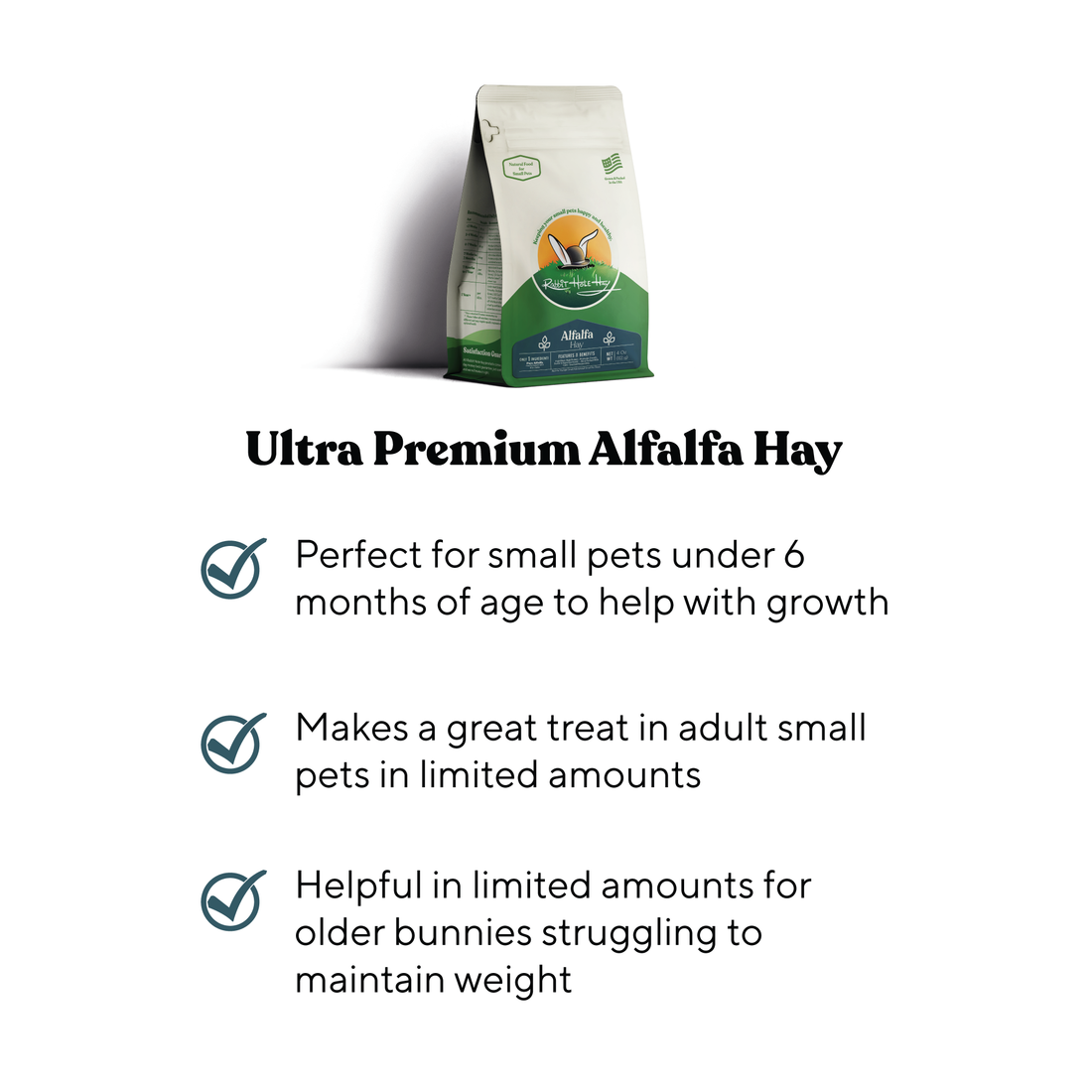
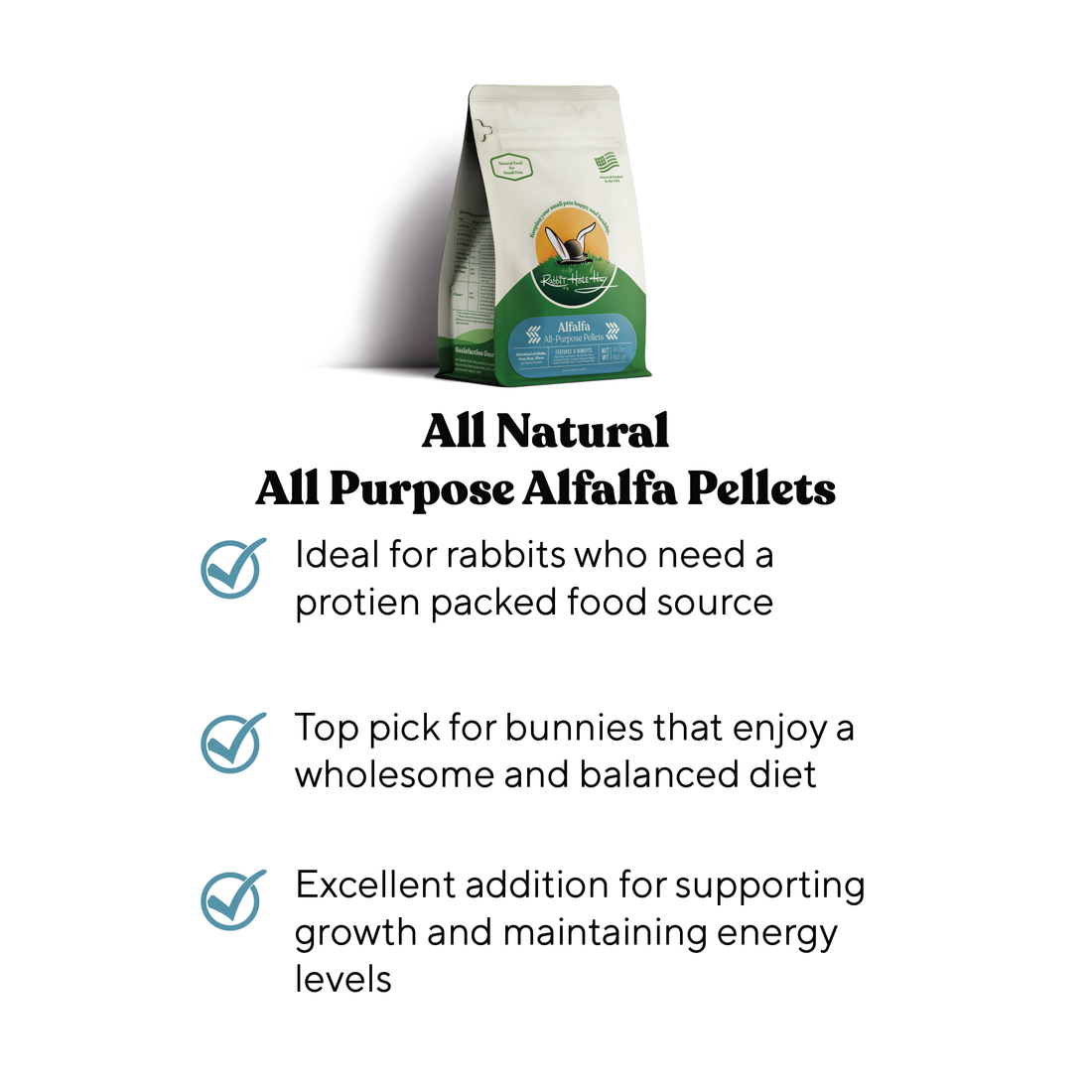
Alfalfa is a legume hay—higher in protein and calcium. It suits growing kits, underweight rabbits, and many nursing does. Adult rabbits on unlimited alfalfa often take in more calcium than they need, which can show up later as bladder sludge or stones in some pets.
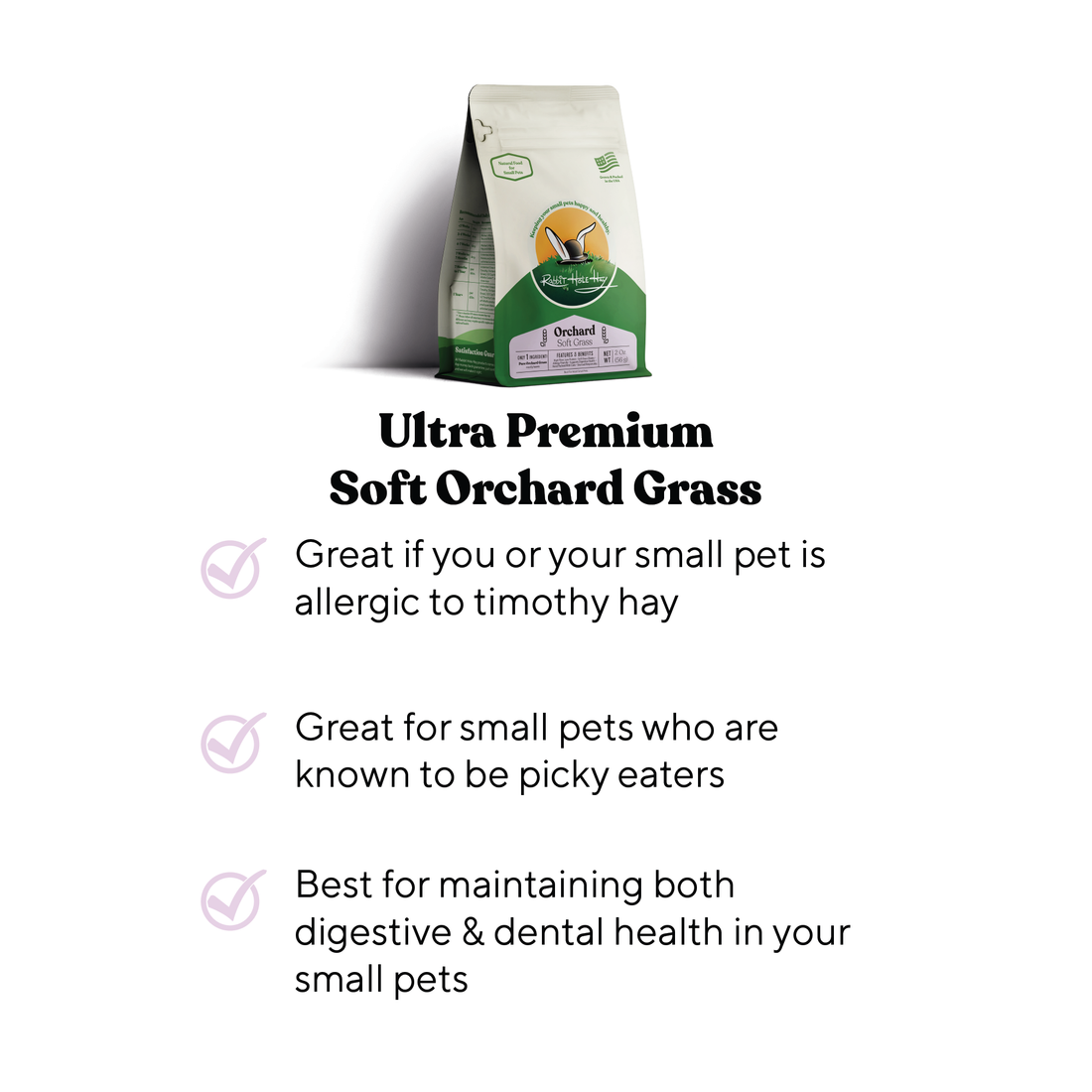
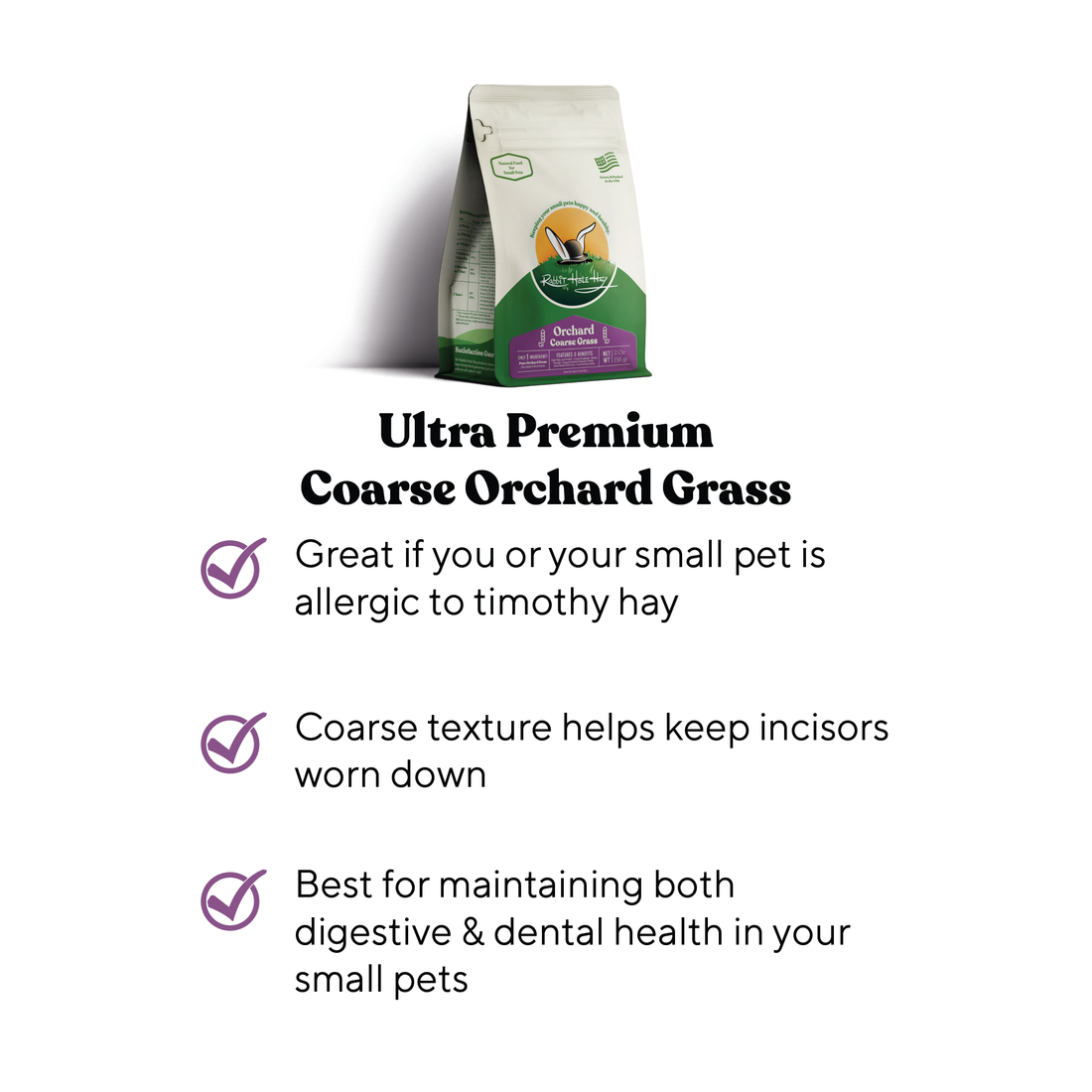
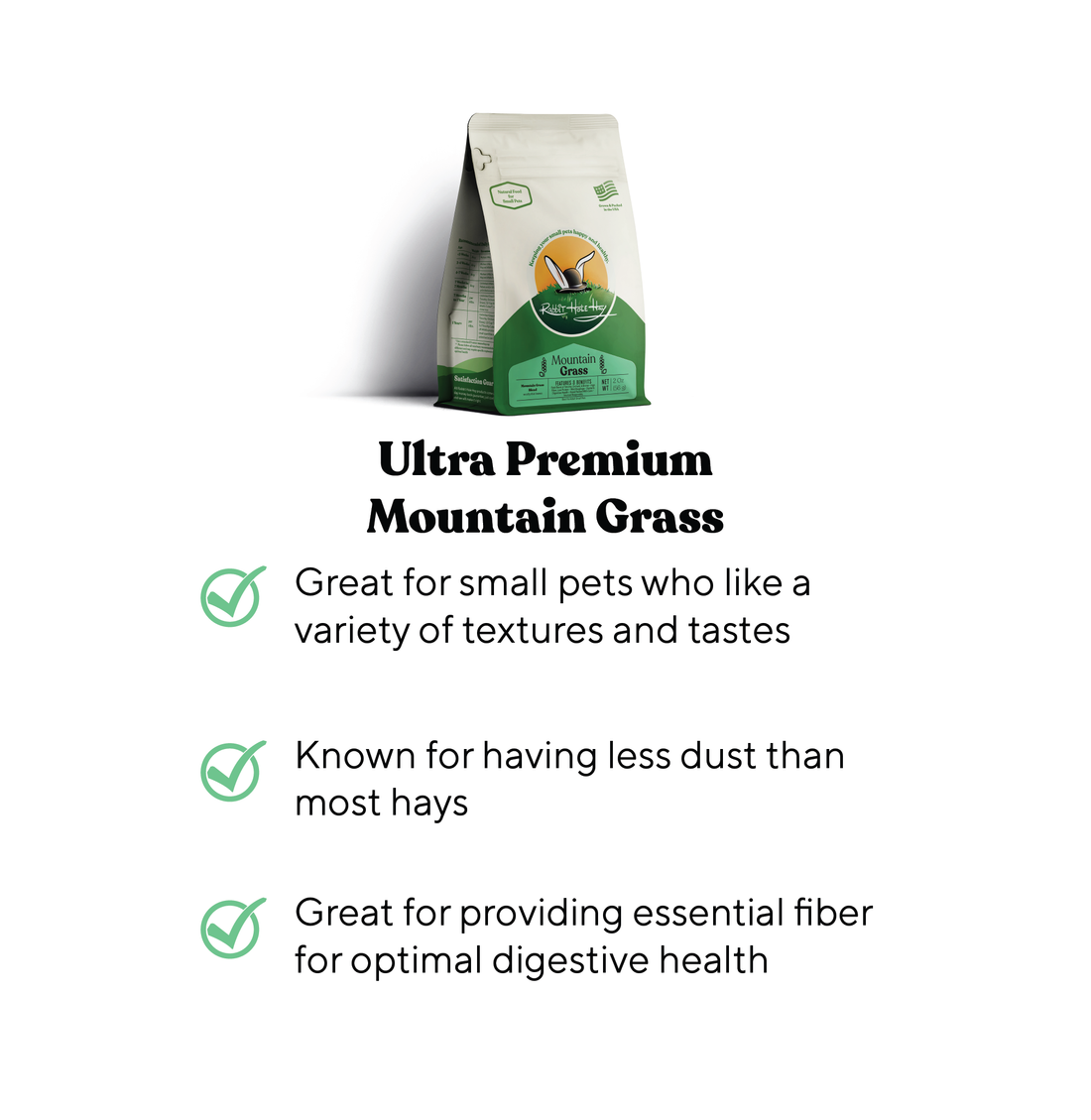
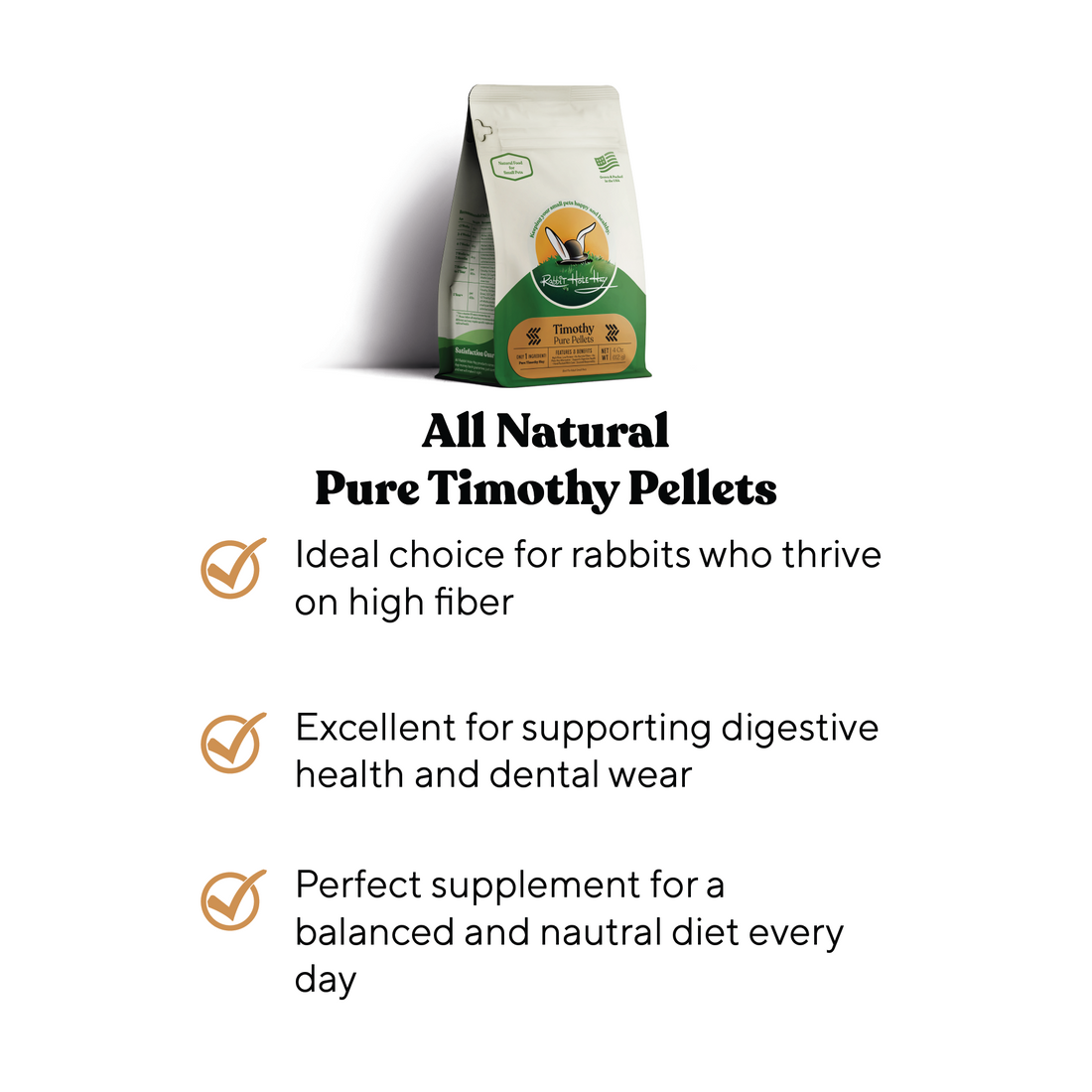
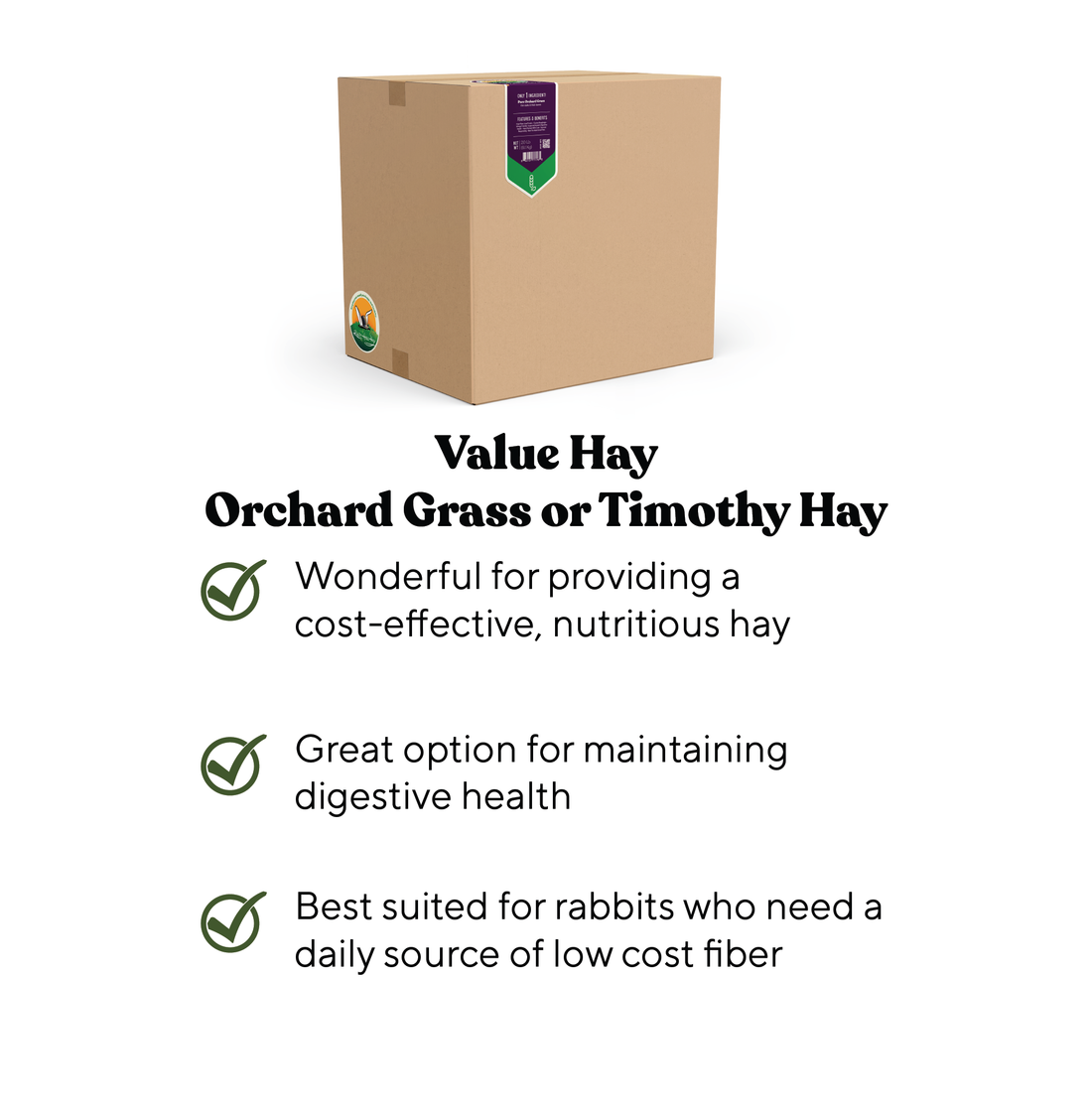
Timothy (and other grass hays like orchard or meadow) gives high fiber with a calmer calorie and calcium load. That is the long-game hay for most adults—not the growth-spurt stuff.
Guinea pigs and chinchillas lean on grass hay for similar fiber and dental reasons. Life-stage swaps between alfalfa and Timothy are covered in more detail when you compare Timothy and alfalfa by age.
Which Cut of Timothy Hay Should I Offer?
Not every rabbit loves the same mouthfeel. Cuts are preference tools, not different "food groups."
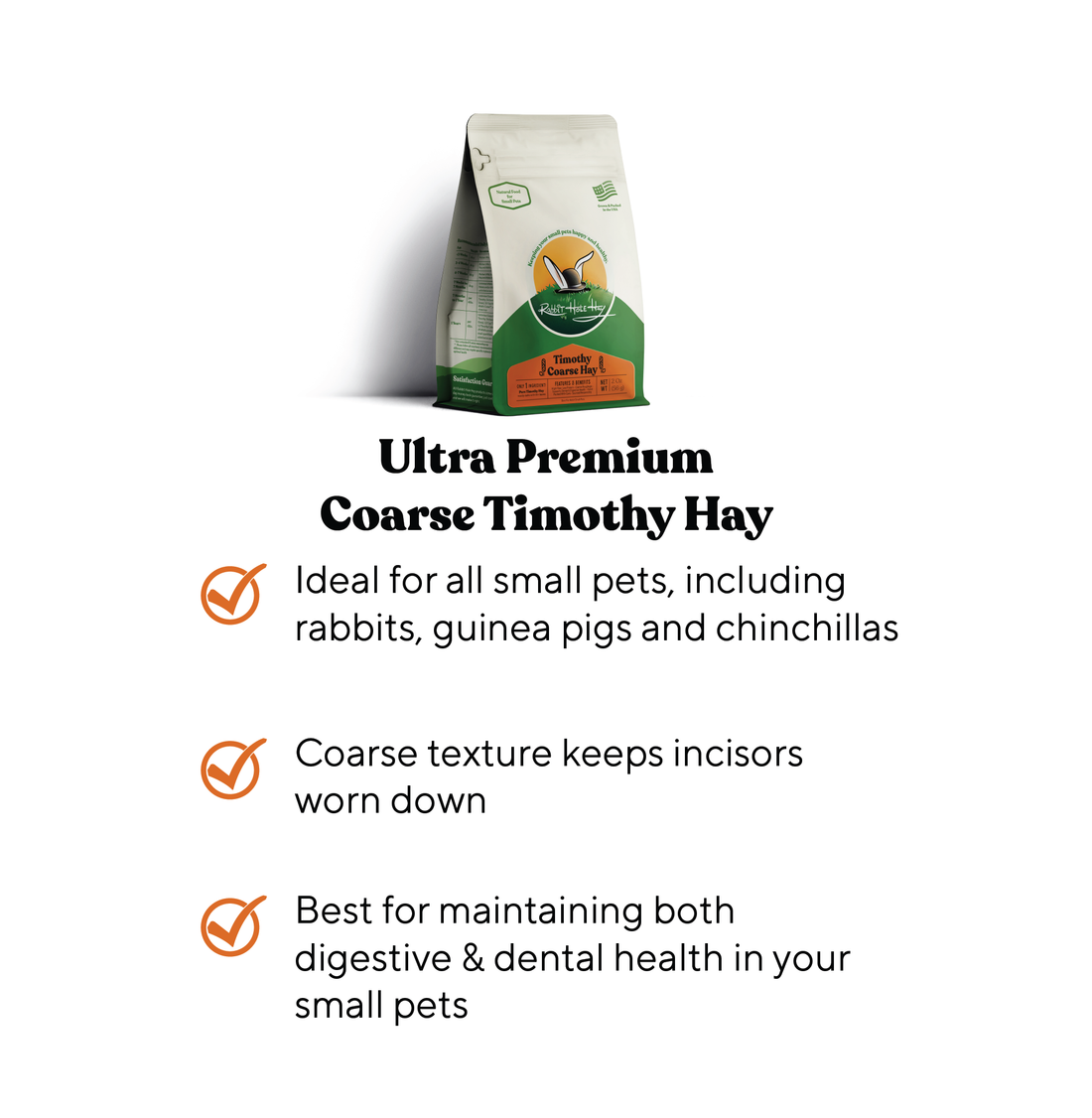
Coarse / first cut: thicker stems, great dental workout for eager chewers.
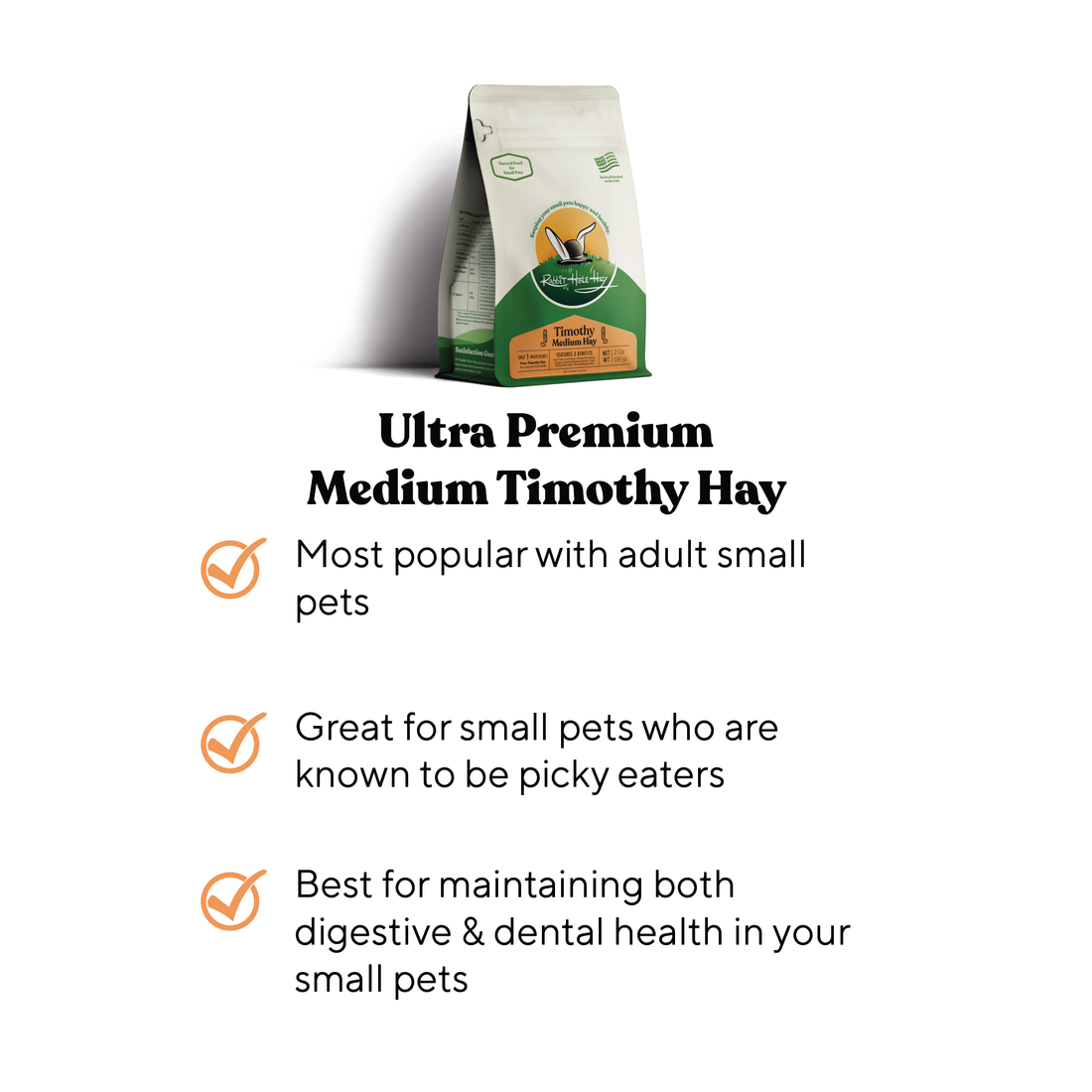
Medium / second cut: a middle texture many adults settle into as their daily default.
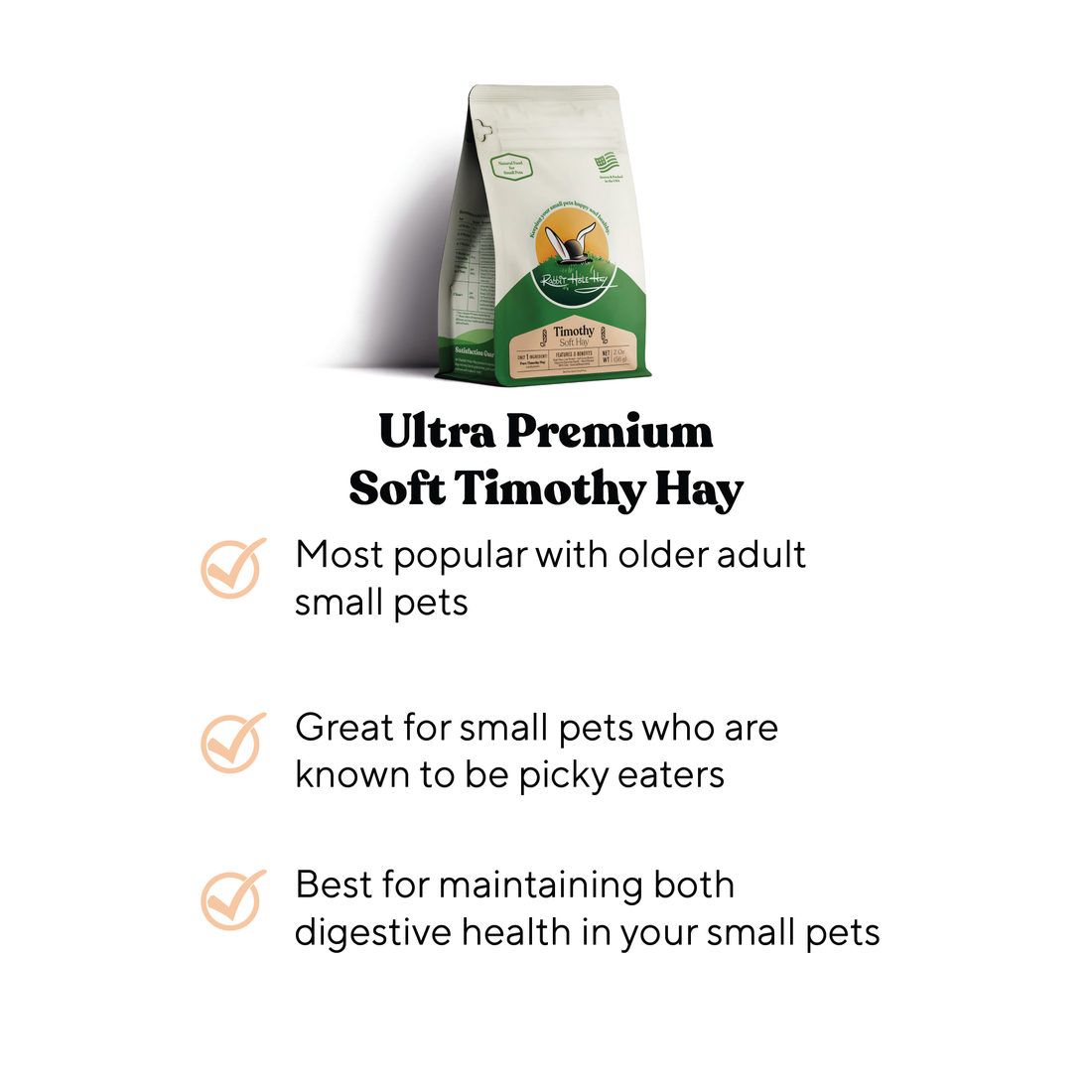
Soft / third cut: finer and grassier—often wins over picky or senior rabbits, still with useful fiber.
If your rabbit snubs one cut, try another before you assume they "hate hay." Freshness matters too: green color, a sweet grassy smell, and long strands beat dusty yellow bags. Browse premium Timothy hay options when you want consistent cuts delivered on a schedule.

What Happens If My Rabbit Skimps on Timothy Hay?
Short stretches of picky eating happen—new home, warm afternoon, a cut they dislike. Ongoing skimping is different. Watch for fewer or smaller droppings, a quieter gut, weight loss, or a sudden pivot to only soft foods.
First, refresh the pile (many rabbits ignore hay that sat overnight), try a different cut, and make sure pellets are not crowding out the rack. Our steps for getting rabbits to eat more Timothy hay walk through environment and flavor tricks that still keep hay in the lead.
If they stop eating hay and greens entirely, call your vet the same day. An empty gut is not a weekend project. Trust the quiet house and the missing crunch more than a hopeful "maybe later."
What Type of Hay Is Best for a Rabbit's Everyday Diet?
For a healthy adult rabbit, a grass hay—Timothy, orchard grass, or a quality meadow mix—is the everyday foundation. Timothy is the familiar default for good reason: fiber-forward, tooth-friendly, and easy to keep in the rack all day.
Alfalfa steps in for babies and special cases; it is not the long-term staple for most adults. Portion details, transitions, and how pellets and greens fit around that hay base live in our best rabbit hay pillar guide and the free Hay Is for Rabbits overview.
What Should I Remember About Timothy Hay?
Keep the rack full. Let Timothy (or another grass hay) do the heavy lifting for gut motion, tooth wear, and something useful to do with those busy mouths. Pellets and greens support the plan; they do not replace it.
When the pile stays fresh and available, you are covering the biggest daily job in rabbit nutrition—without turning dinner into a science project.




Comments