



























































Most pet rabbits land between 2 and 12 pounds, depending on breed—a Netherland Dwarf often sits around 2–2.5 lbs, a medium bun like a Rex near 6–8 lbs, and a Flemish Giant can push 15–20 lbs. There is no single "correct" number for every rabbit; your vet cares more about your rabbit staying steady than matching a chart.
If you picked up your bun and they felt lighter—or you noticed the spine more than usual—that little jolt is worth acting on. Weight is one of the few health clues rabbits cannot hide for long.
Below: breed ranges, what changes through kittenhood and senior years, how to weigh at home without a wrestling match, and when to call the vet about gain or loss.

How Much Should a Rabbit Weigh by Breed?
Breed sets the ballpark. A Mini Rex will never weigh what a Checkered Giant should—and that is fine.

Small Breeds (About 1–5 lbs)
Netherland Dwarf: 2–2.5 lbs
Holland Lop: up to about 4 lbs
Polish Rabbit: 2.5–3.5 lbs
Tiny buns are fragile to handle—support the hindquarters and weigh in a carrier if squirming makes the number useless.
Medium Breeds (About 5–10 lbs)
Mini Rex: 3.5–4.5 lbs
Havana: 4.5–6.5 lbs
Rex: 7.5–10.5 lbs
Large and Giant Breeds (10 lbs and Up)
Flemish Giant: 15–20 lbs
Checkered Giant: 10–12 lbs
French Lop: 10–15 lbs
Giants need bigger enclosures and more hay—not more pellets to "fill them out."
What Should a Rabbit Weigh at Different Ages?
Kits start tiny and grow fast. Adults should plateau; seniors may drift down slowly—but a sharp drop always deserves a vet look.
Newborns (0–2 Weeks)
Kits weigh roughly 1–2 ounces at birth and depend entirely on mom.
Young Rabbits (3–8 Weeks)
By eight weeks, many breeds hit 8 ounces to 2 pounds as solid food starts.
Adolescence (2–6 Months)
Growth spurts are real. A medium rabbit might jump from 3 to 6 pounds in a few months.
Adults (6 Months and Older)
Full size usually arrives by 6–12 months depending on breed. Track monthly once grown—patterns beat one-off weigh-ins. Our guide on signs of rabbit health pairs well with a kitchen-scale habit.
How Do I Weigh My Rabbit at Home?
Monthly weighing catches trouble early. Rabbits hide illness; the scale sometimes tattles first.

Use a digital kitchen scale for small rabbits, or a baby/pet scale for larger buns.
Place the rabbit in a small box or carrier, tare the scale to zero, then weigh box plus bunny and subtract the box.
Weigh at the same time of day when possible—after a morning potty break, before the big hay snack.
Log the number. A spreadsheet on the fridge is fine; your vet will love the trend line.
Sudden loss or gain over a week or two warrants a call—even if appetite looks normal. Eating but losing weight is its own red flag; see our post on rabbit weight loss while still eating.
What If My Rabbit Is Overweight?
Extra weight strains joints and hearts and makes grooming harder—poopy butt risk goes up. Fix it slowly; crash diets can trigger gut slowdown. Your bun did not get chunky overnight; they should not slim down overnight either.
Hay first: Unlimited grass hay should be the bulk of the diet. Pellets are a supplement, not the main event.
Measure pellets: Cut portions gradually with vet guidance.
More floor time: Tunnels, ramps, and supervised roam burn calories without feeling like boot camp.
Treat discipline: Carrots and fruit are dessert-sized—handfuls of parsley and herbs instead.
For day-to-day feeding ratios, our hay and feeding guide walks through portions without guesswork.
What Else Affects Rabbit Weight?
Diet and exercise matter most, but they are not the whole story.

Genetics: Breed sets the ceiling. Comparing a dwarf to a giant is apples and oranges.
Metabolism: Young, growing rabbits burn faster; seniors may need calorie support instead of restriction.
Dental disease: Painful chewing leads to weight loss even when the food bowl looks full.
Illness: Parasites, kidney disease, and gut issues can drop pounds quietly. PetMD's overview of rabbit weight loss lists common medical drivers.
Broader preventive habits—annual exams, dental checks, stress signals—live in our lifespan and daily health overview. The RSPCA rabbit diet guidance also stresses hay-heavy feeding for healthy body condition.
Key Takeaways
Healthy weight depends on breed—roughly 2–5 lbs for dwarfs, 5–10 for mediums, 10–20+ for giants.
Weigh monthly at home and log trends; sudden change beats any single number.
Overweight buns need more hay and movement, not starvation; underweight buns need a vet—not more treats.
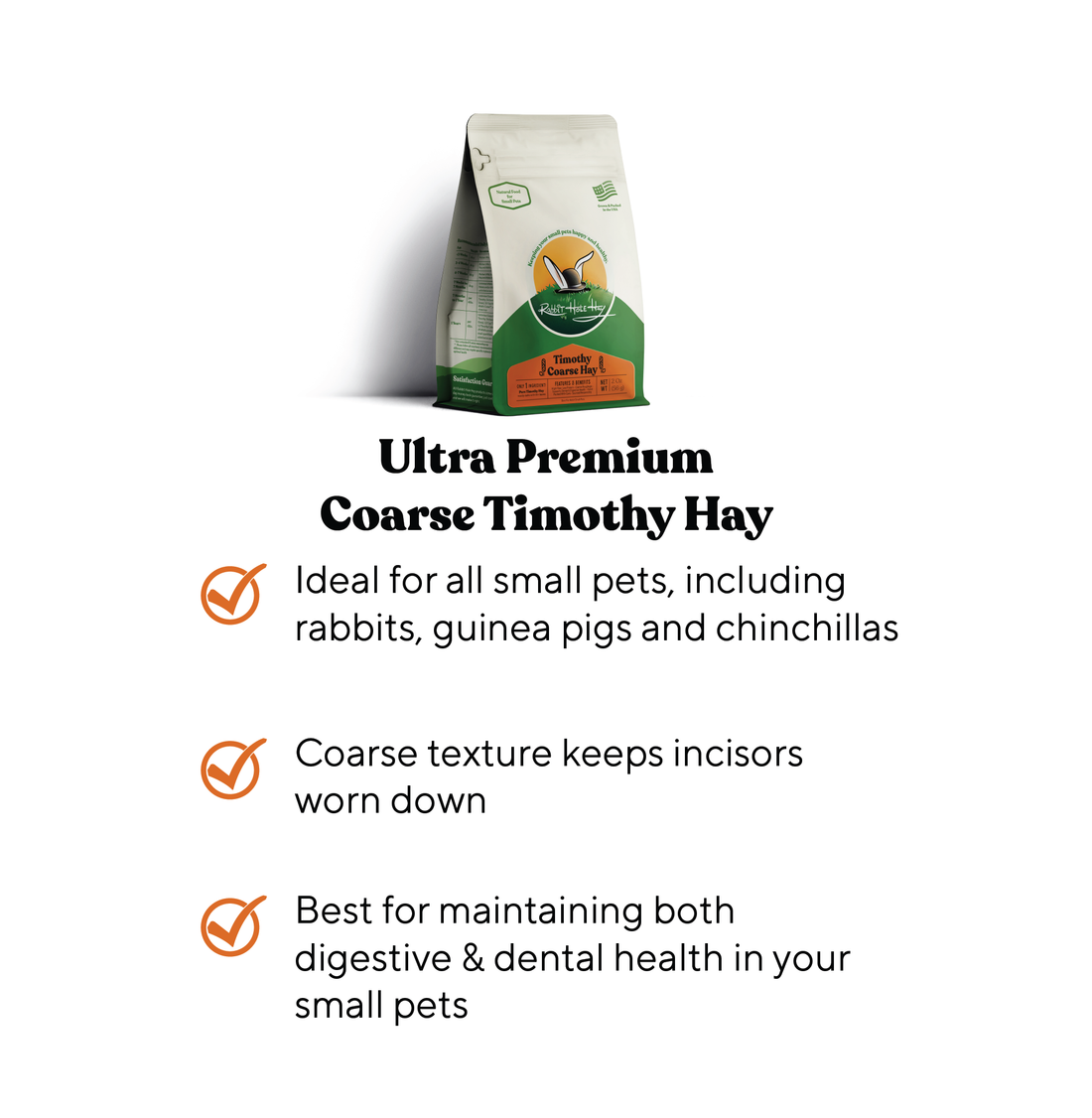
Good hay supports healthy weight from both directions—fiber for gut motility and chewing that keeps teeth worn. When you are ready to restock, our rabbit diet guide explains which varieties fit your setup.





Comments