
















































































To move homes with rabbits while reducing stress, protect their familiar space until the last possible day, turn the travel carrier into a hay-filled hideout weeks early, keep unlimited grass hay and water available through the trip, and settle them first in one quiet starter room with unwashed blankets and their old litter box. Expand the rest of the house slowly over the next two to four weeks once they are eating, pooping, and flopping again. Relocating rabbits is less about one perfect car ride and more about protecting gut health when their world looks dismantled.
If the boxes are already stacking and your bunny is flattening against the wall, that worry is fair. Prey animals read packing chaos as threat, and stress can stall digestion fast.

Expect a mix of pre-move carrier training, moving-day quiet rooms, long-drive logistics, first-night starter spaces, vet-now stress signs, and a short handoff if your move includes a flight.
How Do I Prepare a Rabbit Weeks Before Moving Day?
Start with the carrier, not the tape gun. Leave a sturdy, solid-bottom carrier open in their play area with a soft towel, a big handful of timothy or other grass hay, and a familiar toy so it becomes a hangout they choose—not a trap you shove them into on moving morning. Short, calm hops in and out beat forced practice sessions. If you have time, add a few short driveway rides once they hop in willingly.

Keep their daily feeding, cleaning, and play rhythm as boring and predictable as you can while the house changes around them. Update microchip registry contact info, print or download recent vet records, refill prescriptions early, and research a rabbit-savvy exotics clinic near the new address before you need one. House Rabbit Society housing guidance keeps the bar simple: roomy, secure space beats a fancy crate when routines shatter.
Do not “desensitize” them to packing noise by staging tape and bubble wrap in their room. That usually raises threat signals. Close off chaotic rooms, stash cords and plastic wrap out of chew range, and leave their bunny-proofed zone intact until you truly have to pack it. For day-to-day care around that setup, use our guide on how to care for a rabbit.
What Should Moving Day Look Like for My Rabbit?
Park them in one closed, dim room with hay, water, and a door note that says do not open—movers and helpful friends forget. A worn shirt that smells like you belongs in that room more than a new toy does. Load the carrier only when the vehicle is ready, lined with absorbent towels plus hay, never a wire floor that sends every road bump straight into their feet.
Keep voices low, music soft, and the carrier secured so it cannot slide. Check on them at stops without opening the door in parking lots or open doorways—even a calm rabbit can bolt. Never leave a rabbit alone in a parked car; cabin heat climbs faster than your errand.
If the drive is under about four hours, a well-lined carrier with hay and a spill-proof water option is usually enough. Past that mark, pack a portable litter tray, spare towels, sealed hay, and cool greens in a small cooler so gut rhythm has a chance to keep going.
How Do I Keep a Rabbit Safe on a Long Car Ride?
Place the carrier on the floor behind a front seat or another spot that stays out of direct sun and away from blasting vents. Climate control matters more than scenic windows—heat and cold both punish small prey animals in plastic boxes. Pack a bunny bag before you leave:
Fresh grass hay in a sealed container
Water in a spill-proof bottle plus a dish for hotel nights
A few washed leafy greens in a cooler
Portable litter tray and puppy pads for trips past four to five hours
Vet records, microchip info, and an emergency clinic number along the route
For overnight stops, confirm the lodging accepts rabbits before you book, then set up a small pen or temporary hutch in the same room as you—not in a dark bathroom alone. Replicate litter box, hay pile, and water dishes on a smaller footprint. You are their familiar landmark; they need to hear and see you when every smell is new. Call ahead rather than trusting a pet icon online—policies on rabbits change desk to desk.
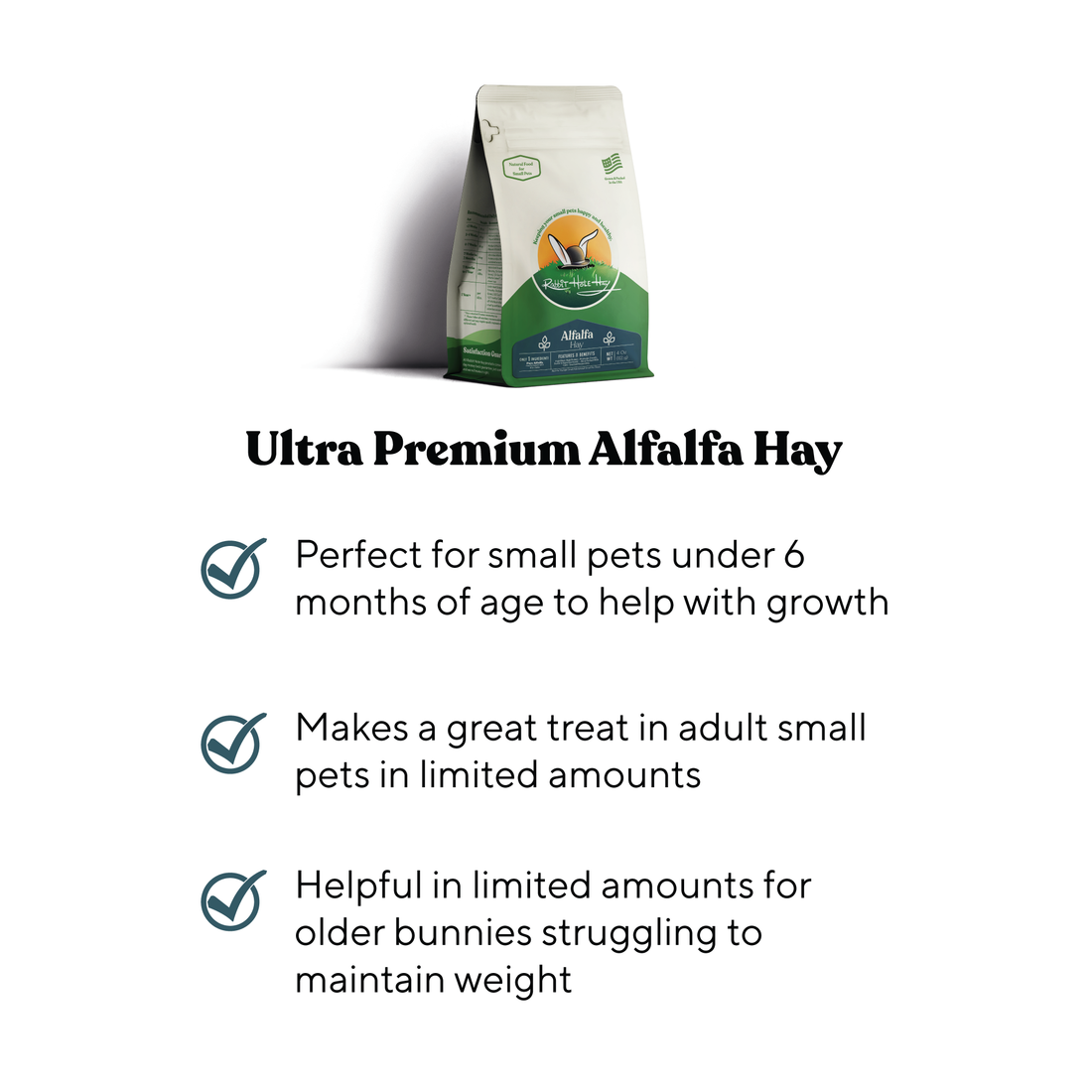
Keep hay in front of them the whole way. Hay is the heat engine when stress tries to stall the gut; pellets and treats ride behind it. Our hay collection is built for that everyday pile, including travel days when appetite gets picky.
What Do I Do the First Night in the New Home?
Do not swing the carrier door open into the whole empty house. Choose one quiet bathroom or spare bedroom, set up the pen or cage with their unwashed blankets, old litter box, and usual dishes, and let them claim that starter space first. Familiar scent is a map of safety—fresh laundry feels clean to you and blank to them.
Watch eating and pooping for the first twelve hours. Plenty of long-strand grass hay should be available the entire time. If they have not eaten or produced droppings in that window, call a rabbit-savvy vet—do not wait to “see if they settle.” Stress-linked gut slowdown is how moves turn into emergencies. For the full walk-through, see our guide to GI stasis in rabbits and House Rabbit Society’s GI stasis overview.
Bunny-proof the starter room before free roam: cords, baseboards, and carpet corners are chew magnets in a place that still smells foreign. Unpack loud rooms away from their door first so their bubble stays quieter while boxes move.
How Long Until a Rabbit Feels Settled After a Move?
Most rabbits need about two to four weeks to fully unclench, and some take longer. Expand territory one room at a time when you see green lights—eating hay, using the litter box, soft eyes, a flop, or a binky—not when the human calendar says “we should be done unpacking.”

Offer simple enrichment once appetite looks steady: cardboard tunnels, dig boxes with shredded paper, and chew toys so new spaces become jobs instead of threats. Easy builds live in our DIY rabbit toy ideas. Keep feeding and play times on the old clock even when your own schedule is chaos.
If weeks later they still hide all day, refuse hay, or turn aggressive in ways that are new for them, book a check with a rabbit-experienced vet. Moves can unmask dental pain or other quiet problems once the adrenaline fades.
What Stress Signs Mean I Should Call a Vet?
Call sooner rather than later for no eating or no droppings for twelve hours, straining without producing stool, hunched posture, grinding teeth with a tense face, sudden litter-box avoidance paired with other changes, or a rabbit that seems limp and checked-out. Soft stool and a dirty bottom after travel also need attention because damp fur plus stress raises fly-strike risk in warm weather.
You are not dramatic for dialing the clinic from a half-unpacked kitchen. Prey animals hide pain, and gut slowdown after relocating rabbits shows up more often than owners expect. Keep hay piled high while you arrange care—empty guts do not wait for the Wi-Fi guy.
RSPCA’s rabbit health advice helps when you are choosing between wait-and-see and drive-now.
What If Part of the Move Means Flying With My Rabbit?
Airline rules, under-seat carriers, cabin vs. cargo decisions, and TSA packing are a different checklist from a car move across town. Confirm written cabin approval early, skip cargo holds whenever you have any other option, and pack hay within airline and security rules.
For that full flight plan, use our guide on how to prepare a rabbit for airline travel. For changing addresses by car or truck, keep the quiet-room, scent-transfer, and slow-expand steps on this page.
Key Takeaways
Protect their gut and their nerves first—the boxes can wait another afternoon.
Train the carrier with hay weeks early and leave their familiar room intact until you must pack it.
Use a solid-bottom carrier, stable car temperature, and a closed quiet room on moving day.
Settle first in one starter space with unwashed bedding; expand rooms over two to four weeks.
Keep grass hay flowing before, during, and after—and call a rabbit-savvy vet if eating or pooping stalls for twelve hours.
When you restock for the new address, a Rabbit Starter Kit keeps hay, basics, and beginner care notes in one place so the first weeks are less of a scavenger hunt.






Comments