


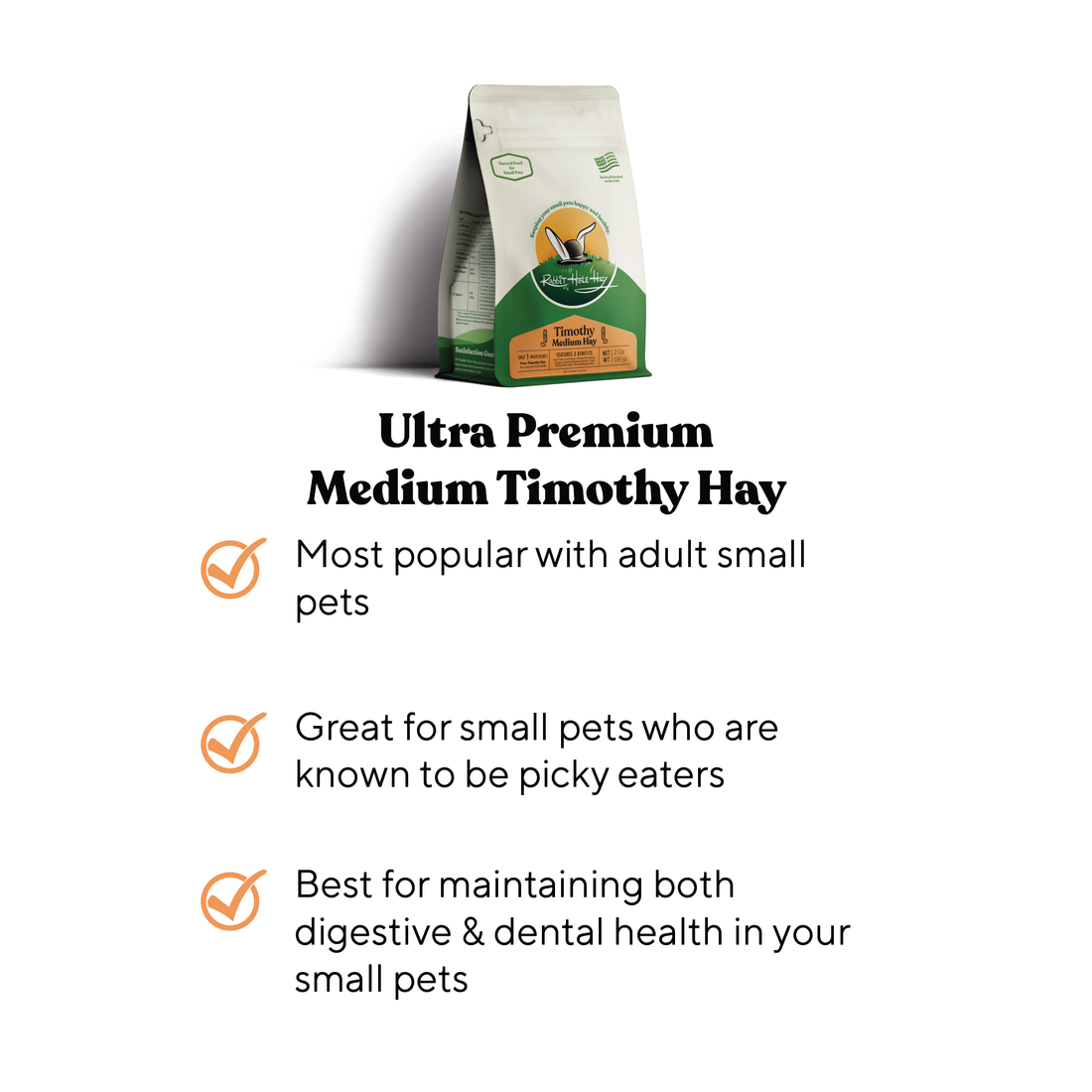

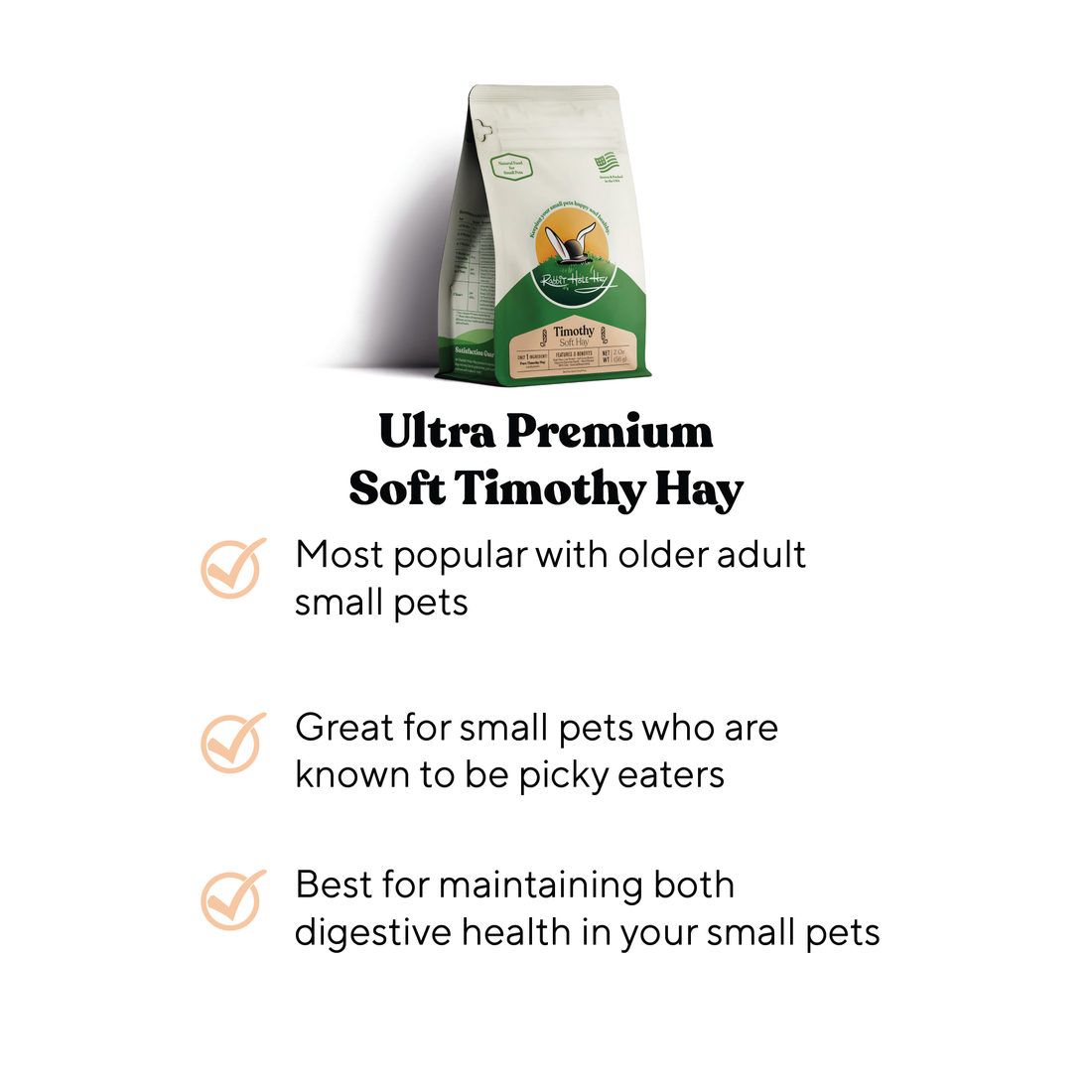

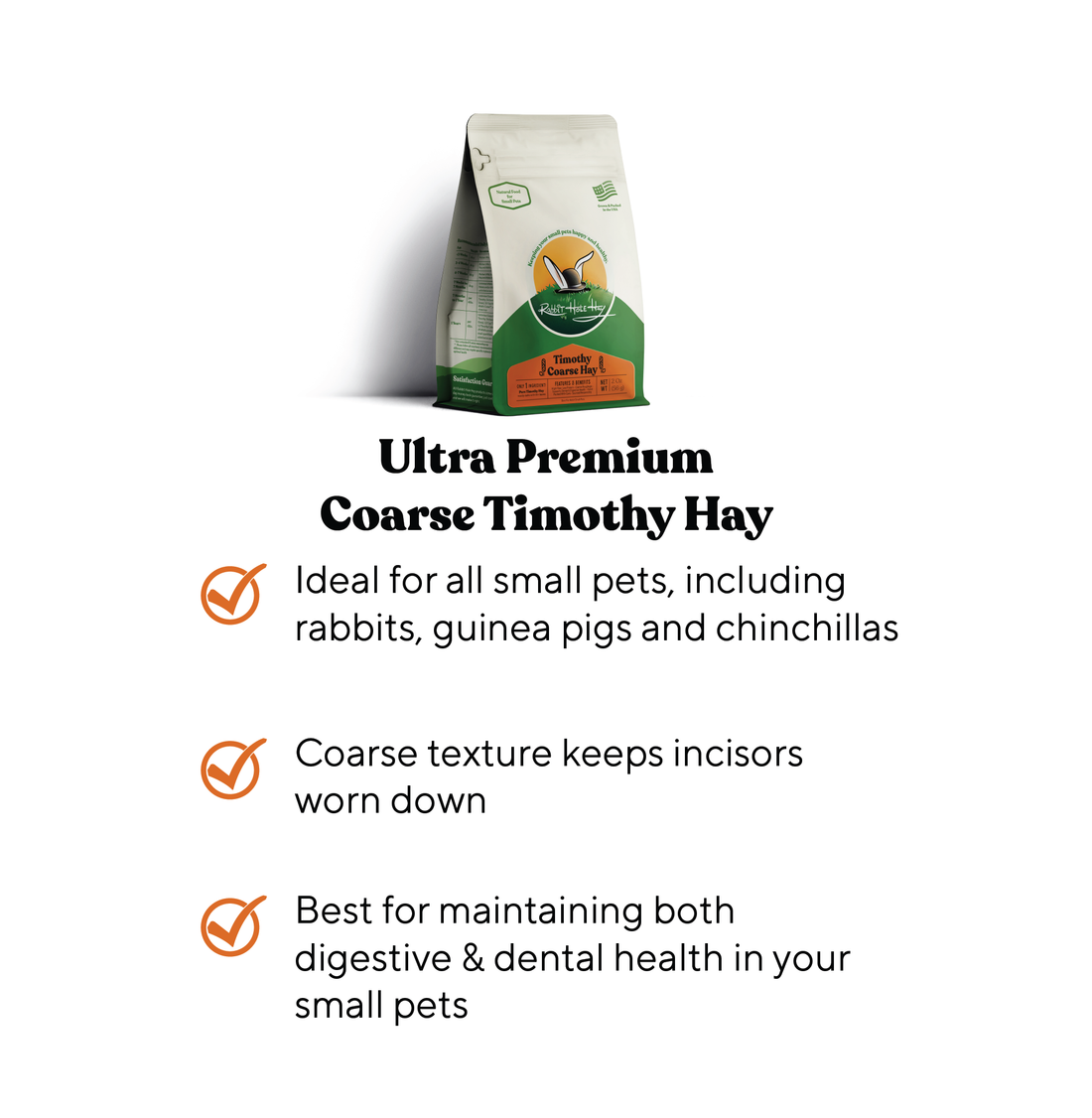

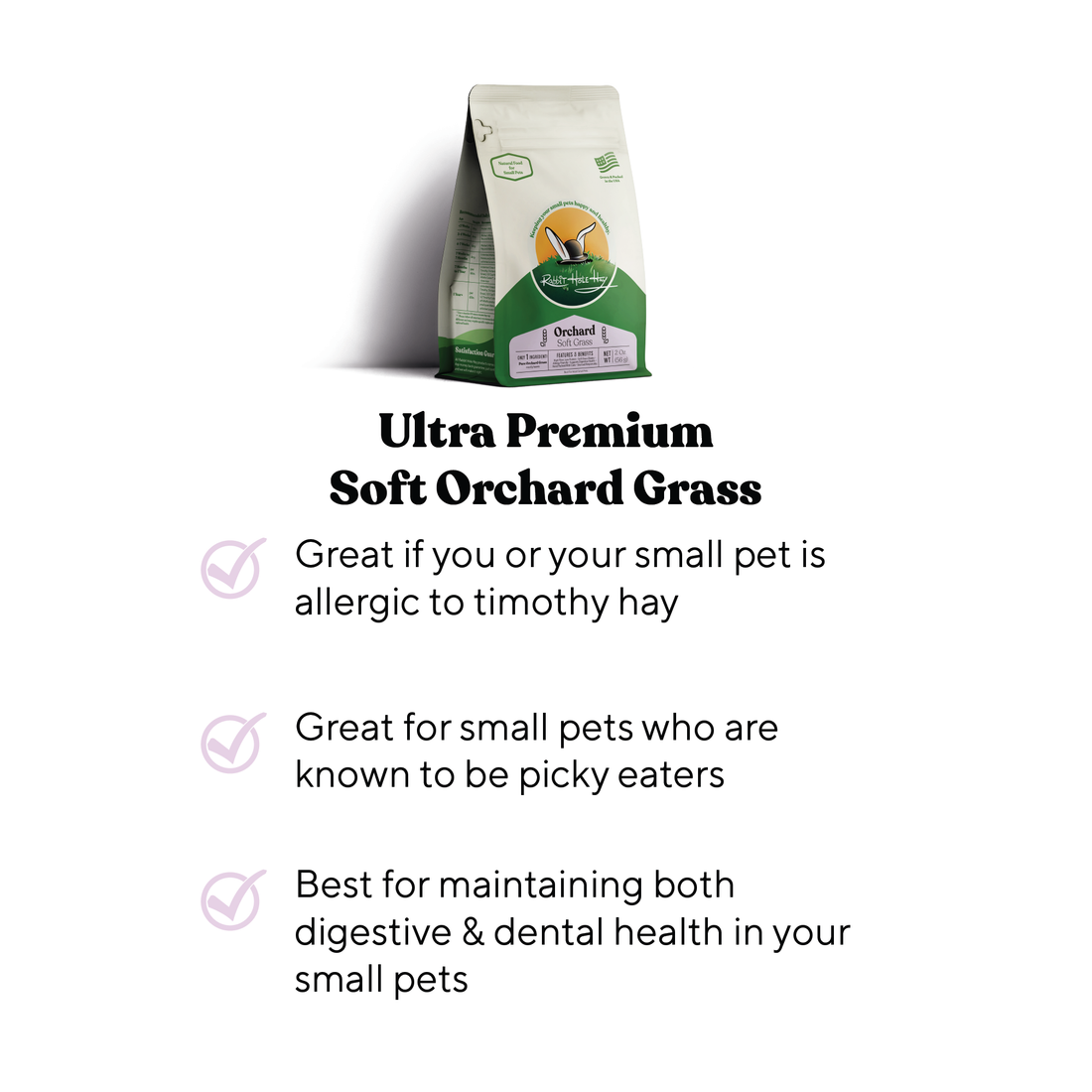

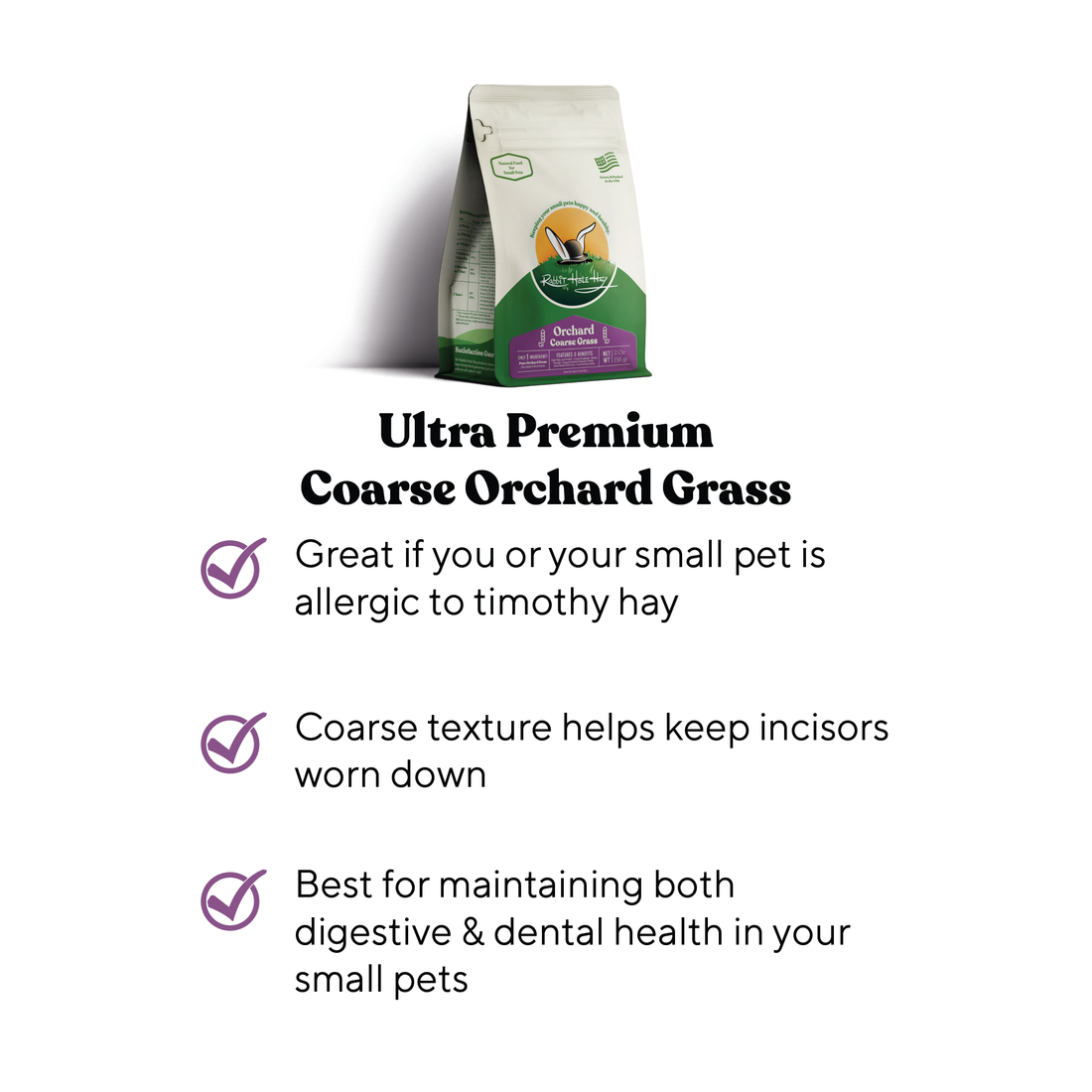

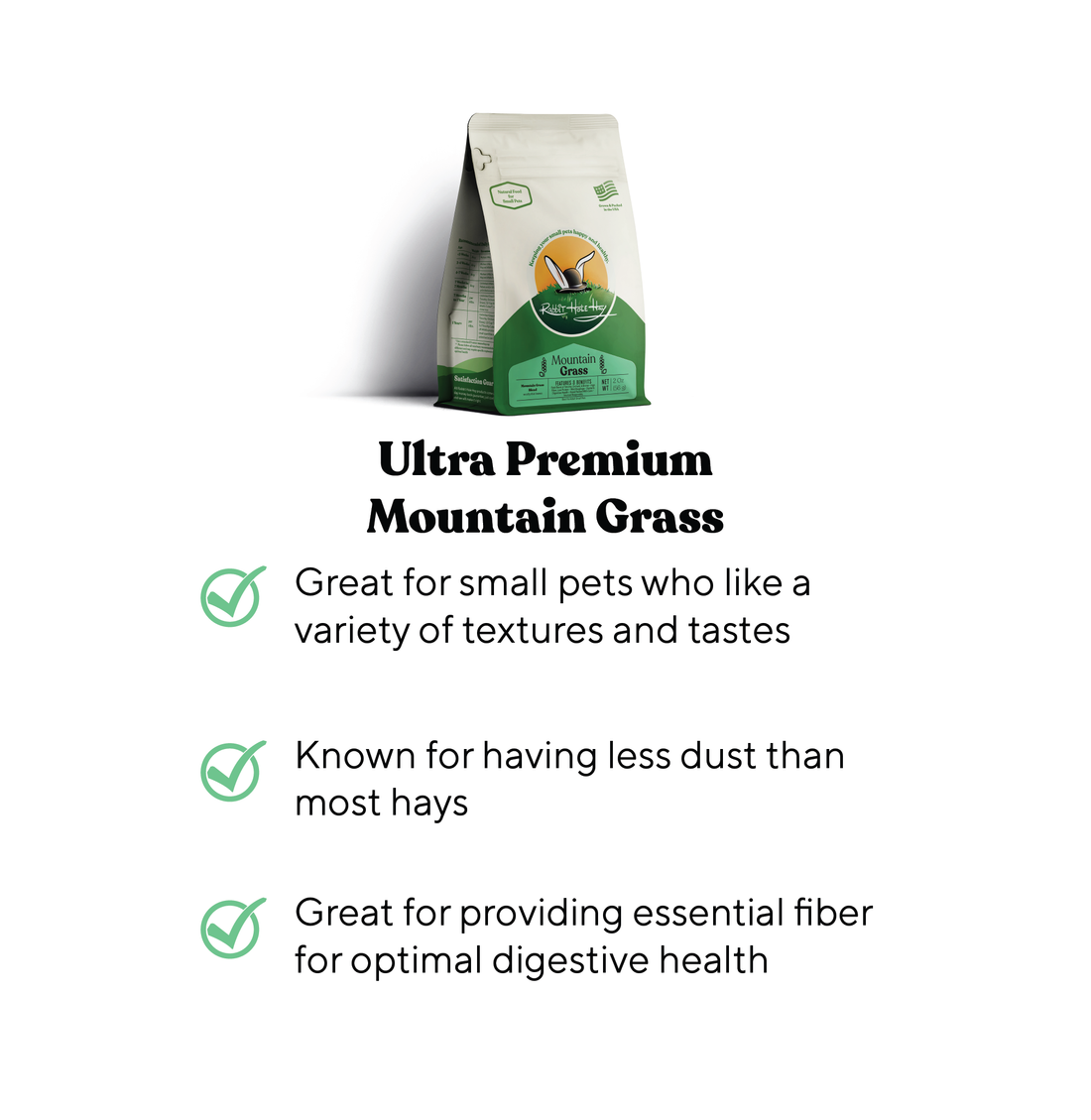



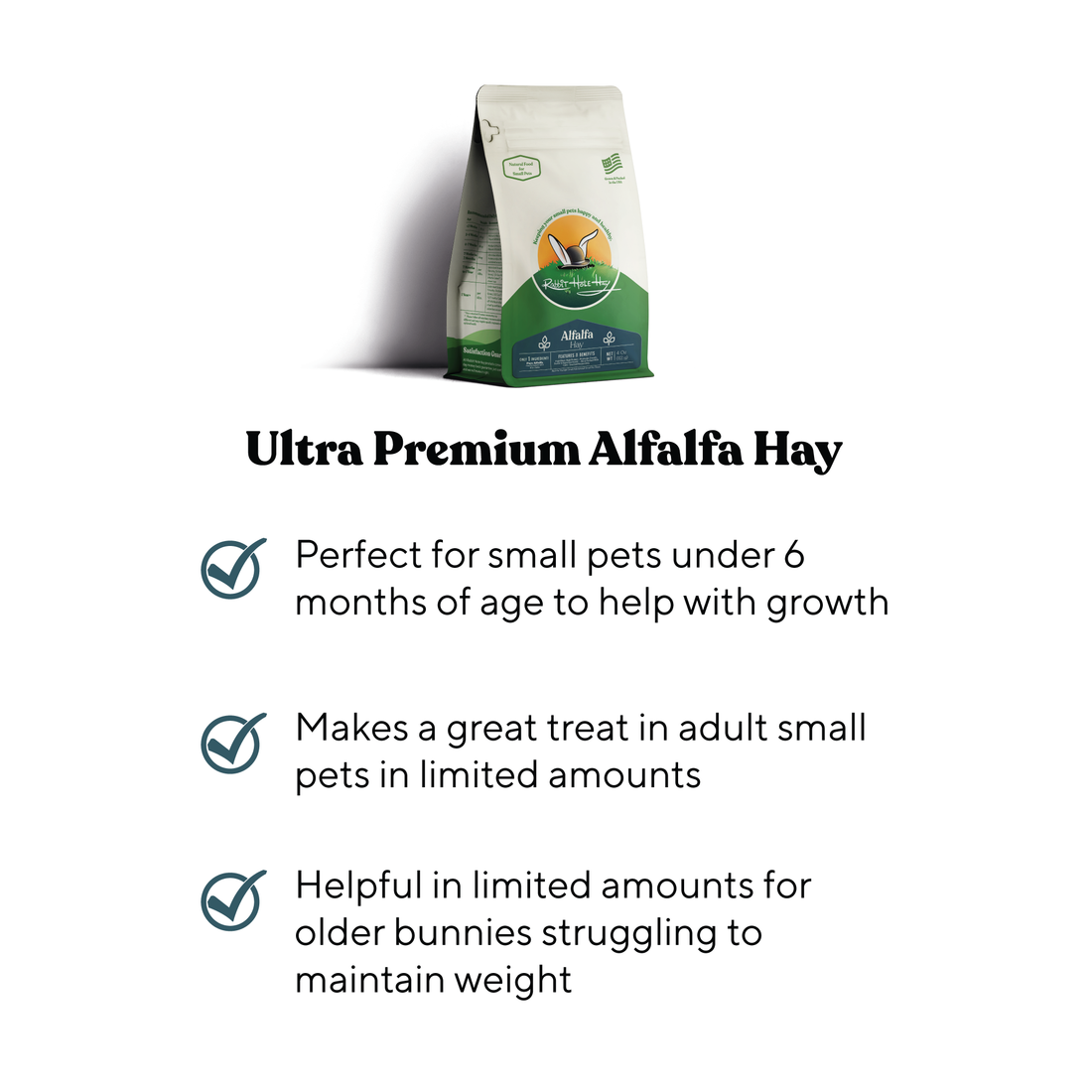





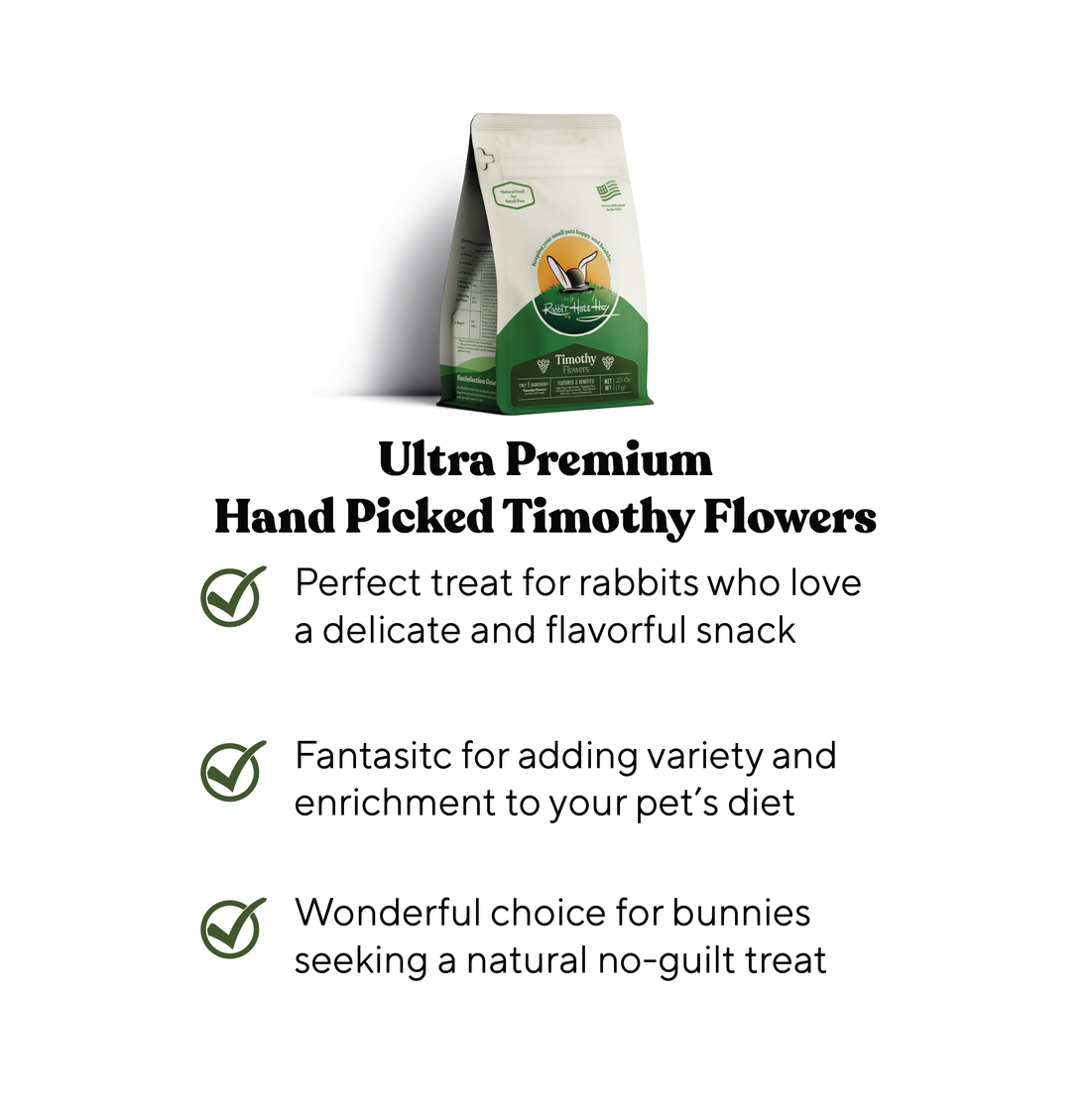

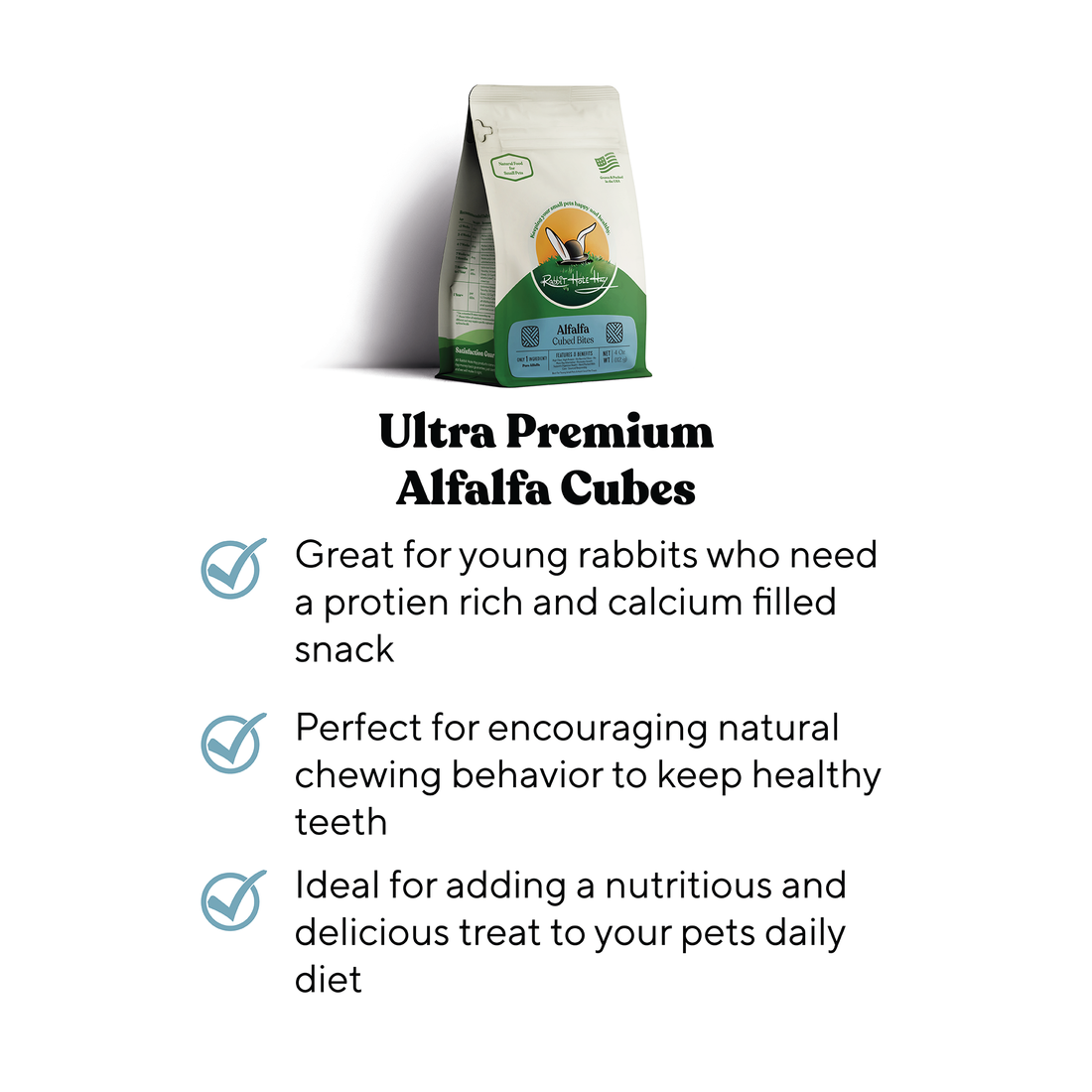



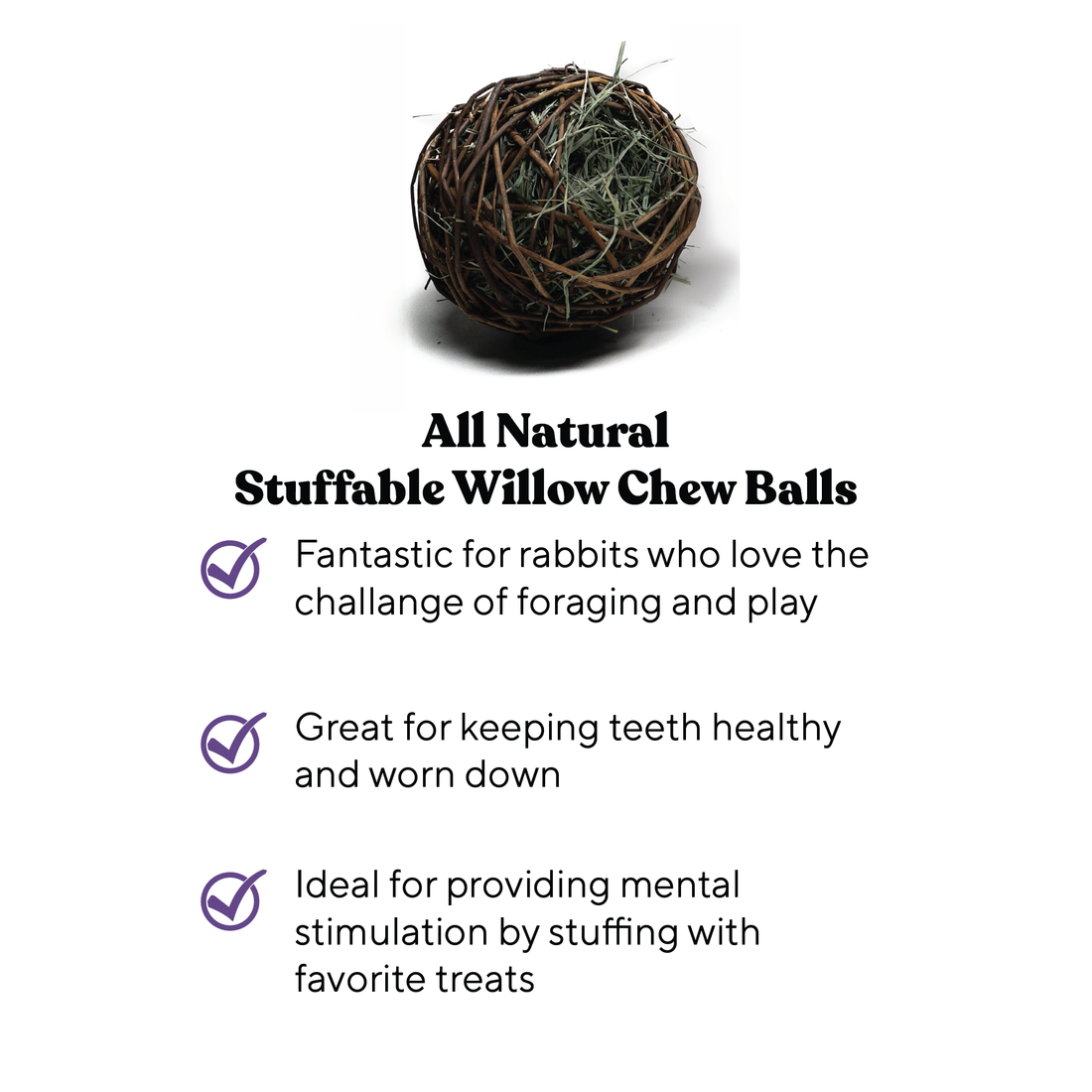


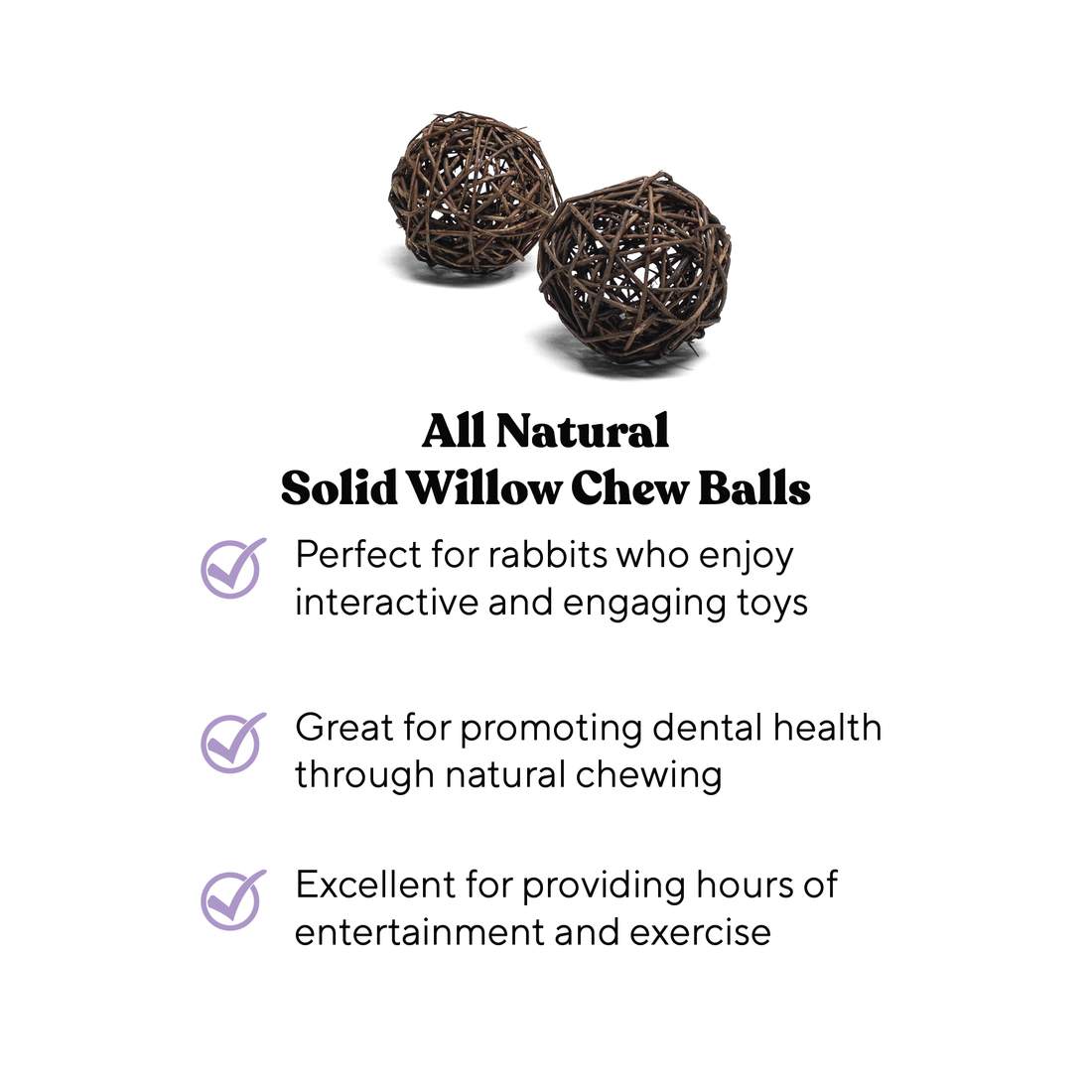

































Support a senior rabbit's diet with hay by keeping unlimited grass hay at the center—usually Timothy—and matching the cut to how they chew and how hungry they still are. Most older rabbits do well on medium (second-cut) Timothy; softer third-cut Timothy or orchard grass helps when teeth are worn or the pile sits untouched. Alfalfa is a tool for underweight seniors, not a default swap, and it belongs in the plan only when your vet has checked calcium and overall health.
If your six-year-old (or older) bun suddenly snubs the same hay they used to demolish, you are not imagining it. Aging changes appetite, teeth, and digestion, and the hay pile is often where you notice first. We will walk through the young-to-adult hay handoff, which Timothy cuts fit seniors, when alfalfa is fair game, litter-box clues, and water and pellet tweaks. For the wider hay-first picture, start with our guide to the best rabbit hay for everyday health.

How Should Hay Choices Change as a Rabbit Grows From Young to Adult?
Before senior tweaks make sense, remember the earlier handoff. Growing kits and many nursing does need the extra protein and calcium in alfalfa. Around seven months, most healthy rabbits move to grass hay—Timothy, orchard grass, or meadow—so fiber stays high while calcium and calories drop.
That young-to-adult shift is a different job than senior feeding. If you are still mid-transition, use our age-based hay transition guide and our Timothy vs alfalfa life-stage overview. Once grass hay is the daily staple, senior care is mostly about cut, texture, and appetite—not starting over with a new hay species every month.
Which Timothy Hay Cut Works Best for Senior Rabbits?
A solid senior rabbit hay diet still means hay is most of what they eat. What usually needs tweaking is the cut—not a whole new kind of food.
First-cut (coarse) Timothy: tougher stems that wear teeth well—great workout, sometimes too firm for older mouths.
Second-cut (medium) Timothy: balanced texture many seniors keep as their everyday pile.
Third-cut (soft) Timothy: leafy and fragrant—often wins when appetite dips or chewing hurts, but pair it with something that still encourages grind.

Start with medium Timothy unless your rabbit already refuses it. If they nibble less, mix in soft Timothy rather than dumping the whole bag overnight. Rabbit guts hate surprise menus; a gradual blend keeps the litter box steadier than a cold swap.
What If My Senior Rabbit Will Not Eat Timothy Hay?
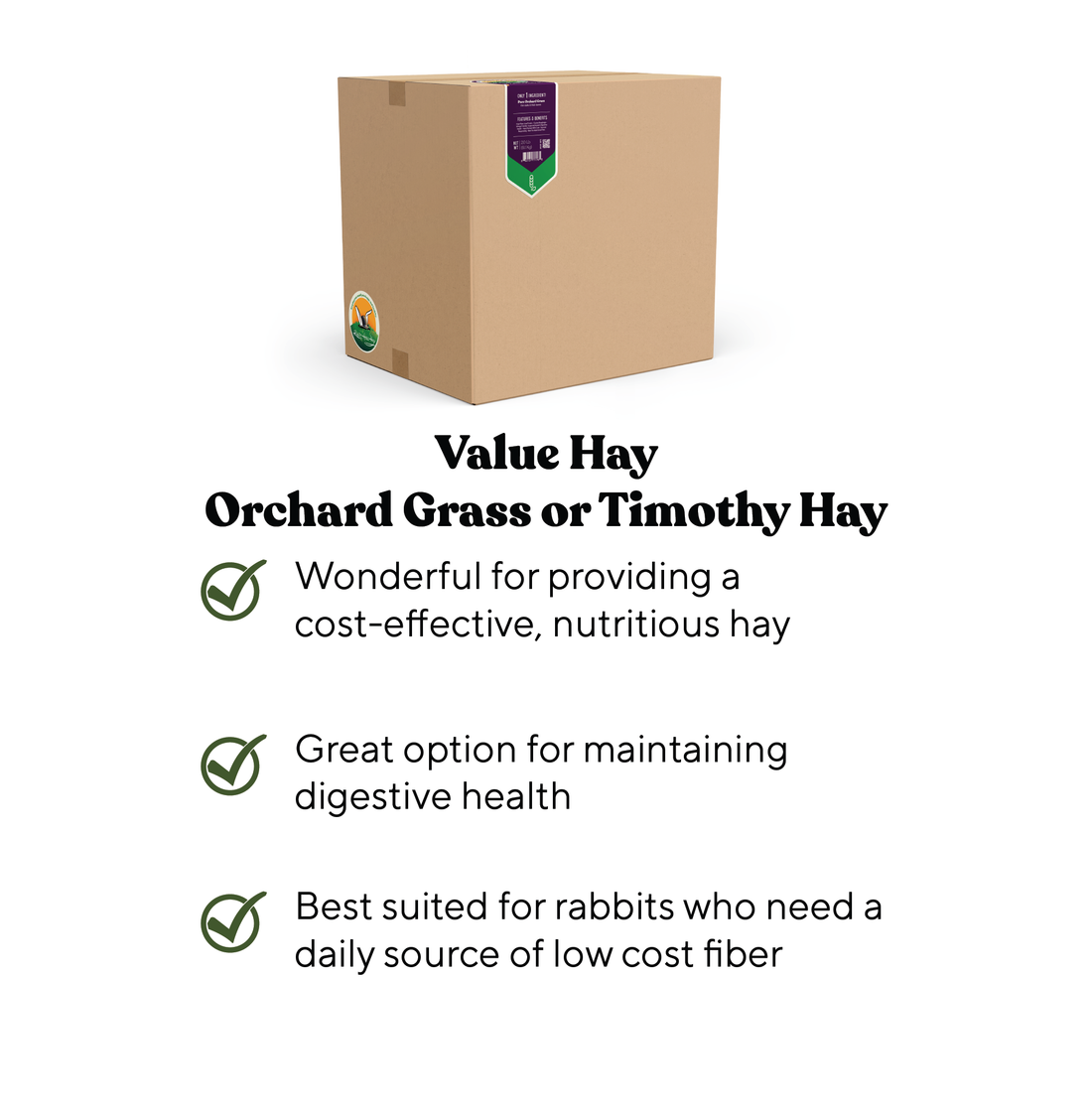
Some seniors get picky about smell and stem size. Try a different Timothy cut first. If dust or sneezing is the issue, orchard grass is often the next grass hay to try—it smells a little sweeter and can be easier on sensitive noses.
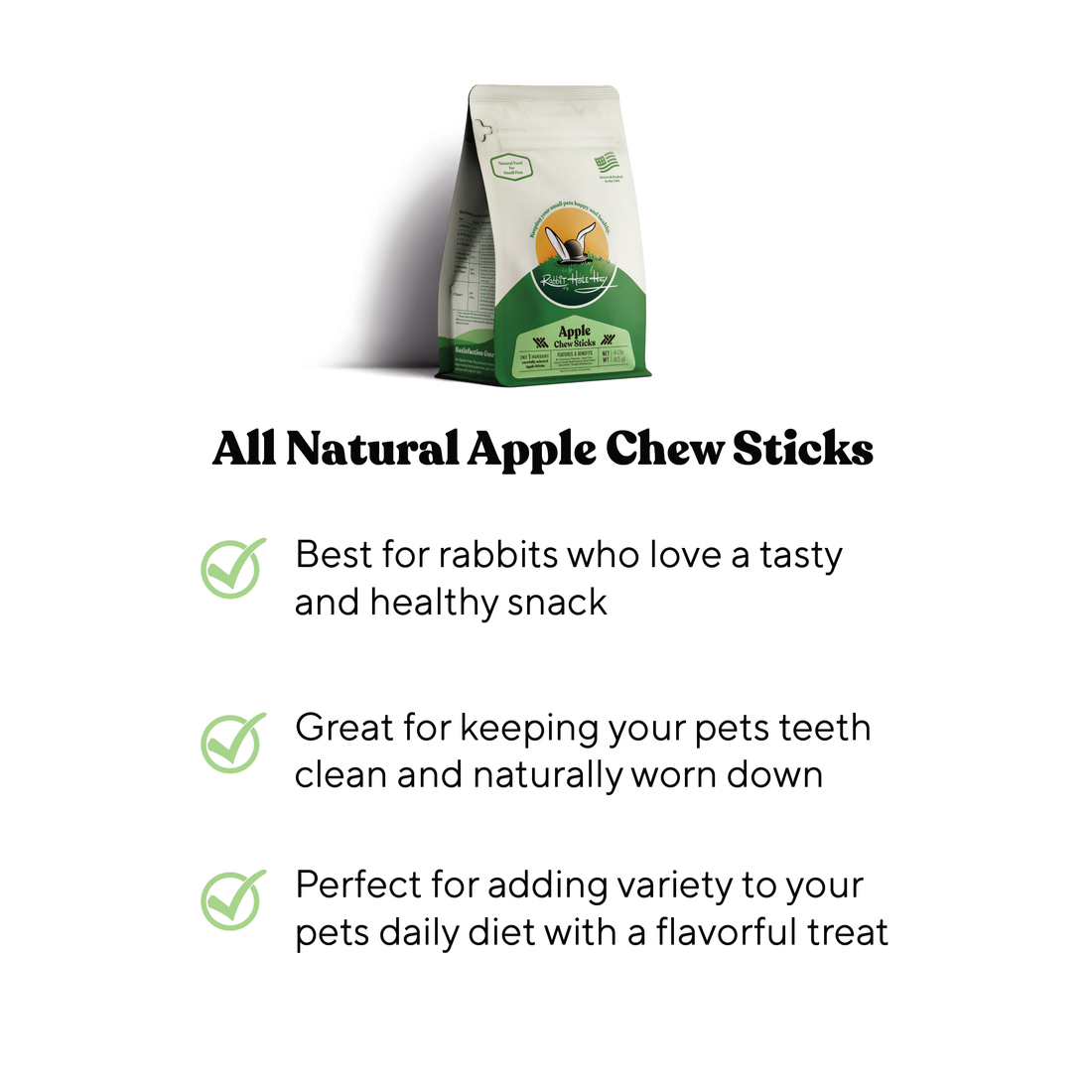
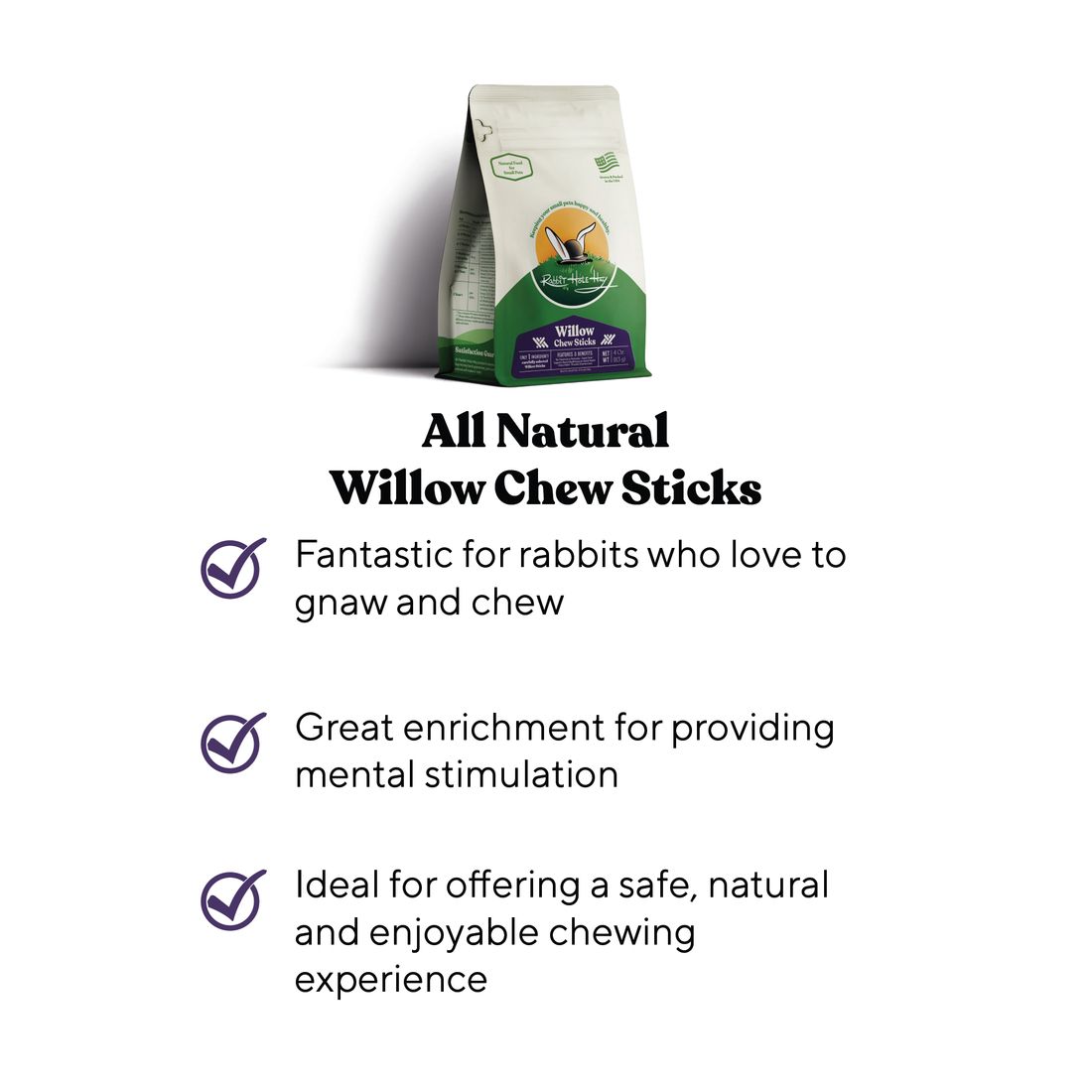
VCA Hospitals notes that rotating grass hay types can keep interest up. Soft orchard or soft Timothy may restart grazing, but soft hay alone does less dental work. Add untreated apple chew sticks or other rabbit-safe wood toys so teeth still get a job.
Sudden total refusal—especially with less poop, a hunched posture, or a quiet, tucked bun—is not a “picky phase.” That is a same-day vet call, not a new bag experiment.
When Does Alfalfa Belong in a Senior Rabbit's Diet?
Healthy adults and most seniors should not live on alfalfa. The extra calcium and protein can tip toward bladder sludge and weight gain when the rabbit is already at a good body condition.
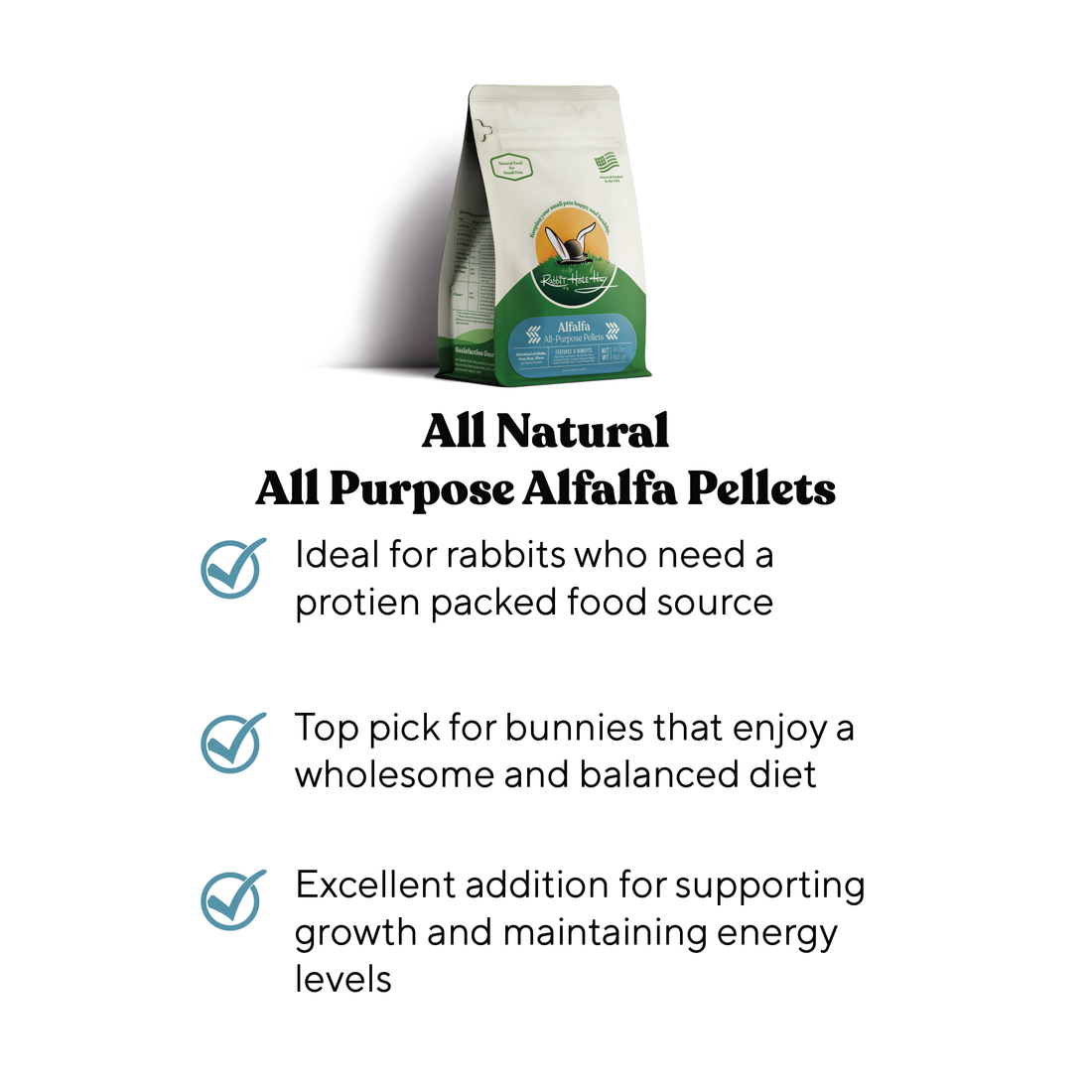
Underweight seniors or rabbits recovering from illness are the exception. Even then, alfalfa is a supervised add-in, not the whole rack. Ask your vet to confirm calcium status and overall health before you mix it in. A small alfalfa portion blended into their usual grass hay is safer than an overnight alfalfa-only bowl.
If weight is dropping and alfalfa is not on the table yet, check teeth and gut motility with your vet first. A lot of "they will not eat hay" nights turn out to be sore teeth—not a rabbit who suddenly hates Timothy.
How Do I Spot Digestive Trouble Related to Hay?
Senior droppings tell you whether the hay plan is working. Small, dry pellets often mean not enough fiber or water. Mushy or sticky stool means the gut is struggling—not that you need a sugary treat to “settle” them.
Poop stuck to the rear (“poopy butt”) is more than a messy clean-up. Soft stool in the fur raises fly-strike risk, so clean gently and call your vet if it keeps returning. House Rabbit Society's diet overview still puts hay near 80% of the everyday plate for a reason: fiber keeps the gut moving.
Fewer droppings, no interest in the hay pile, or a bun who sits still and stops exploring can slide toward GI stasis. Do not wait to “see if they eat dinner.” Get rabbit-savvy help the same day.

How Should Water and Pellets Change for Seniors?
Hay gets the spotlight, but dehydration makes every gut problem worse. If your senior ignores a bottle they used for years, offer a heavy ceramic bowl too. Some older rabbits find bowls easier; others still prefer bottles because the water stays cleaner. Offering both is the boring, effective fix.
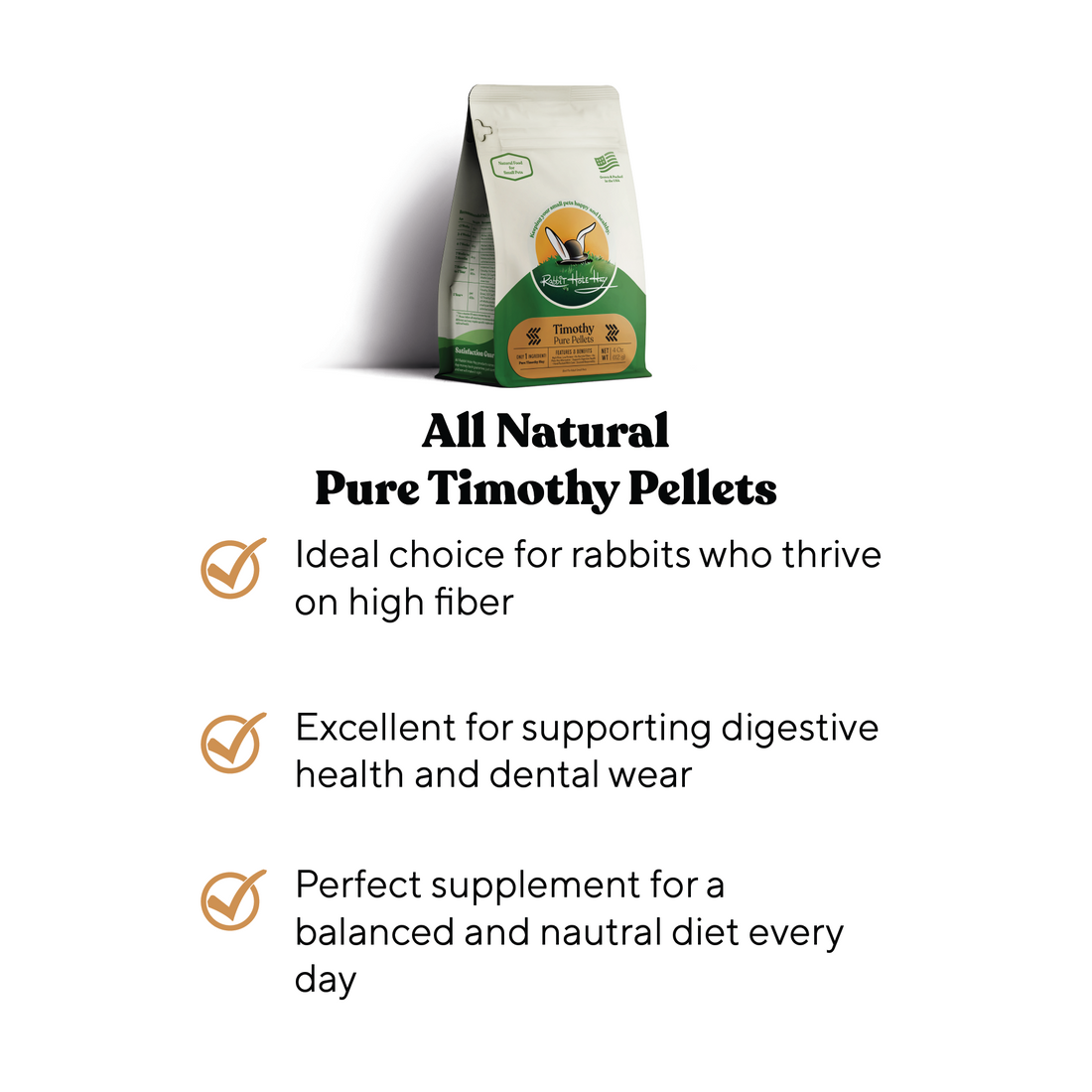
Pellets stay in a supporting role. Choose a plain timothy-based pellet without colorful seeds or dried fruit. If your rabbit is losing weight and your vet agrees hay alone is not enough, you may increase pellets carefully—not by pouring a free buffet of mix. Weight loss with a full bowl still points to teeth, pain, or illness more often than "they need more flavors."
What Daily Hay Routine Helps a Senior Rabbit?
Consistency beats clever recipes. A simple day looks like this:
Morning: Fresh medium or coarse Timothy plus a measured pellet serving.
Midday: Top up hay; offer leafy greens such as romaine or parsley. Keep sugary treats rare.
Evening: Another hay refresh; add soft Timothy or orchard if they ignored the firmer pile earlier.
Overnight: Hay still available; replace water so morning starts clean.
Rabbits graze in short sessions all day. An empty rack overnight is how seniors quietly under-eat. If soft hay becomes their favorite, keep chews in the pen so dental wear does not stall while they chase the easy stems.
Cold weather raises calorie burn. Keep the hay pile generous and the habitat draft-free rather than leaning on extra treats. Habitat comfort—low-entry litter boxes, non-slip flooring, food they can reach without jumping—matters as much as which bag you bought.
When Should I Call the Vet About My Senior Rabbit's Diet?
Yearly wellness visits are not optional once your rabbit is a senior. Ask for teeth checks, weight tracking, and bloodwork when your vet recommends it. Between appointments, call sooner if you see:
Sudden hay refusal or a sharp drop in droppings
Ongoing soft stool or poopy butt
Weight loss you can feel along the spine and hips
Drooling, favoring one side of the mouth, or dropping food
Lethargy, hiding more than usual, or grinding teeth in pain (not soft contented grinding)
You are not overreacting for booking that appointment. Older rabbits hide discomfort until the litter box and food bowl make it obvious—and by then, waiting overnight rarely helps.
Key Takeaways for a Senior Rabbit Hay Diet
Keep grass hay unlimited and match Timothy cut to teeth and appetite—medium for most, soft when chewing or interest slips. Use alfalfa only for underweight seniors with vet approval. Watch droppings, water access, and weight the same week you change the bag.
Small daily habits beat a perfect shopping cart. Fresh hay, clean water they will actually drink, and a rabbit-savvy vet who knows your bun's baseline will do more than any single "senior formula" claim on a package. When you want greens, pellets, and hay in one place, our Understanding Your Rabbit's Diet page is a solid next step.





Comments