














































































Rabbits are known for their cute looks and curious personalities but they’re also impressive runners. Whether they’re zipping away from predators or simply sprinting for fun, their speed is something to marvel at. It’s one of the many traits that help these small mammals survive in the wild.
Click Here For a Beginners Guide to Rabbit Care.

But just how fast can rabbits run? The answer might surprise you. Let’s dive into the details of their speed, the factors that influence it, and how their agility compares to other animals.
What Makes Rabbits Such Fast Runners?
Rabbits might look fragile, but their bodies are built for speed and quick escapes. They rely on their strong hind legs and lightweight bodies to achieve rapid bursts of motion. When they run, they use a leaping gait called a “gallop.” This allows them to cover large distances in seconds, all while staying nimble and unpredictable in their movements.
Their skeletal structure also plays a role. A rabbit’s spine is highly flexible, allowing for a full range of motion during a sprint. Combined with powerful muscles, especially in their hindquarters, rabbits can generate explosive speed almost instantly.
Interestingly, a rabbit’s ability to run fast isn’t just about strength; it’s also about instinct. In the wild, rabbits are prey animals. They’ve evolved to detect danger quickly and react in seconds, often zig-zagging to throw predators off their trail.
How Fast Can Rabbits Run?
The question “How fast can rabbits run?” has a simple yet fascinating answer: Most rabbits can reach speeds of 25 to 35 miles per hour. This speed varies depending on the breed, size, and individual fitness level of the rabbit. For comparison, that speed is faster than the average human sprinter!
Wild rabbits, like Jackrabbits, are some of the fastest. Their top speed can hit 45 miles per hour when fleeing predators. Domesticated rabbits, on the other hand, usually don’t need to run as fast. Still, some domestic rabbits can reach the impressive speeds of 25 miles per hour.
What makes their speed even more remarkable is how quickly they can accelerate. A rabbit can go from a standstill to full speed in just a second or two. This quick reaction time is critical for survival in the wild.
Factors That Influence a Rabbit’s Speed
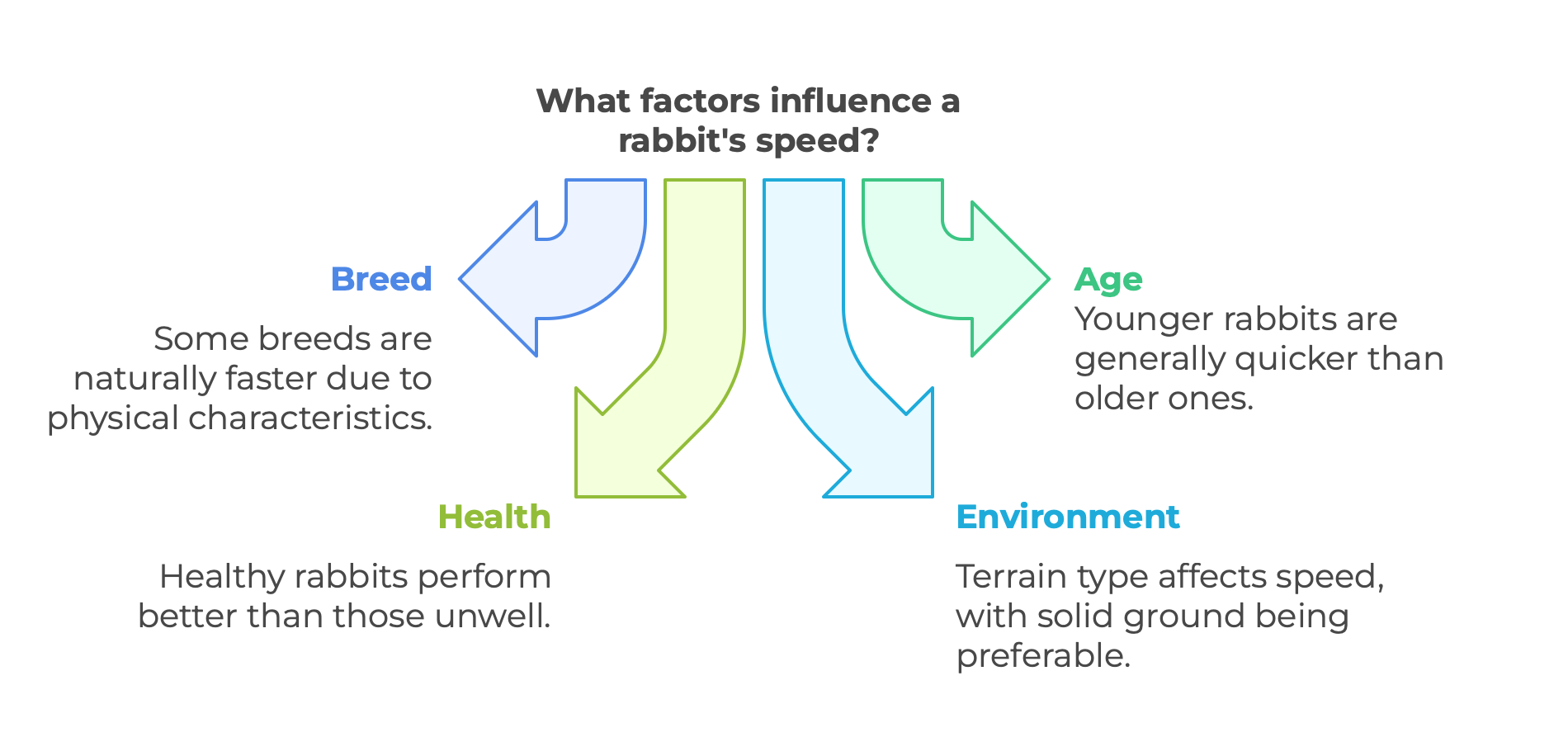
Not all rabbits are created equal when it comes to running. Several factors can influence how fast a rabbit can move:
-
Breed: Some breeds, like the Belgian Hare, are naturally faster due to their lean build and long legs. Others, like dwarf breeds, aren’t as speedy but make up for it with agility.
-
Age: Young rabbits tend to be quicker and more energetic than older ones. As rabbits age, their muscles and joints may lose some flexibility, slowing them down.
-
Health: A healthy rabbit with a balanced diet and regular exercise will perform better than one that’s overweight or unwell.
-
Environment: The type of terrain also matters. Rabbits run faster on solid, flat ground than on uneven or slippery surfaces.
How Rabbits Use Speed in the Wild
For wild rabbits, running fast is a matter of life or death. Their ability to sprint and change direction quickly helps them evade predators like foxes, hawks, and coyotes. A rabbit’s zig-zagging motion can confuse predators and make it difficult for them to keep up.
Additionally, their speed is essential for covering distances when foraging for food or finding shelter. Wild rabbits need to be constantly on the move, whether it’s to avoid threats or search for better resources. Speed gives them the edge they need to survive in a competitive environment.
How Do Rabbits Compare to Other Fast Animals?
Rabbits might not be as fast as a cheetah, which can hit speeds of up to 70 miles per hour, but they’re certainly no slouches. In fact, they outrun many other small mammals. For instance, squirrels and chipmunks top speed is 20 miles per hour. Rabbits easily leave them in the dust.

Even in the pet world, rabbits are among the fastest small mammals. Cats, for example, can run at a maximum speed of 30 miles per hour, but most household cats rarely reach that speed. Rabbits are also faster than guinea pigs, which can only run at around 6 miles per hour.
Ultimately, a rabbit’s speed serves a different purpose than that of larger predators. While animals like lions use their speed for hunting, rabbits use it as a defensive mechanism. This makes their quickness even more impressive because it’s paired with incredible agility and awareness.
Why Pet Rabbits Need to Stay Active
Domesticated rabbits don’t need to outrun predators, but exercise is still crucial for their health. Regular playtime in a safe, open area helps them maintain muscle tone and stay mentally stimulated. Even pet rabbits enjoy short bursts of speed, which mimic their natural instincts.

If you have a rabbit at home, consider setting up an enclosed space where they can run and hop freely. Some owners even use agility courses or tunnels to encourage movement. These activities not only promote fitness but also allow rabbits to express their playful side.
Remember, a happy, healthy rabbit is an active rabbit. Providing space and opportunities to move and binky is one of the best ways to ensure your furry friend thrives.
Conclusion
So, how fast can rabbits run? With speeds reaching up to 35 miles per hour, they’re among the fastest small mammals. Their unique combination of strength, flexibility, and instinct makes them exceptional runners, whether they’re dodging predators or playing in the backyard.
For pet rabbits, staying active is just as important. By encouraging movement and play, you can help your rabbit live a happy, healthy life while appreciating the natural speed that makes them so special.
Curious about more rabbit behavior? Learn about rabbit behavior and explore how to respond to their unique body language.






Comments