












































Rabbits usually reach for the sweetest, easiest bite in the room—fruit, extra pellets, tender greens—if those show up every day. In a healthy home, their true favorite food should still be hay: about 80% of what they eat. Treats and produce can be the fun part once hay is the main course, not the thing that edges it out.
If your rabbit acts like hay is wallpaper while they beg for snacks, you are not alone—that is normal rabbit math, not a broken pet. We will walk through which foods they actually love, which hay fits their age, and how to keep treats from shrinking the hay pile. For the bigger hay-first picture, start with our guide to the best rabbit hay for everyday health.

What Foods Do Rabbits Usually Prefer?
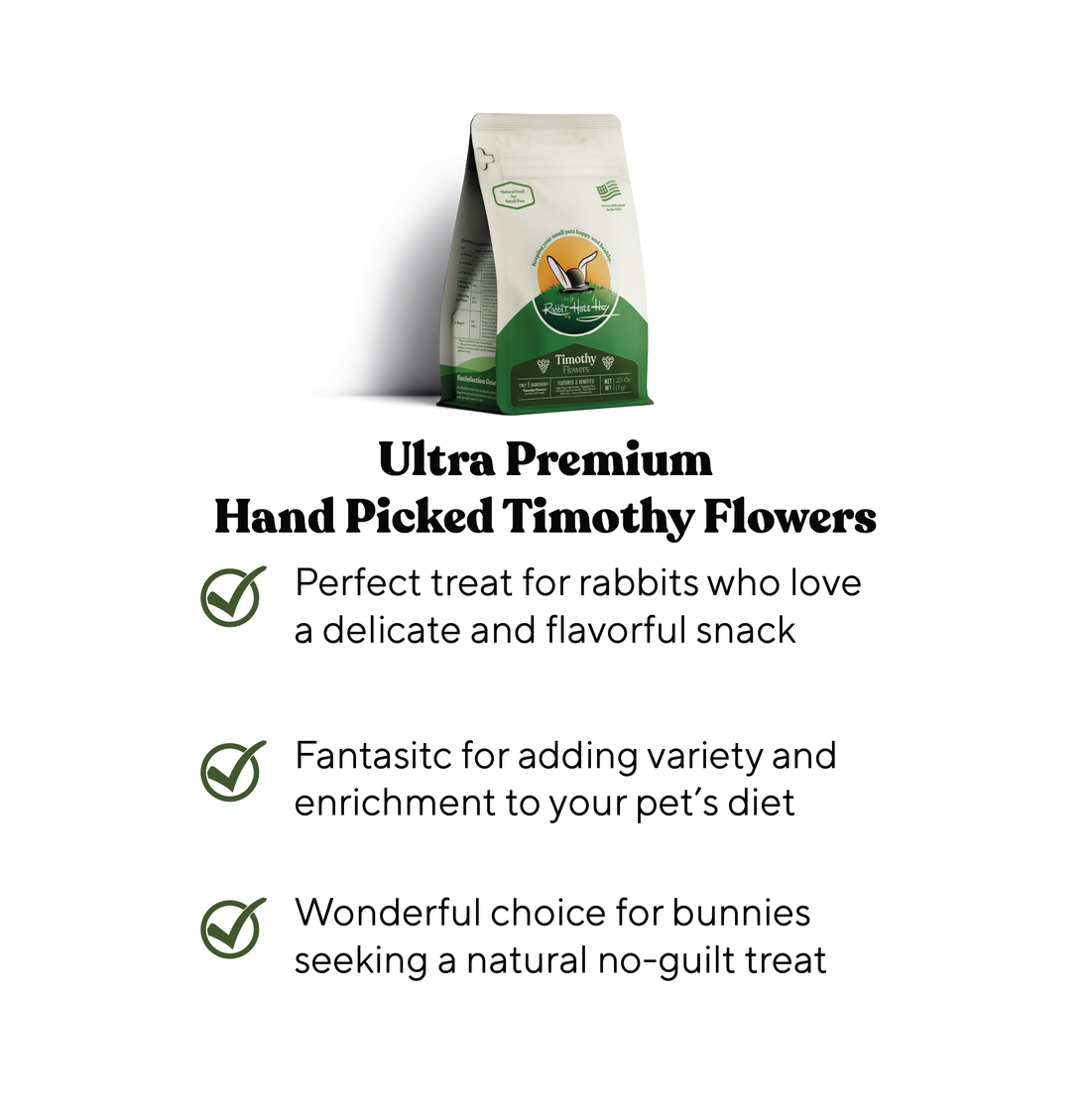
Most pet rabbits light up for anything sugary or starchy—banana chips, carrots, apple slices, and a heaping pellet bowl. Leafy greens rank high too: cilantro, romaine, and parsley often disappear before you finish chopping.
Individual taste varies. One rabbit worships orchard grass; another only touches soft Timothy. Some ignore cubes but love loose hay in the litter box. Watch which pile empties first—that is your rabbit's honest vote.
Those preferences are fine as long as hay still wins on volume. Favorites only become a problem when they shrink the hay pile. If snacks are winning every day, read our guide to why rabbits skip hay before you write them off as picky.
Why Should Hay Be the Favorite Food?
Hay is not just filler. Constant chewing wears teeth down and keeps the gut moving—the two systems that keep a rabbit alive day to day. House Rabbit Society puts unlimited grass hay at the center for that reason.
Think of hay as the engine and everything else as passengers. Pellets, greens, and treats can ride along, but they should not replace the miles of fiber your rabbit needs to chew through each week. A rabbit who fills up on treats and skips hay is choosing dessert for every meal—you would not either.
Fresh hay should smell grassy and look green, not dusty or yellowed. Quality matters because stale hay is easy to ignore. If the pile sits untouched, swap in a fragrant bag from a fresh hay collection before you decide they hate fiber.
Which Hay Types Fit Young Rabbits Versus Adults?
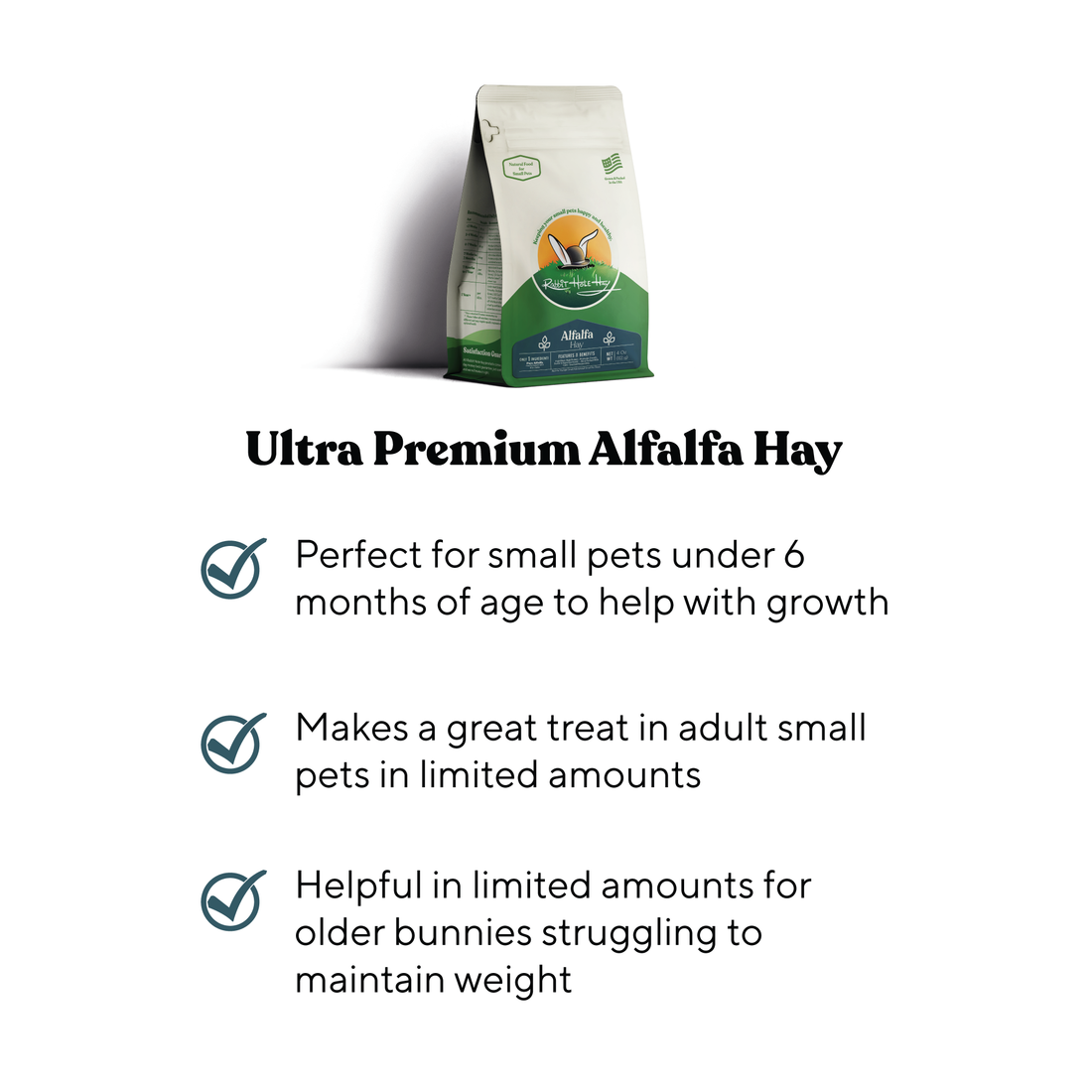
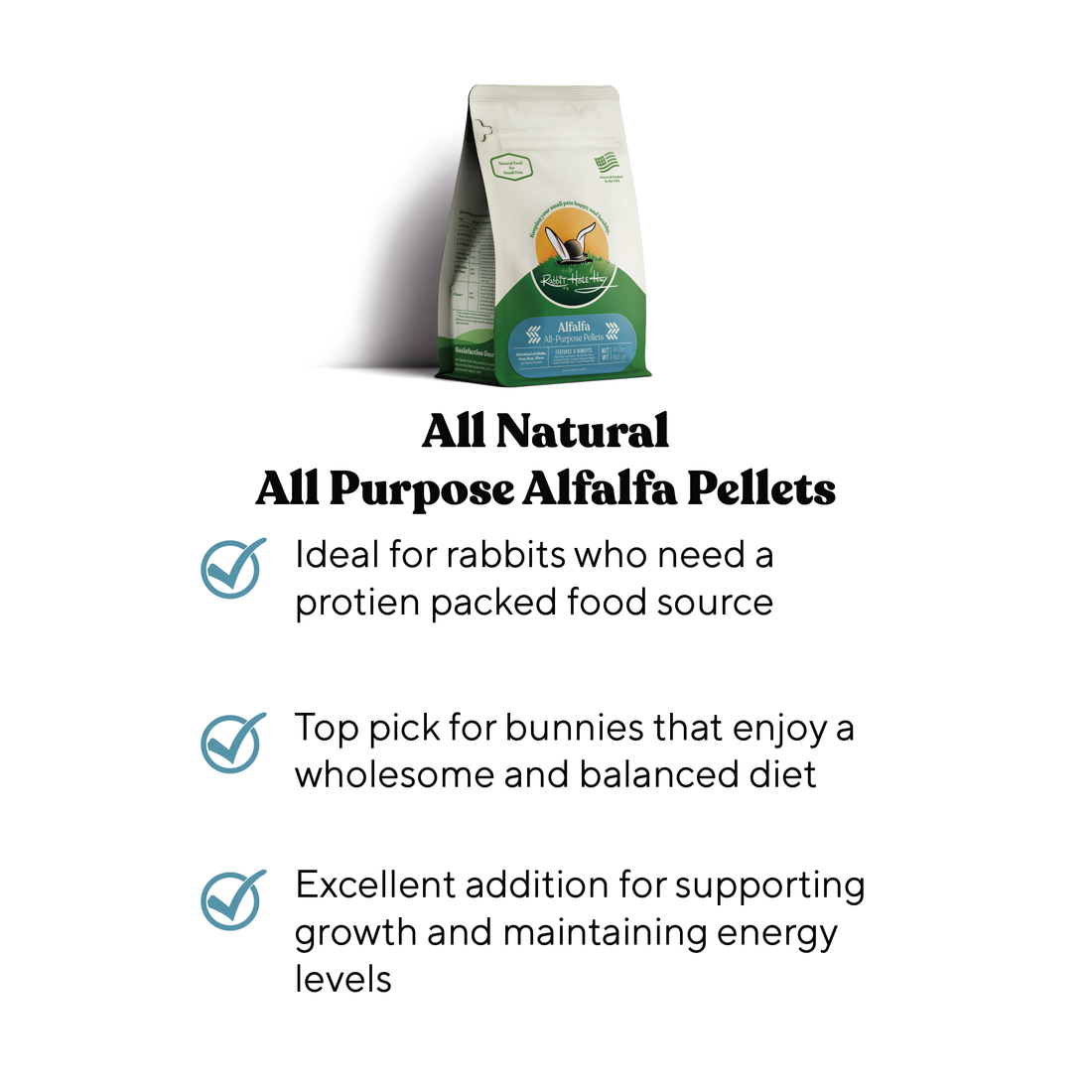
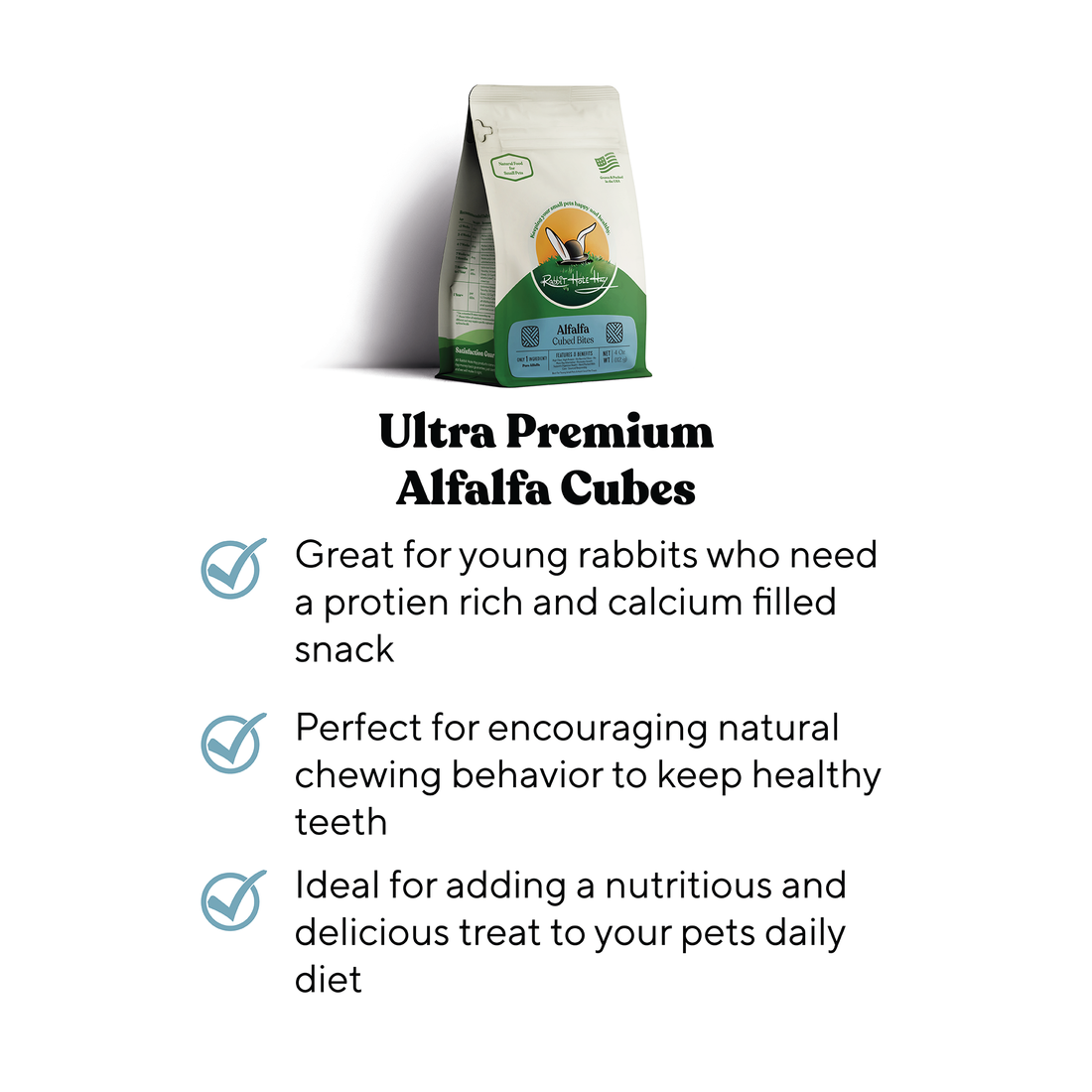
Young rabbits under about seven months are still growing. Alfalfa hay fits that stage—higher protein and calcium, bigger leaves, thicker stems. Pair it with age-right pellets and plenty of water while they build bone and muscle.
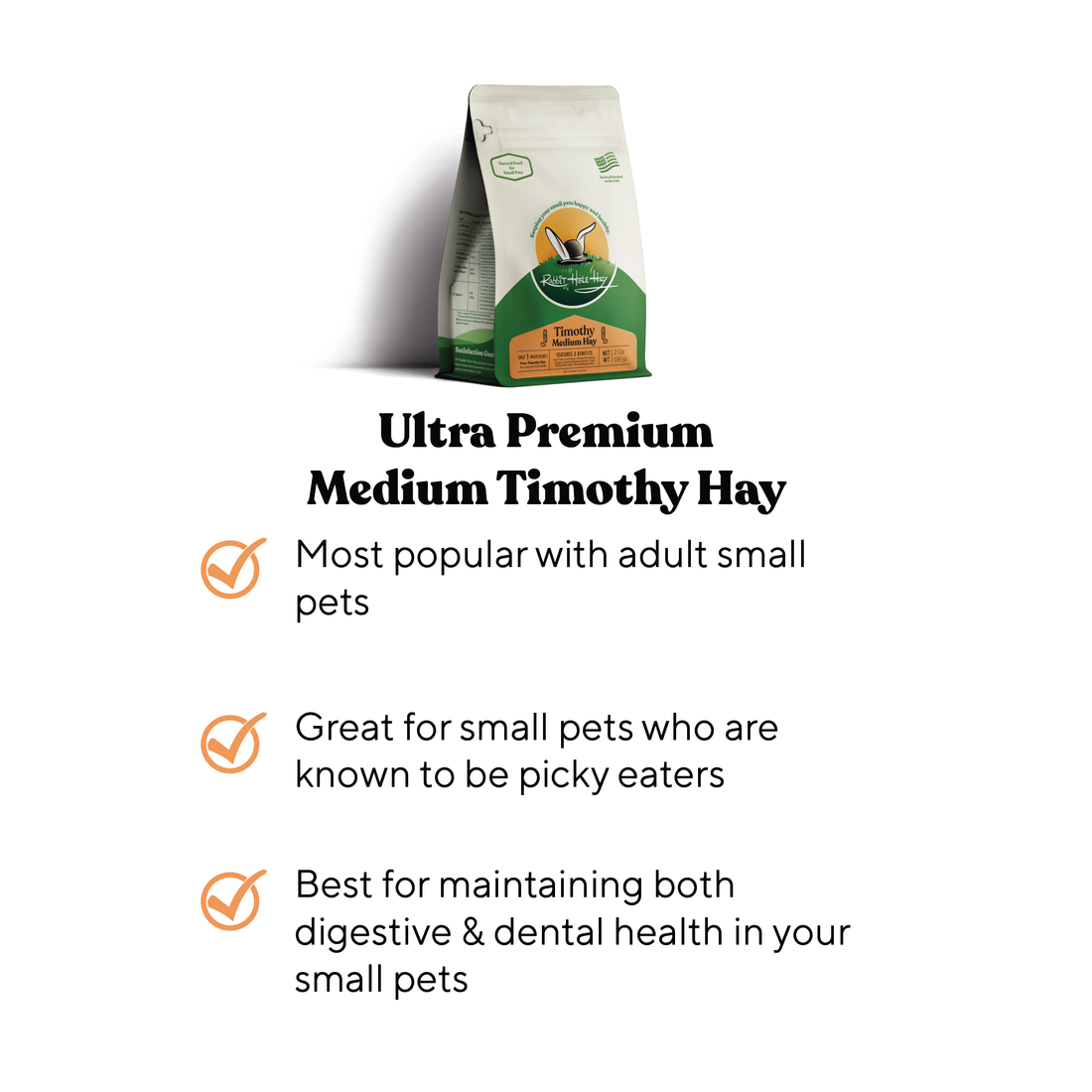
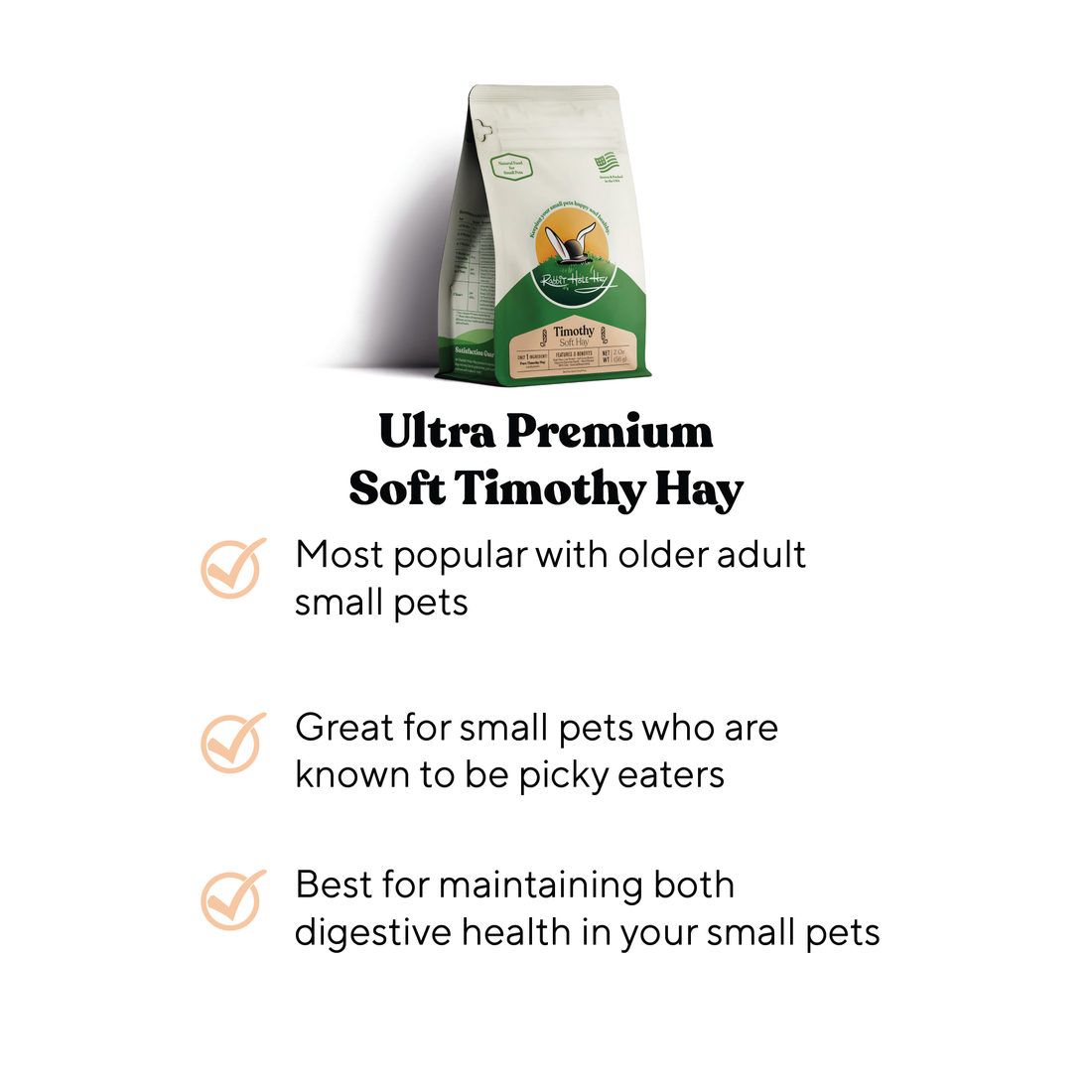
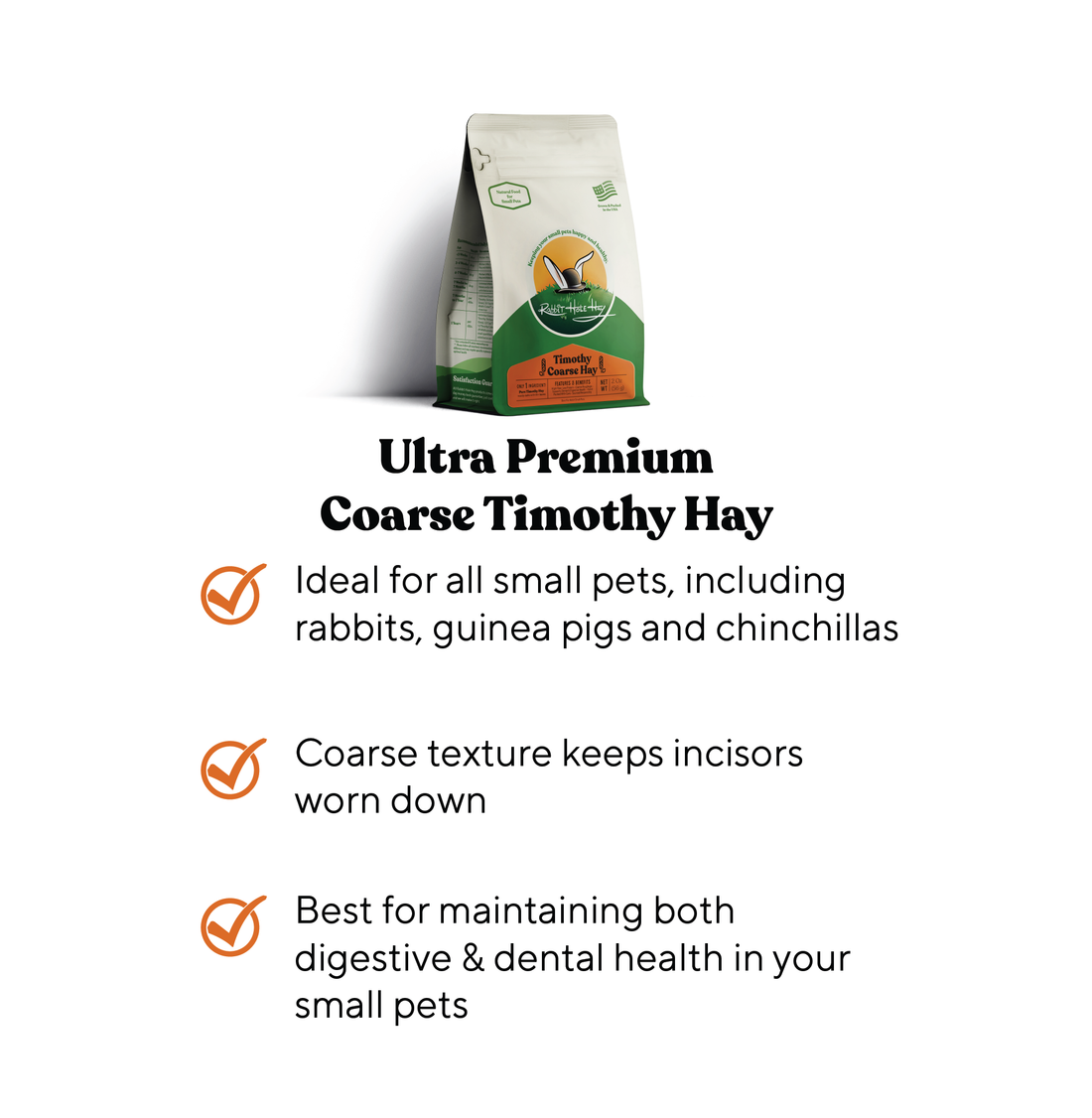
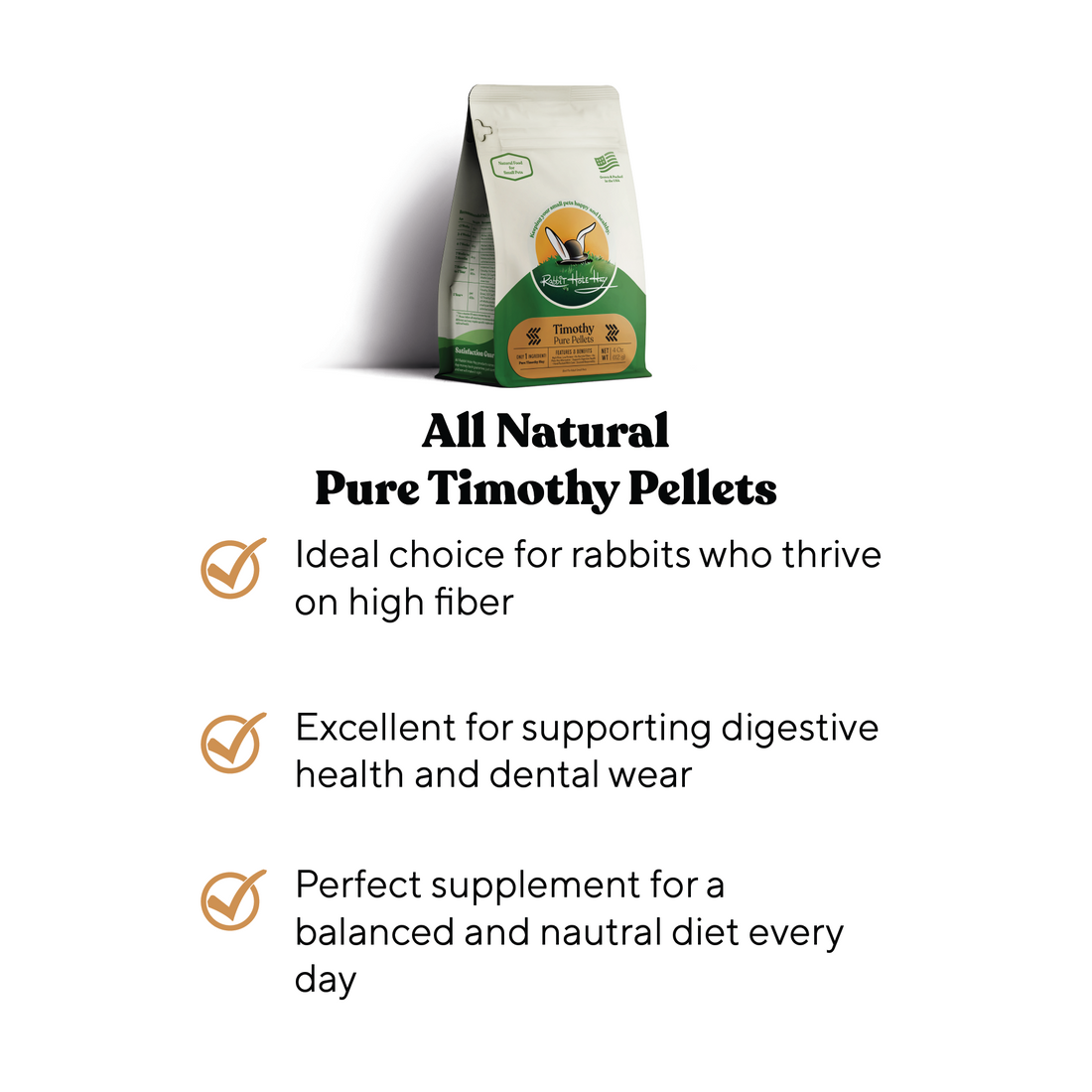
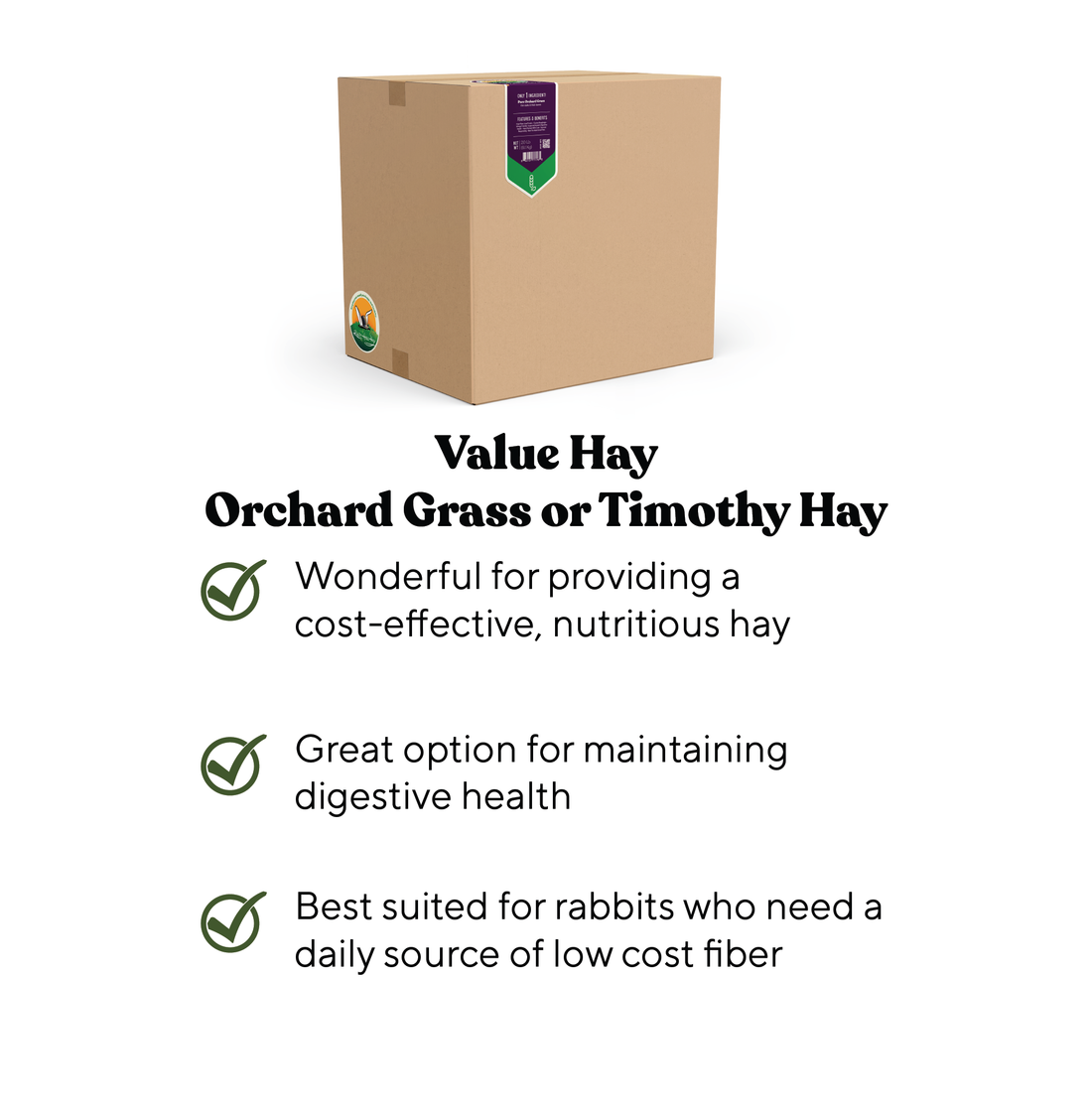
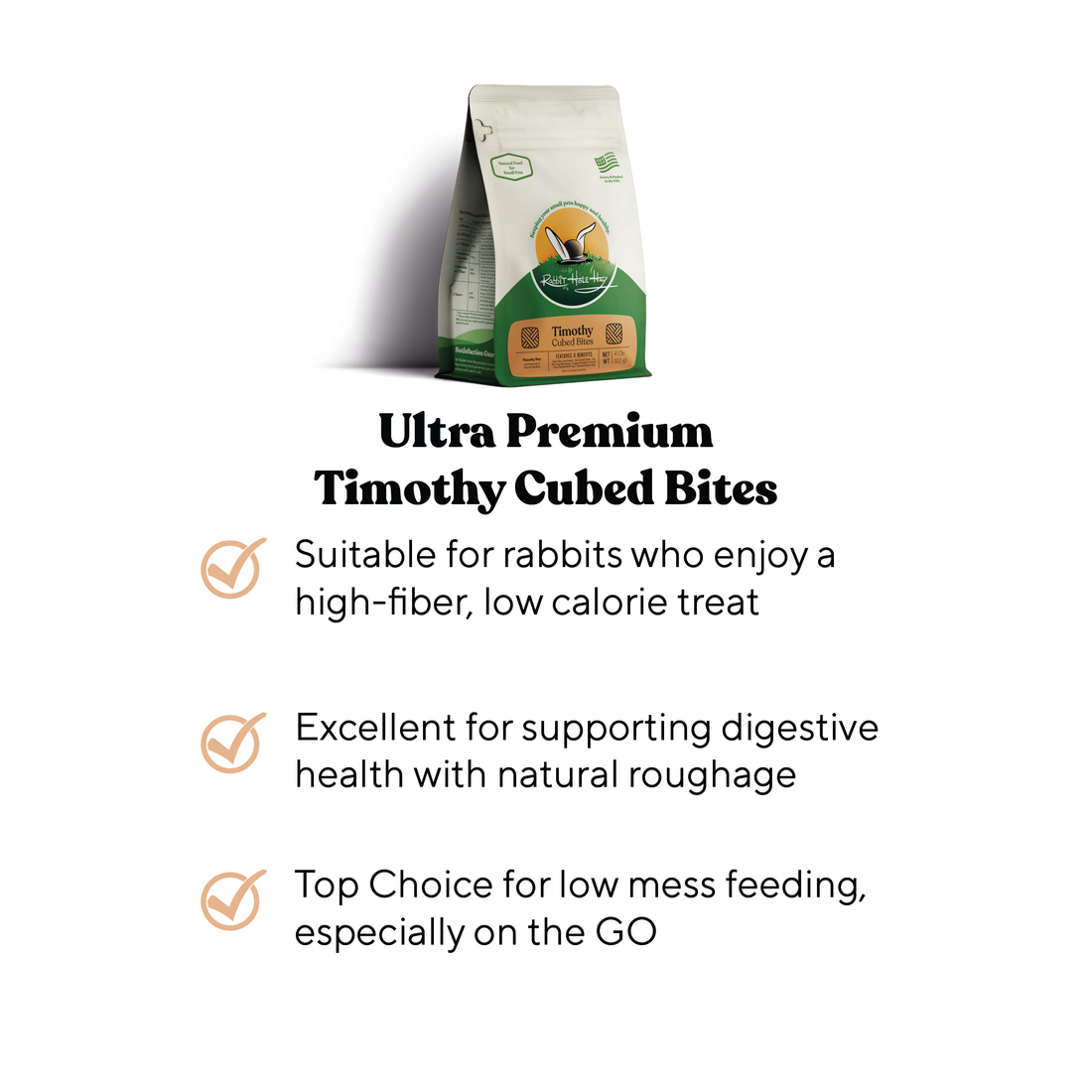
Adult rabbits need grass hays that are high in fiber and lower in protein and calcium. Timothy Hay is the everyday staple for most buns. Farmers cut it in three passes: coarse first cut for strong chewers, medium second cut for a balance of stem and leaf, and soft third cut for rabbits who need gentler texture.
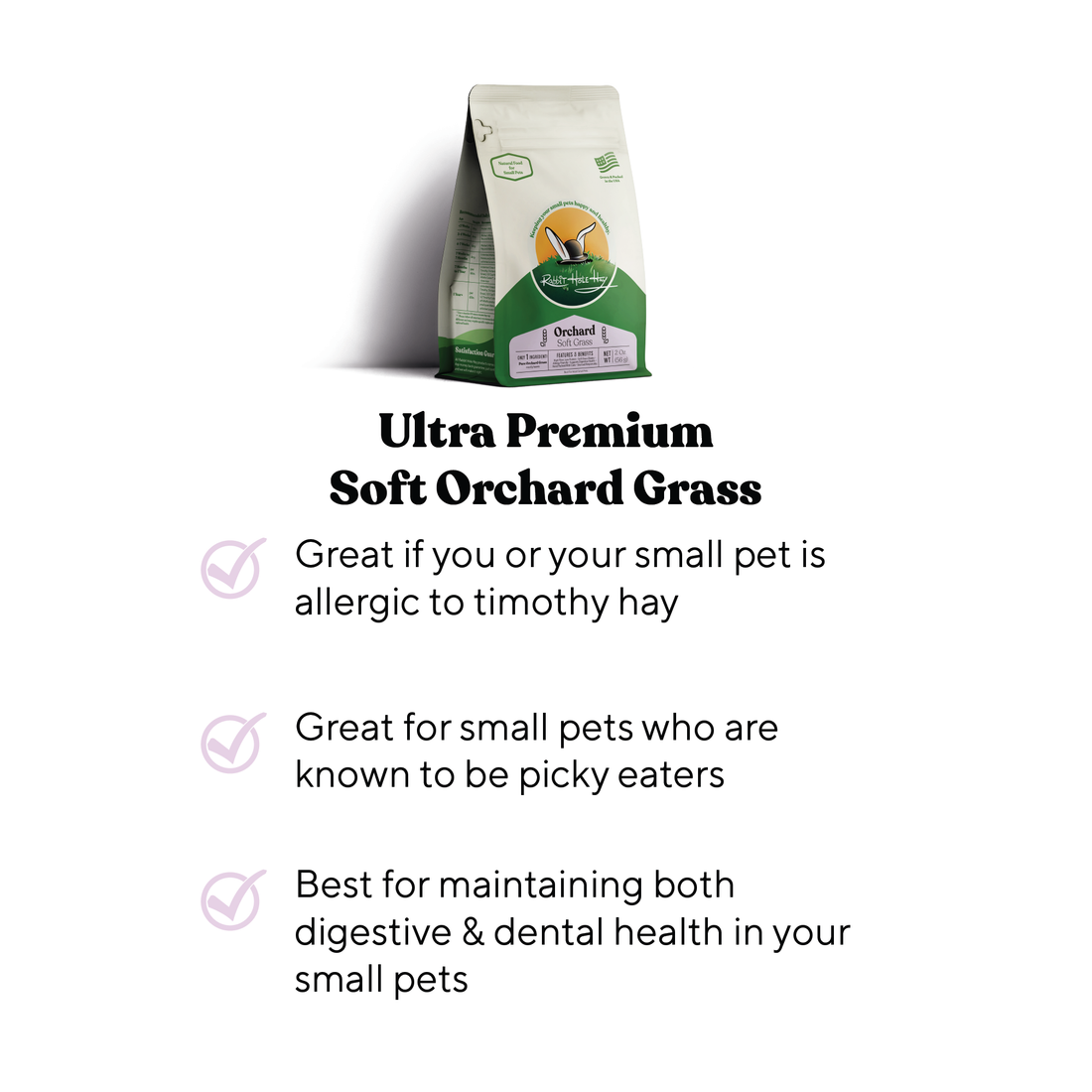
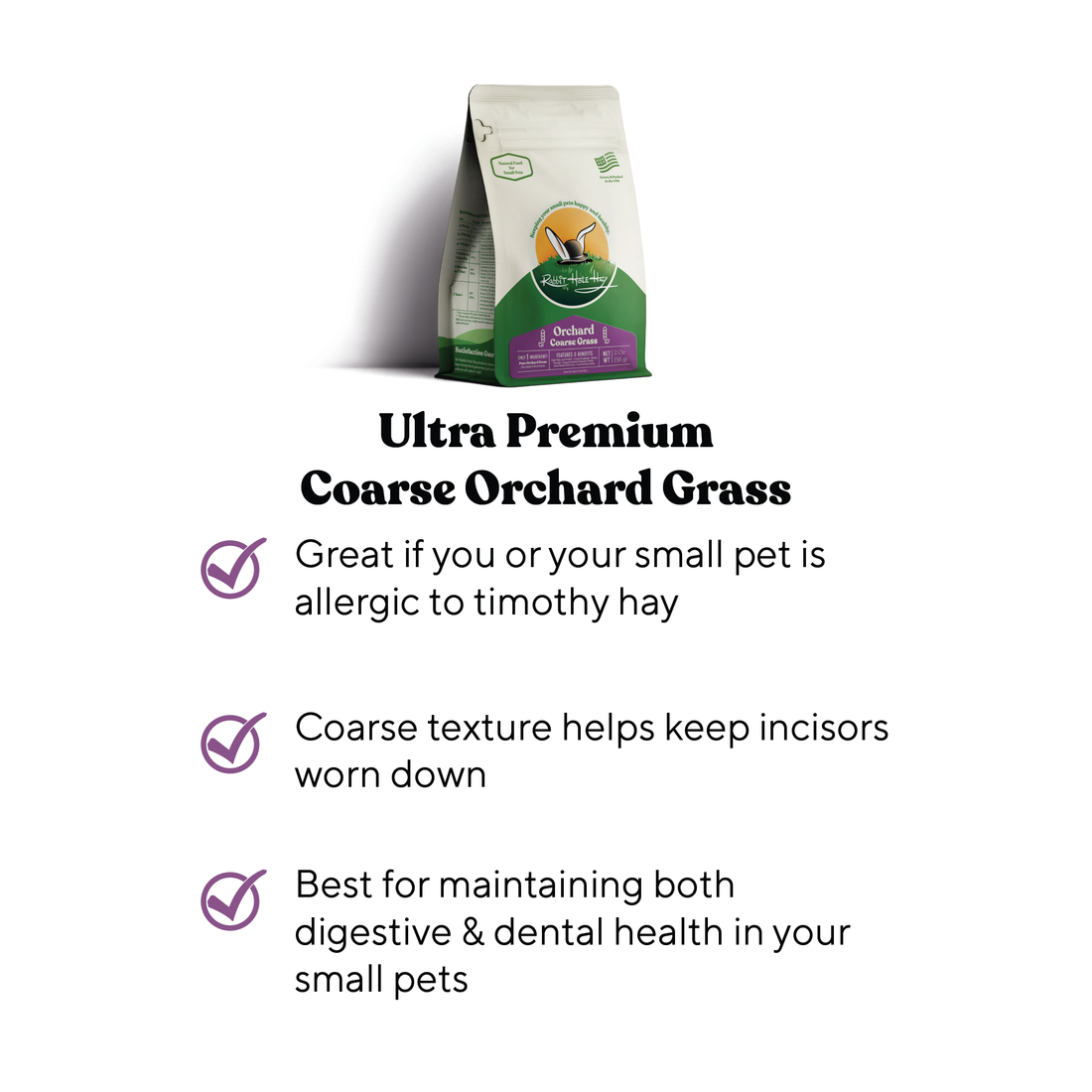
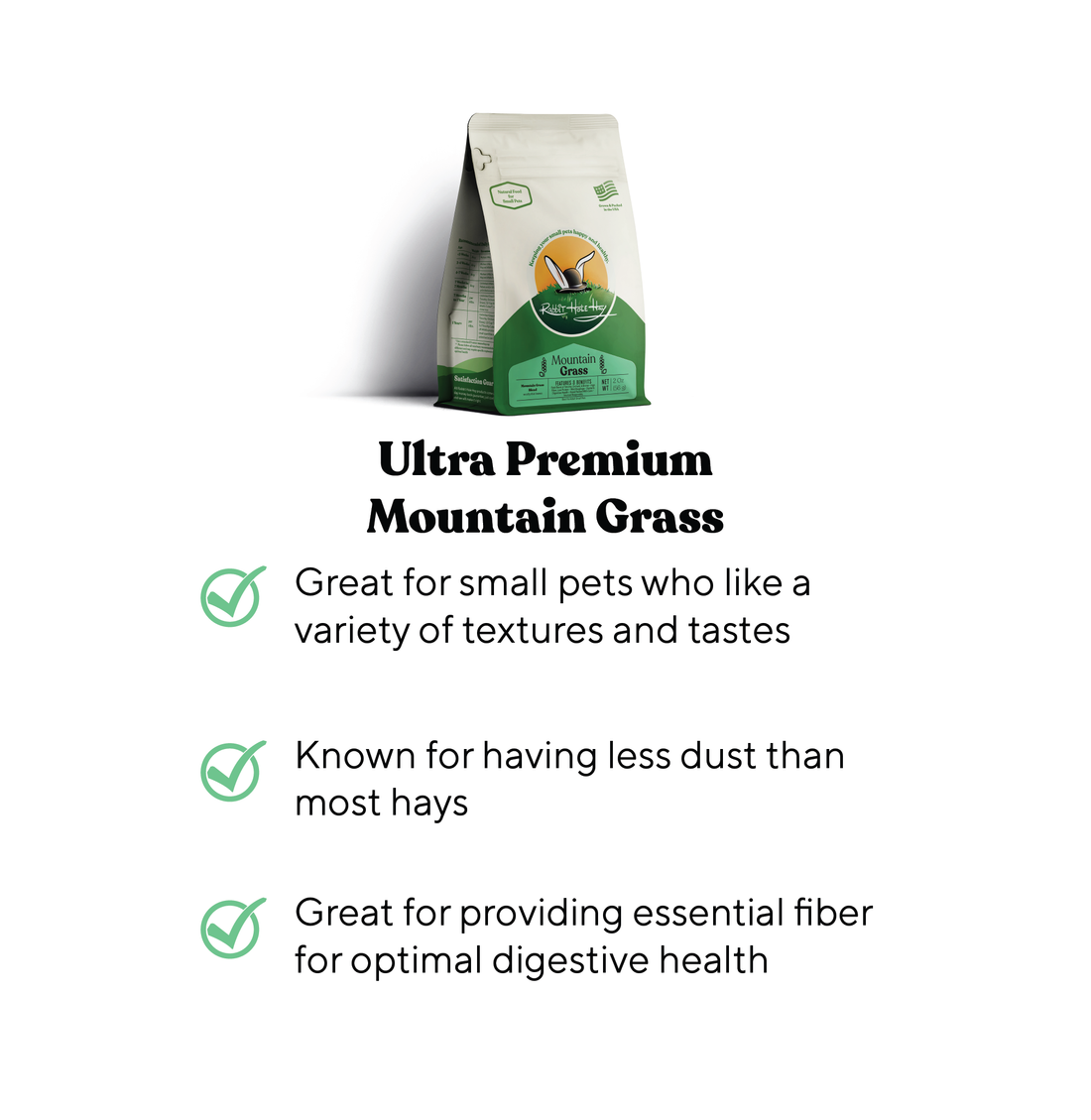
Coarse Orchard Grass and soft orchard grass are solid swaps for rabbits—or people—sensitive to Timothy pollen. Mountain Grass blends wild grasses with coarse leaves and little stem, close to what rabbits might browse outdoors.
Plan the handoff around seven months. Blend alfalfa down and grass hay up over a week or two so appetite and droppings stay steady. Our guide to changing hay as a rabbit grows walks through the timing.
When Soft Hay Needs Extra Chewing Help
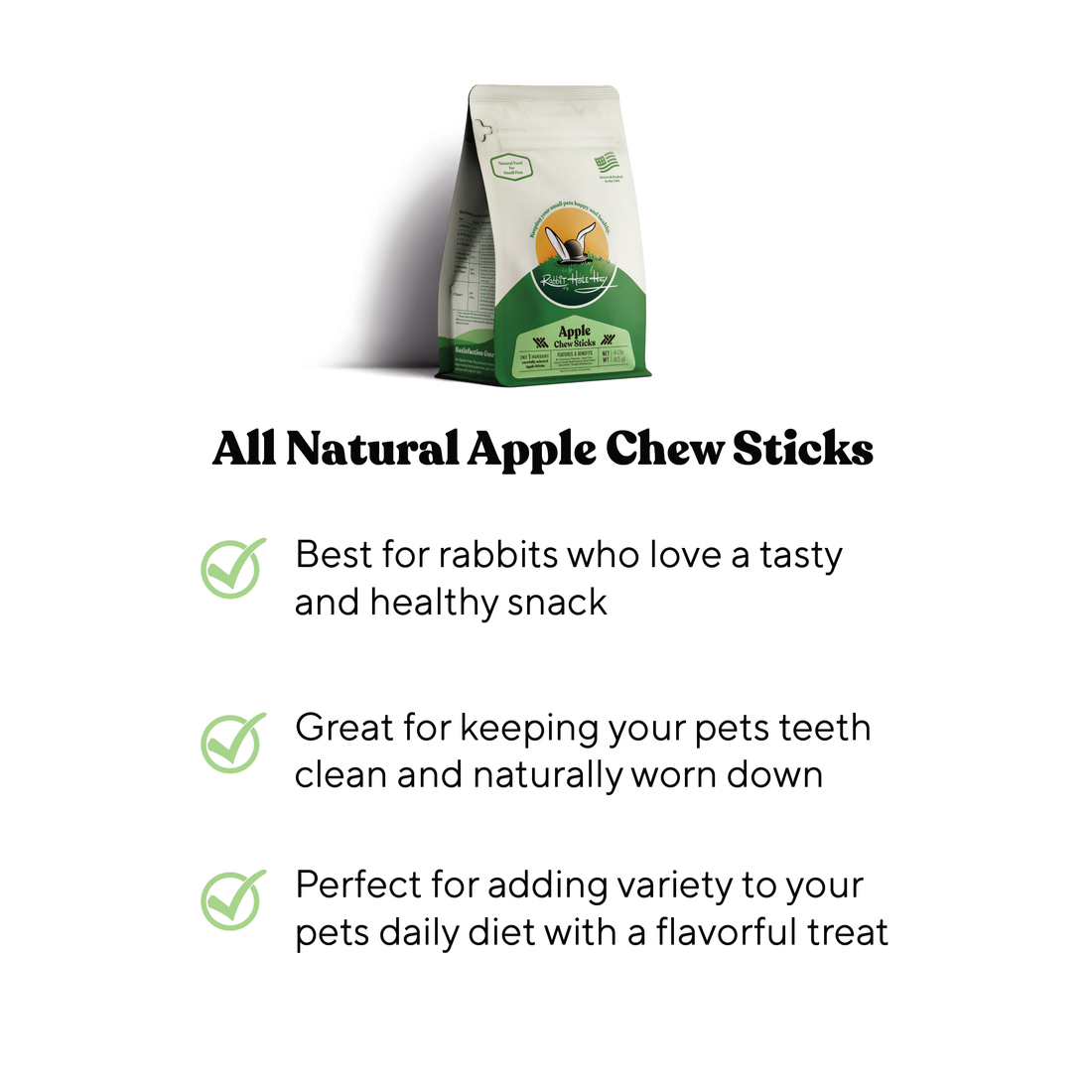
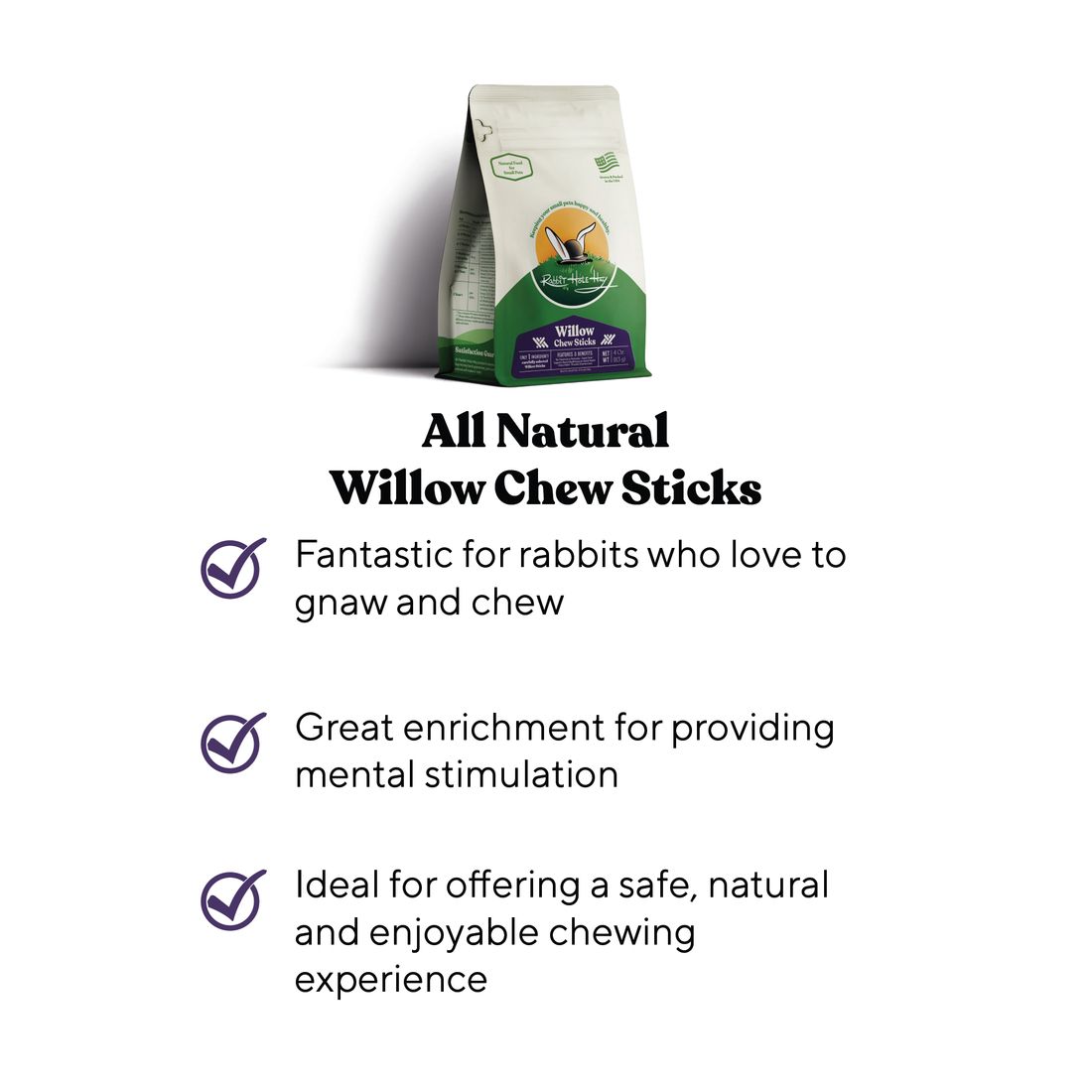
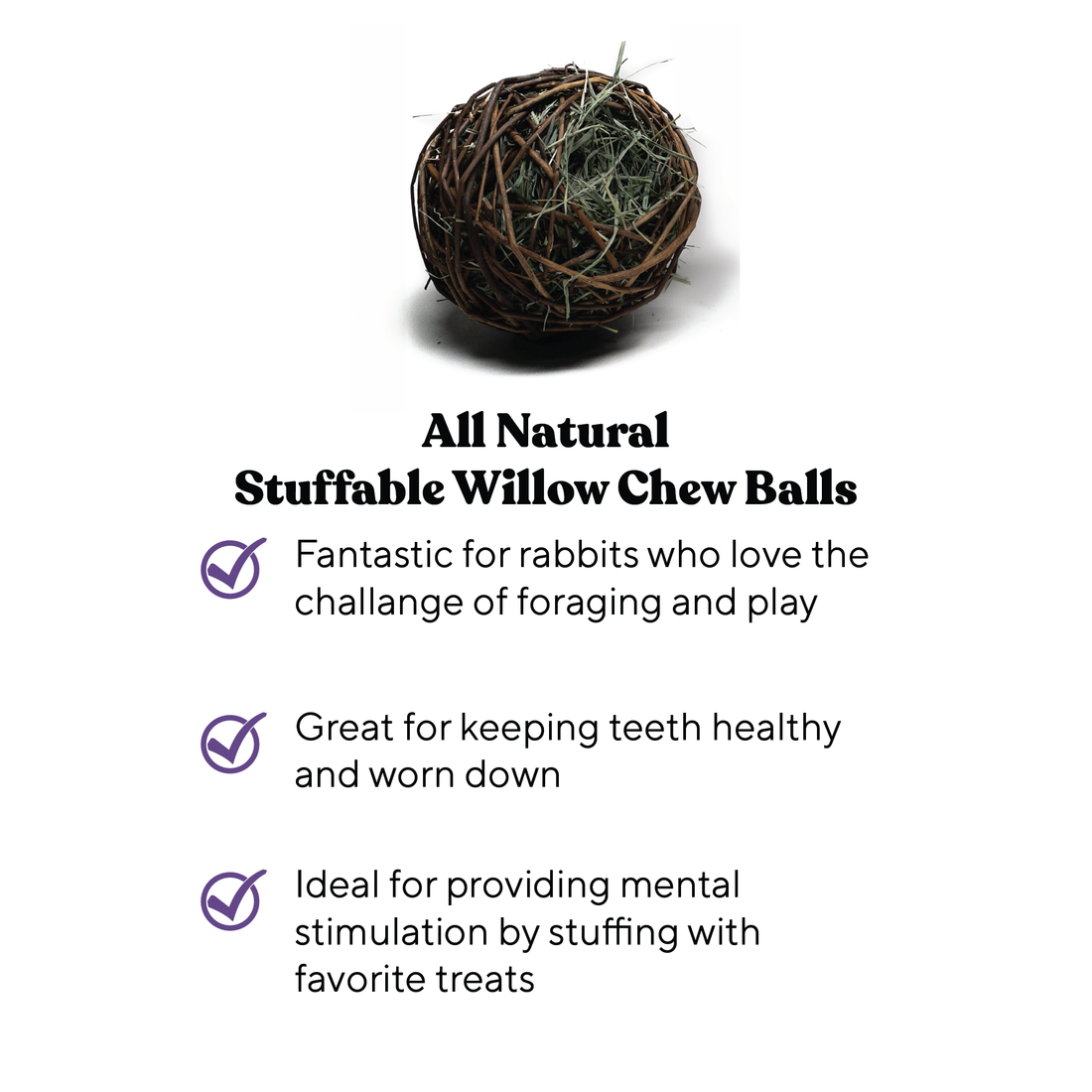
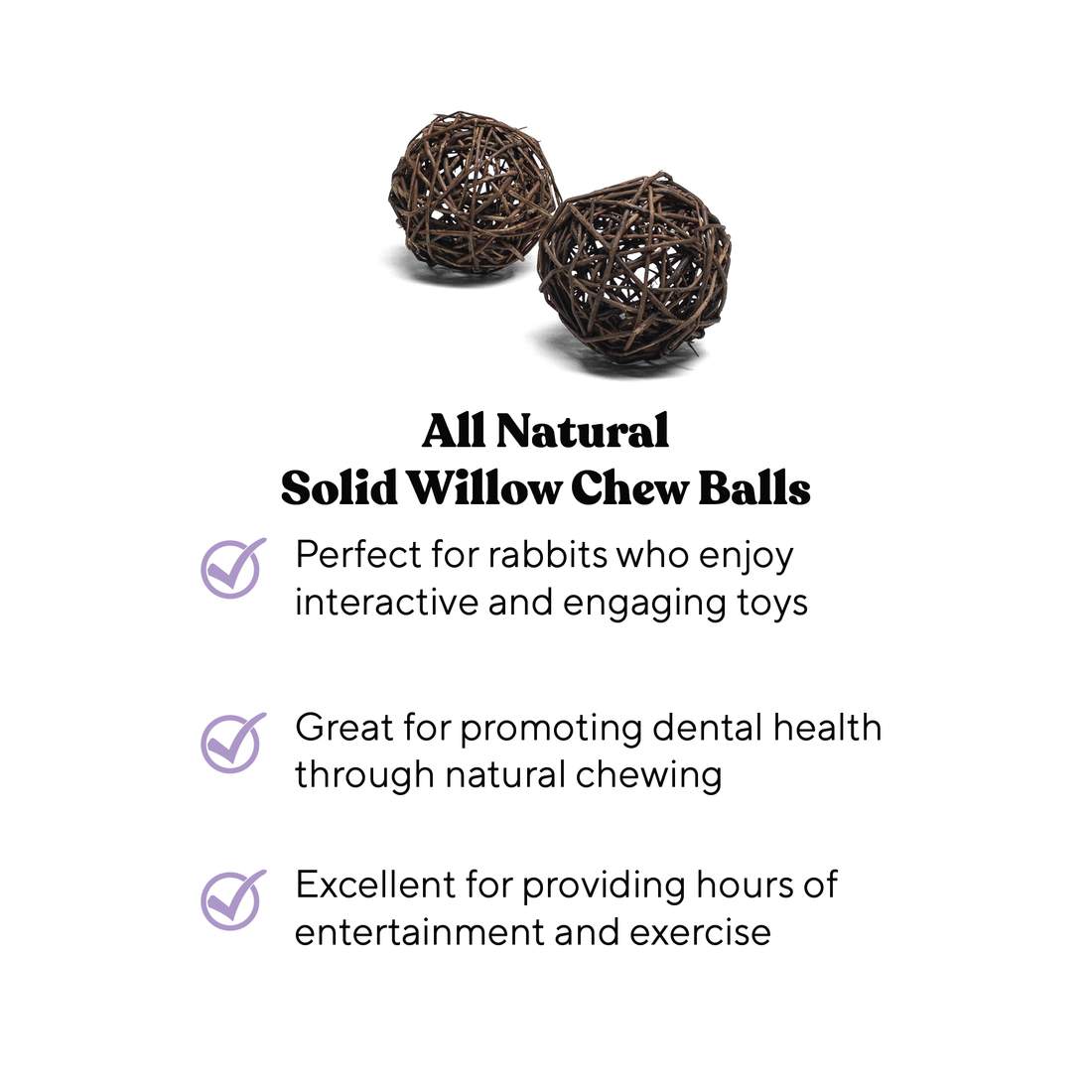
Rabbits on soft Timothy or soft orchard grass still need something coarse to grind teeth. Add apple chew sticks, willow chew sticks, or a handful of coarse hay alongside the soft pile. Dental wear is daily maintenance, not a one-time fix.
What Fresh Foods Do Rabbits Love After Hay?
Rabbits adore vegetables and herbs—and those belong in the bowl once hay is covered. Leafy greens like romaine and escarole, plus herb tops, are crowd favorites. Carrot tops and radish greens make great small treats without the sugar hit of the root itself.
Skip potatoes, beans, nuts, seeds, and corn. They upset rabbit digestion fast. Keep fruit to rare pinches—a thumbnail of banana, not a daily dessert.
Serve greens after you see steady hay eating, not as a bribe that replaces it. If produce shrinks the hay pile, cut portions back until grazing returns to normal.
How Can I Get a Picky Rabbit to Love Hay?
Some rabbits need a nudge before hay feels like the best option in the room. Try rubbing a tiny amount of fresh mint, sage, rosemary, or basil through a handful of hay—just a whisper of scent, not a salad. Once they accept that mix, fade the herb and keep the hay routine.
Placement beats tricks. Many rabbits graze where they toilet. Park hay over or beside the litter pan and refresh it daily. A second pile in their lounge spot gives them a reason to chew without a special trip across the pen.
If you still need volume tactics, use our five steps for getting rabbits to eat more Timothy hay. Freshness, measured pellets, and fewer sugary shortcuts usually move the needle before you chase a fifth hay brand.
Where Do Pellets, Cubes, and Chew Toys Fit?
Alfalfa pellets help young rabbits learn structured meals alongside hay and water. Feed measured portions freely until about seven months, then shift to a measured adult ration so pellets stay a side dish, not the main event.
Alfalfa cubes suit growing rabbits; Timothy cubes fit adults who like compact hay. Cubes are convenient and less messy—they still count toward hay volume if your rabbit actually eats them.
Chew toys keep bored teeth busy and back up softer hay textures. Rotate safe wood chews so enrichment does not turn into swallowed splinters.
Key Takeaways
Rabbits have favorite flavors, but hay should stay the food they eat most. Match hay type to life stage, keep produce and treats small, and fix setup before you label them permanently picky.
Let grass hay fill about 80% of the diet; treats and greens are accents, not replacements.
Use alfalfa for young rabbits; transition to Timothy, orchard, or mountain grass for adults.
Offer fragrant, fresh hay in the litter box and lounge; measure pellets and limit fruit.
When the hay pile needs a refresh, farm-fresh bales ship from Rabbit Hole Hay—same stuff you would want them grazing on anyway. For a broader diet map, our guide to understanding your rabbit's diet ties the daily plate together.




Comments